Batana Oil vs Amla Oil for Hair Growth: Benefits, Pros & Cons
BY TRYBELLO
Sep 22, 2026

Key Takeaways
- Batana oil is rich in oleic acid, linoleic acid, vitamin E, and beta-carotene, making it a deep conditioner best suited for dry, coarse, curly, or chemically treated hair.
- Amla oil is an infusion of Indian gooseberry in a carrier oil, delivering vitamin C, tannins, and flavonoids, but its texture and quality vary widely depending on the carrier oil and added ingredients.
- Batana oil excels at smoothing, softening, and reducing breakage through lubrication, while amla oil is more commonly used for scalp conditioning and general hair manageability.
- Batana oil can feel greasy, cause buildup, or attract dirt if overused, while amla oil may irritate sensitive scalps, trigger allergic reactions, or darken lighter hair tones.
- Trybello Hair Helper Spray offers a lightweight daily alternative with caffeine, biotin, and botanical extracts for thinning or fragile hair.
Choosing the Right Oil for Your Hair Concerns
Batana oil suits dry, brittle, coarse, or chemically treated hair that needs deep conditioning along the shaft. Amla oil leans toward lighter scalp conditioning and better manageability, but its texture and strength vary by product depending on the carrier oil and added ingredients.
Hair type matters just as much as the oil itself. A rich formula that softens coarse hair can weigh fine strands down and cause buildup, while a lighter amla blend may not deliver enough moisture for hair that snaps at the tips.
Trybello Hair Helper Spray offers a lightweight daily alternative with caffeine, biotin, and botanical extracts for those who want targeted scalp care alongside or instead of traditional oils, backed by a 120-day growth guarantee.
"Doctor-Approved Natural Spray Rapidly Boosts Growth & Thickness. Why 88,000+ Women Are Switching to Trybello!"
Join 88,000+ women who've transformed their hair with our doctor-formulated spray, rated 4.85/5 Excellent by 60,000+ real reviewers.

Proven Natural Ingredients
- ✓ Caffeine – Energizes follicles and supports a longer, healthier growth phase
- ✓ Sophora Flavescens Extract – Revitalizes dormant follicles for improved density
- ✓ Oryza Sativa (Rice) Extract – Antioxidant-rich, protects follicles from oxidative stress
- ✓ Angelica Polymorpha Sinensis Root Extract – Boosts scalp microcirculation and nutrient delivery
- ✓ Biotin – Strengthens hair structure and supports keratin production from within


What Is Batana Oil?
Batana oil is a natural oil derived from the nuts of the American oil palm. Traditionally used for hair and skin care, it is valued as a rich plant-based oil that can be incorporated into conditioning routines. It contains oleic acid, linoleic acid, vitamin E, beta-carotene, phytosterols, and other antioxidant compounds.
Its rich texture makes it especially useful for people with dry, brittle, or damaged-looking hair. How well it works can depend on hair type and how much you apply, especially for strands that get weighed down easily.

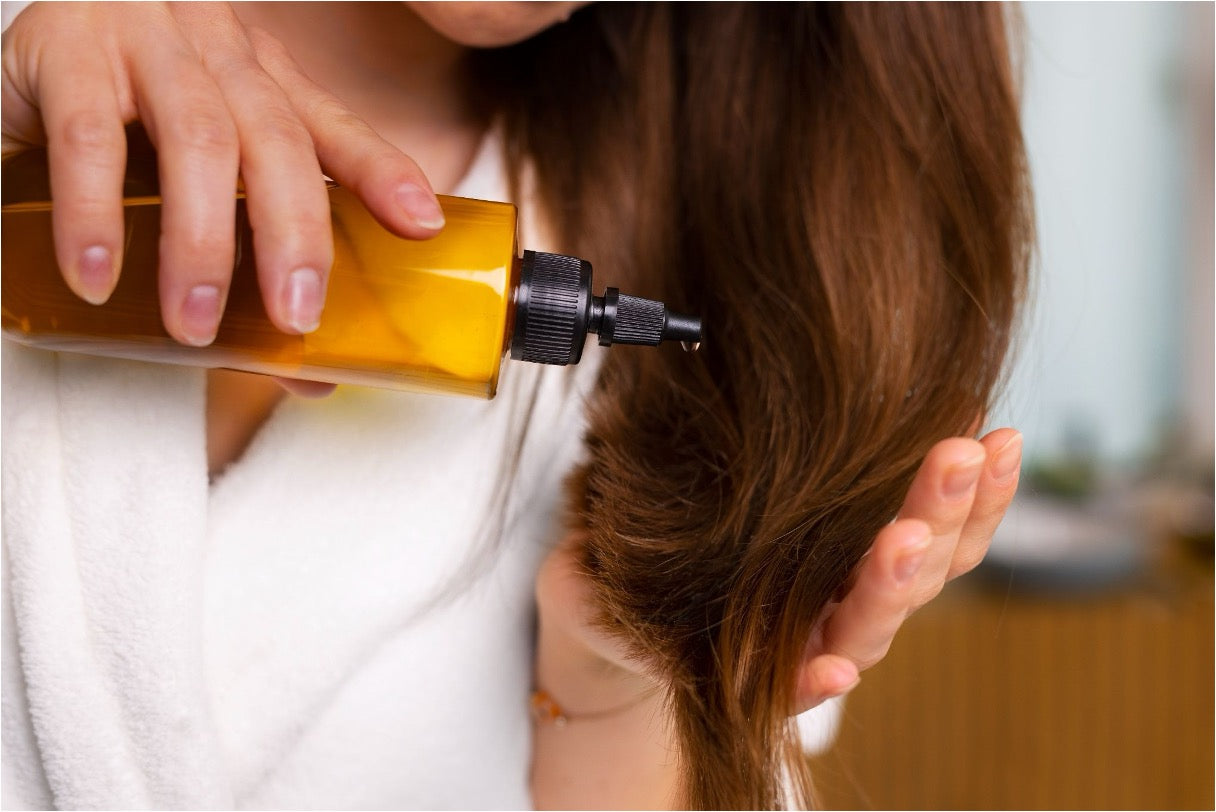
Batana oil is a rich conditioning oil that can help soften dry strands and improve hair styling.
What Is Amla Oil?
Amla oil is a traditional hair-care oil made using the fruit, commonly known as Indian gooseberry or amla. Amla has long been used in Ayurvedic hair-care practices and is valued for its naturally occurring vitamin C, tannins, flavonoids, and other antioxidant compounds.
Unlike many plant oils pressed directly from seeds or fruits, amla hair oil is often made by infusing amla fruit or powder into a carrier oil such as coconut, sesame, or another base oil. As a result, the final texture, weight, and nutrient profile can vary considerably between products. The carrier oil and additional ingredients such as fragrance can also influence how the formula feels on the hair and scalp.

Amla oil has a long history in traditional hair care and is commonly used to condition the hair and scalp.
Batana Oil vs Amla Oil: Hair Care Benefits Compared
Benefits of Batana Oil for Hair
Batana oil is primarily valued for its conditioning properties. It can help soften dry, brittle strands, smooth the hair’s surface, and improve how easily the hair can be brushed, styled, and managed.
Its rich texture also makes it useful for hair that needs extra moisture. Used in moderation, it can improve the overall look and feel of hair while providing extra conditioning for the lengths and ends.
Benefits of Amla Oil for Hair
Amla oil is also used as a conditioning and scalp-care ingredient. It can improve hair softness, smoothness, and overall health, making it a useful addition to routines for dry or difficult-to-manage strands.
However, its suitability varies by carrier oil and individual hair type. Lighter formulas may feel more comfortable on fine hair, while you may need richer blends to provide more conditioning for thicker or drier hair.
Pros & Cons of Batana Oil
Batana oil's rich fatty acid profile makes it one of the heavier natural oils used in hair care, which works in its favor for some hair types and against it for others.
Pros of Using Batana Oil
- Good for Dry Hair: Its richer texture can provide extra conditioning for strands that feel rough or dehydrated.
- Useful for Coarse Hair: Heavier oils may work well for thicker textures that need more substantial moisture.
- Can Be Used as a Pre-Shampoo Treatment: Applying it before washing lets you use more without leaving your hair oily afterward.
- Helps With Detangling: The added slip can make brushing through knots easier and reduce unnecessary pulling.
- Works Across Hair Textures: You can incorporate batana oil into straight, wavy, curly, or coily hair routines by adjusting the amount used.
Cons of Using Batana Oil
- May Feel Greasy: Because batana oil is rich and relatively heavy, applying too much can leave hair looking oily or weighed down.
- Can Cause Build-Up: Frequent use without adequate cleansing may leave oil residue on the hair and scalp.
- May Attract Dirt: Excess oil on the hair can collect environmental particles, potentially making strands feel less clean.
- Possible Sensitivity: As with other natural oils, some individuals may experience irritation or sensitivity. A patch test is a sensible precaution before more extensive use.
Pros & Cons of Amla Oil
Amla oil's biggest advantage and biggest drawback are the same: because it is an infusion rather than a pressed oil, what you get depends entirely on the product you buy.
Pros of Using Amla Oil
- Traditional Hair-Care Option: Amla has a long history of use in Ayurvedic hair-care routines.
- Flexible Formulations: Amla can be combined with different carrier oils, allowing products to have different textures and feels.
- Suitable for Different Hair Types: The right formula and amount can make amla oil workable for straight, wavy, curly, or coily hair.
- Easy to Add to Existing Routines: You can use it as a pre-shampoo treatment, scalp oil, or occasional conditioning treatment.
Cons of Using Amla Oil
- Potential Scalp Irritation: Some people may experience itching, redness, bumps, or irritation, particularly if the formula contains fragrance or other additives.
- Possible Allergic Reactions: Sensitivity to amla itself or ingredients such as fragrance, preservatives, or carrier oils is possible.
- May Affect Light Hair Tones: Amla may make lighter or chemically treated hair look subtly darker, so a strand test can help.
Batana Oil vs Amla Oil vs Trybello Hair Helper Spray
| Feature | Trybello Hair Helper Spray | Batana Oil | Amla Oil |
|---|---|---|---|
| Type | Lightweight leave-in scalp treatment | Rich natural hair oil | Traditional hair-care oil |
| Key Ingredients | Caffeine, biotin, and botanical extracts | Fatty acids and naturally occurring nutrients | Amla fruit compounds and carrier oil |
| Main Use | Supports scalp care and healthier-looking hair | Conditions and moisturizes dry hair | Conditions hair and supports scalp care |
| Key Benefits | Helps support fuller-looking, stronger, more manageable hair | Moisturizes, smooths, reduces frizz, and adds shine | Moisturizes, adds shine, and improves softness |
| Best For | Targeted daily hair and scalp care | Dry, coarse, or brittle hair | Various hair types, depending on the formula |
| Texture | Lightweight and fast-absorbing | Rich and heavier | Varies depending on the carrier oil |
| Potential Drawbacks | Requires consistent use as part of a routine | May feel greasy or cause buildup if overused | Formula and feel can vary between products |
Trybello for a More Complete Hair-Care Routine
Choosing a hair oil is only one part of maintaining healthy-looking hair. A consistent routine that includes gentle cleansing, conditioning, and targeted hair care can help address dryness, breakage, and overall hair appearance.

Trybello Hair Helper Spray gives a lightweight option for adding targeted scalp care to a routine alongside traditional hair oils.
At Trybello, we built Trybello Hair Helper Spray for this kind of routine: lightweight daily scalp care that sits alongside whichever oil you choose. Browse our hair collection to build a routine suited to your hair and scalp.
Frequently Asked Questions (FAQs)

Trending Topics





*Disclaimer: Individual results may vary. The information provided in this article is for educational purposes only and is not intended as medical advice. Consult a healthcare professional before starting any new hair or lash care regimen, especially if you have sensitivities or underlying health conditions. Product pricing is subject to change. For full terms, visit Trybello.com.

See our latests posts #TRYBELLO