DHT Blocker vs Minoxidil: Benefits, Interactions & Side Effects
BY TRYBELLO
Jun 11, 2026

Key Takeaways
- DHT blockers target the hormonal root cause of androgenetic hair loss, while minoxidil stimulates hair follicles and extends the active growth phase.
- DHT blockers come in two categories: prescription oral medications and natural alternatives, such as saw palmetto, pumpkin seed oil, and Capixyl, that work topically or as supplements.
- Common side effects from oral pharmaceutical DHT blockers include sexual dysfunction, gynecomastia, and rare mood changes, while minoxidil's main side effects involve scalp irritation, temporary shedding, and hypertrichosis (oral form).
- Interactions matter most with oral pharmaceutical treatments, where DHT blockers can compound with hormonal therapies and oral minoxidil can amplify the effects of blood pressure drugs and diuretics.
- For a topical, natural approach to DHT-driven hair loss without the systemic risks, the Trybello Hair Helper Spray Plus delivers Capixyl-based growth support backed by a 120-day hair growth guarantee.
DHT Blocker vs Minoxidil: What's the Difference?
Dihydrotestosterone (DHT) blockers reduce or block the hormone that shrinks follicles in androgenetic alopecia, while minoxidil is a vasodilator that widens scalp blood vessels and extends the active growth phase of the hair cycle.
The two treatments differ in scope, side-effect profiles, and who they suit. DHT blockers come in prescription oral forms, plus natural options such as saw palmetto, pumpkin seed oil, and the Capixyl complex, with side effects ranging from sexual dysfunction to gynecomastia in the pharmaceutical versions.
Minoxidil is available over the counter as a 2% or 5% topical and, off-label, as a low-dose oral formulation, working across multiple hair loss types but commonly causing scalp irritation, temporary shedding, and hypertrichosis in the oral form.
We will break down how each treatment works, its benefits, side effects, and interactions in detail below.
“Enhanced with Capixyl™ for 2X Faster Results! Why Smart Women Are Upgrading to Bello Hair Helper Spray Plus!”
Experience accelerated hair transformation with our enhanced formula featuring scientifically-proven Capixyl™. See visible growth in just 4 weeks, not 12.
Advanced Natural Formula with Capixyl™
- Capixyl™ – Clinically proven to lower DHT levels and stimulate follicles for 2X faster growth
- Enhanced Biotin – Maximum scalp absorption for accelerated thickness
- Caffeine Extract – Boosts ingredient absorption and blood circulation
- Rice Water + Red Clover – Reduces shedding by up to 60%

120-Day Growth Guarantee: No results after 4 months? Full refund, no questions asked.


What Is a DHT Blocker & How Does It Work?
DHT stands for dihydrotestosterone, a hormone derived from testosterone through the action of an enzyme called 5-alpha reductase.
In people genetically predisposed to hair loss, DHT binds to receptors in the hair follicles and causes them to shrink over time, a process called follicular miniaturization. The follicles gradually produce thinner, shorter hairs until they stop producing hair altogether.
A DHT blocker is any substance that interrupts this process, either by reducing how much DHT your body produces or by blocking DHT from binding to follicle receptors.

DHT blockers work by reducing the hormone that causes hair to thin and shed over time.
How DHT Blockers Work
DHT blockers fall into two primary categories based on how they target the hormone. The first category, 5-alpha reductase inhibitors, blocks the enzyme that converts testosterone into DHT. Less enzyme activity means less DHT produced overall.
The second category, receptor-level blockers, act at the follicle itself, preventing DHT from binding to androgen receptors even when DHT remains in the body. Some natural compounds, such as saw palmetto, are believed to work through this mechanism.
Benefits of DHT Blockers
The most important benefit of a DHT blocker is that it targets the actual cause of androgenetic alopecia rather than just managing the symptoms. By reducing the hormone driving follicular miniaturization, DHT blockers can slow or halt hair loss in people genetically predisposed to it. Clinical trials on both prescription and natural DHT blockers have shown measurable improvements in hair density and regrowth in many users.
Beyond hair preservation, reducing DHT also protects existing follicles from future damage. Starting a DHT blocker earlier in the hair loss process typically yields better long-term outcomes than waiting until significant thinning has already occurred.
ForChics ForLash Eyelash Enhancing Serum
Minoxidil began as an oral medication for high blood pressure in the 1970s. Researchers noticed that patients taking it were growing unexpected hair, which led to its development as a topical hair loss treatment. Today, it's available over the counter as a 2% or 5% topical solution or foam, and also in oral form at lower doses through prescription.
How Minoxidil Works
Minoxidil is a vasodilator, meaning it widens blood vessels. When applied topically to the scalp, it increases blood flow and nutrient delivery to hair follicles.
This extended nourishment prolongs the anagen (active growth) phase of the hair cycle and shortens the telogen (resting/shedding) phase, resulting in thicker, longer hair strands and reduced shedding over time.
Crucially, minoxidil does not block DHT. It has zero hormonal activity. This means it can treat hair loss caused by factors other than DHT, such as telogen effluvium or stress-related shedding, but it does not address the underlying hormonal damage happening at the follicle level in androgenetic alopecia.
Benefits of Minoxidil
Minoxidil's biggest advantages are its accessibility and versatility. It's available without a prescription, works for both men and women, and can be effective across multiple types of hair loss, not just hormone-driven hair loss.
A clinical trial of the 5% topical foam formulation in 352 men found statistically significant hair count improvements compared to placebo at 16 weeks. For individuals in the early stages of hair loss, minoxidil may produce a noticeable cosmetic difference by increasing hair density and slowing visible thinning.

Like most hair loss treatments, minoxidil only delivers results with consistent use over several months.
DHT Blockers Side Effects & Interactions
Side Effects
The most discussed side effects of prescription oral DHT blockers relate to sexual health. A subset of users notice decreased libido, erectile dysfunction, or reduced ejaculate volume.
These effects are generally considered reversible upon discontinuation, though a small number of men have reported persistent symptoms after stopping the medication. This remains an area of ongoing research.
Possible Interactions
DHT blockers share a few interaction considerations because they all work on the same hormonal pathway. Layering them isn't recommended without medical guidance, since they reduce DHT through similar mechanisms and can amplify side effects.
Pharmaceutical DHT blockers have no clinically meaningful drug-drug interactions documented across most common medication classes. Among natural DHT blockers, saw palmetto has mild blood-thinning properties and should be used cautiously with anticoagulants, antiplatelet drugs (such as aspirin), and hormone-based therapies, including birth control.
Minoxidil Side Effects & Interactions
Side Effects
The most common side effect of topical minoxidil is scalp irritation (dryness, flaking, or itching), often associated with the propylene glycol carrier in liquid formulations rather than minoxidil itself.
A temporary increase in shedding during the first few weeks is also common. This happens because minoxidil shortens the telogen (resting) phase, prematurely shifting hair into anagen (growth) and triggering a wave of old hairs to shed before new ones replace them.
Oral minoxidil, used off-label at low doses of 0.25 to 5 mg daily, carries more systemic considerations. A multicenter study of 1,404 patients found the most common side effect was hypertrichosis (unwanted facial or body hair growth), affecting 15.1% of users.
Less common systemic effects included lightheadedness, fluid retention, and tachycardia. Oral minoxidil should be used only under medical supervision, particularly in patients with cardiovascular conditions.
Possible Interactions
Topical minoxidil has a relatively low interaction profile compared to oral forms. The main consideration is avoiding application alongside other topical scalp treatments that may compromise skin barrier function or cause irritation.
Oral minoxidil is where interactions matter most. Combining it with other vasodilatory medications or blood pressure drugs can produce compounding hypotensive effects, meaning your blood pressure could drop further than intended.
The same multicenter study found cardiovascular side effects were dose-dependent, and patients with existing hypertension or on antihypertensive medications need closer monitoring.
Quick Comparison: DHT Blocker vs Minoxidil
| Feature | DHT Blockers | Minoxidil |
|---|---|---|
| Mechanism | Reduces DHT production or blocks DHT from binding to follicle receptors | A vasodilator that extends the anagen (growth) phase |
| Treats | Androgenetic alopecia (hormonal hair loss) | Multiple types of hair loss, including stress-related and androgenetic |
| Forms Available | Oral, topical, supplements (saw palmetto, pumpkin seed oil) | Topical solution or foam (2% or 5%), oral (low-dose, off-label) |
| Results Timeline | 3 to 6 months for visible changes | 16 weeks for visible changes; max effect at 4 months |
| Benefits | Targets the hormonal root cause of hair loss; protects existing follicles | Stimulates follicle activity; works regardless of cause; widely accessible |
| Common Side Effects | Sexual dysfunction (reversible in most cases); gynecomastia; rare mood changes | Scalp irritation; temporary shedding in the first few weeks; hypertrichosis (oral) |
| Key Interactions | Oral DHT blockers may interact with blood thinners or hormone-based medications | Other vasodilators or blood pressure drugs (oral form); diuretics |
Why Trybello Hair Helper Spray Plus Is a Safer Approach to Hair Loss

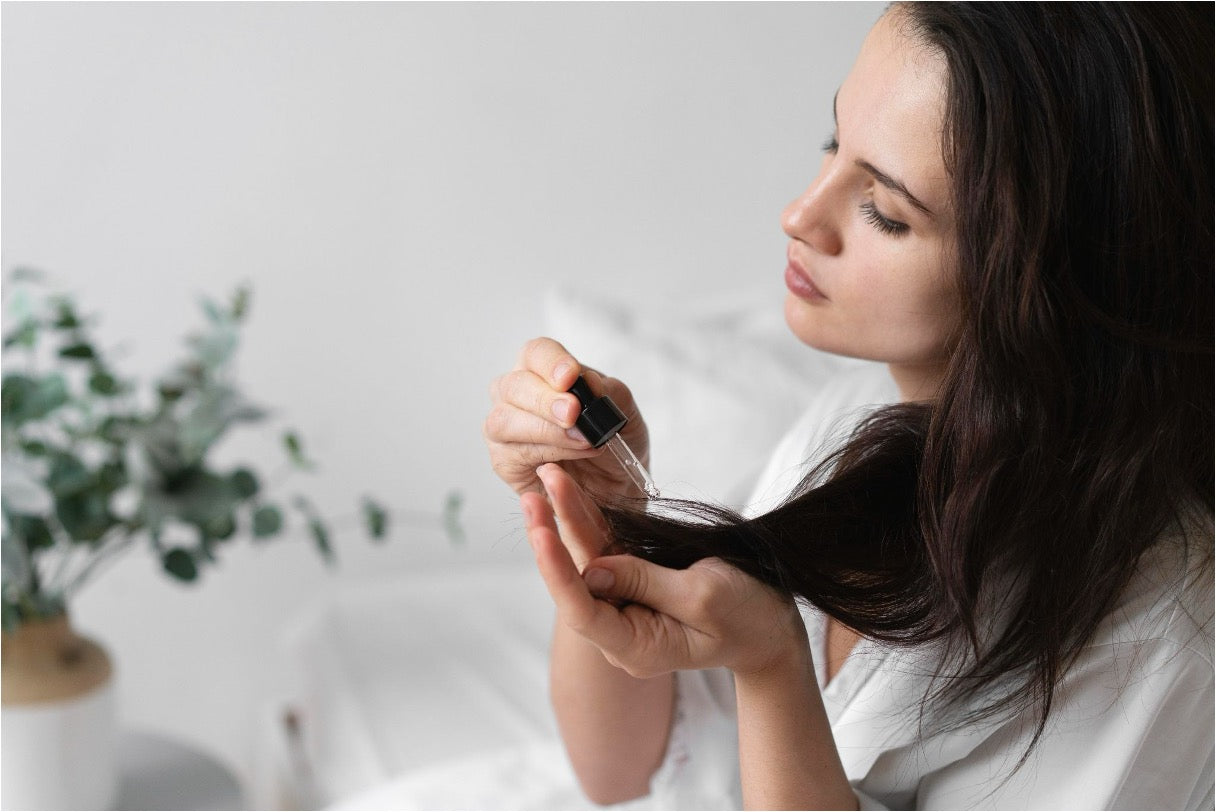
Trybello Hair Helper Spray Plus combines Capixyl, Caffeine, and botanical actives to target DHT-driven hair loss.
DHT blockers and minoxidil both deliver measurable results, but they come with possible side effects that not every user wants to take on, especially for a treatment that often becomes a long-term routine. The Trybello Hair Helper Spray Plus is designed to address the same underlying driver of hair loss without a prescription or systemic side effects.
Formulated by our US-based team, the Trybello Hair Helper Spray Plus is a Capixyl-powered formula that combines Acetyl Tetrapeptide-3 with red clover extract, a clinically studied blend designed to target DHT activity at the follicle while supporting denser, fuller hair. Beyond Capixyl, the formula combines Biotin and Caffeine for enhanced absorption and follicle support, along with Argan Oil, Panax ginseng, Ginger Root, and Aloe to nourish the scalp. We back every bottle with our 120-day hair growth guarantee, and the formula is doctor-approved, hormone-free, and vegan.
Try the Trybello Hair Helper Spray Plus today.
Frequently Asked Questions (FAQs)

Trending Topics






*Disclaimer: Individual results may vary. The information provided in this article is for educational purposes only and is not intended as medical advice. Consult a healthcare professional before starting any new hair or lash care regimen, especially if you have sensitivities or underlying health conditions. Product pricing is subject to change. For full terms, visit Trybe

See our latests posts #TRYBELLO