Hair Loss After Food Poisoning: Causes, Timeline & Treatment
BY TRYBELLO
Jun 26, 2026

Key Takeaways
- Food poisoning triggers a delayed form of shedding called telogen effluvium, where stress, dehydration, and rapid nutrient loss push a large share of follicles into a resting phase all at once.
- Shedding typically starts 6 to 12 weeks after the illness, peaks for several weeks to a few months, and resolves with visible regrowth over a 6 to 9 month window.
- The fastest recovery comes from pairing internal repair (restoring iron, zinc, biotin, and B12) with consistent topical scalp support like Trybello Hair Helper Spray.
- Lowering cortisol through rest, electrolytes, and adaptogens such as ashwagandha works alongside Trybello Hair Helper Spray to move follicles back into active growth sooner.
- Trybello Hair Helper Spray delivers biotin, caffeine, castor oil, and rice water extract straight to the scalp, bypassing a still-healing gut so regrowth can begin while your body is still rebuilding from the inside.
Hair Loss from Food Poisoning: What You Need to Know
Food poisoning can trigger sudden hair shedding through a condition called telogen effluvium, where stress and nutrient loss push follicles into a resting phase. Shedding usually starts 6 to 12 weeks after the illness, peaks for several weeks to a few months, and resolves with a 6 to 9 month recovery once treatment begins.
Recovery is almost always full, but the right approach can shorten the timeline considerably. The fastest results come from pairing internal recovery, like restoring iron, zinc, and B vitamins, with consistent topical support from a targeted scalp product such as Trybello Hair Helper Spray. Below, we break down exactly how food poisoning disrupts hair growth, what the recovery timeline looks like, and the steps that move it along fastest.
“Doctor-Approved Natural Spray Rapidly Boosts Growth & Thickness.
Why 100,000+ Women Are Switching to Trybello!"
Join over 100,000 happy customers who've transformed their hair with our doctor-formulated spray in just 12 weeks, rated 4.8/5 by 40,000+ real users.
Proven Natural Ingredients
- • Caffeine Extract – Blocks DHT and boosts blood flow to follicles
- • Biotin – Direct scalp absorption, no pills needed
- • Castor Oil – Soothes inflammation and locks in moisture
- • Rice Water Extract – Strengthens hair and reduces shedding
120-Day Growth Guarantee: No results? 100% money back, no questions asked.


How Can Food Poisoning Cause Hair Loss?

Aside from causing gastrointestinal symptoms, food poisoning may also lead to hair loss.
Food poisoning hits far more than your stomach. Severe vomiting, diarrhea, fever, and dehydration tell your body to redirect resources toward survival, and hair growth, being a low-priority biological process, gets shut down first.
The result is telogen effluvium, where a large share of follicles drop out of the active growth phase at the same time, producing a synchronized mass shedding event weeks later. It's the biological equivalent of a system reset.
Telogen Effluvium Explained
Telogen effluvium is the medical term for stress-triggered hair shedding. Under normal conditions, roughly 85% of your scalp hairs are in the anagen (active growth) phase at any given time, while only around 15% are in the telogen (resting/shedding) phase. When a significant stressor hits, like food poisoning, that ratio shifts dramatically, and a large number of anagen hairs are pushed into the telogen phase all at once.
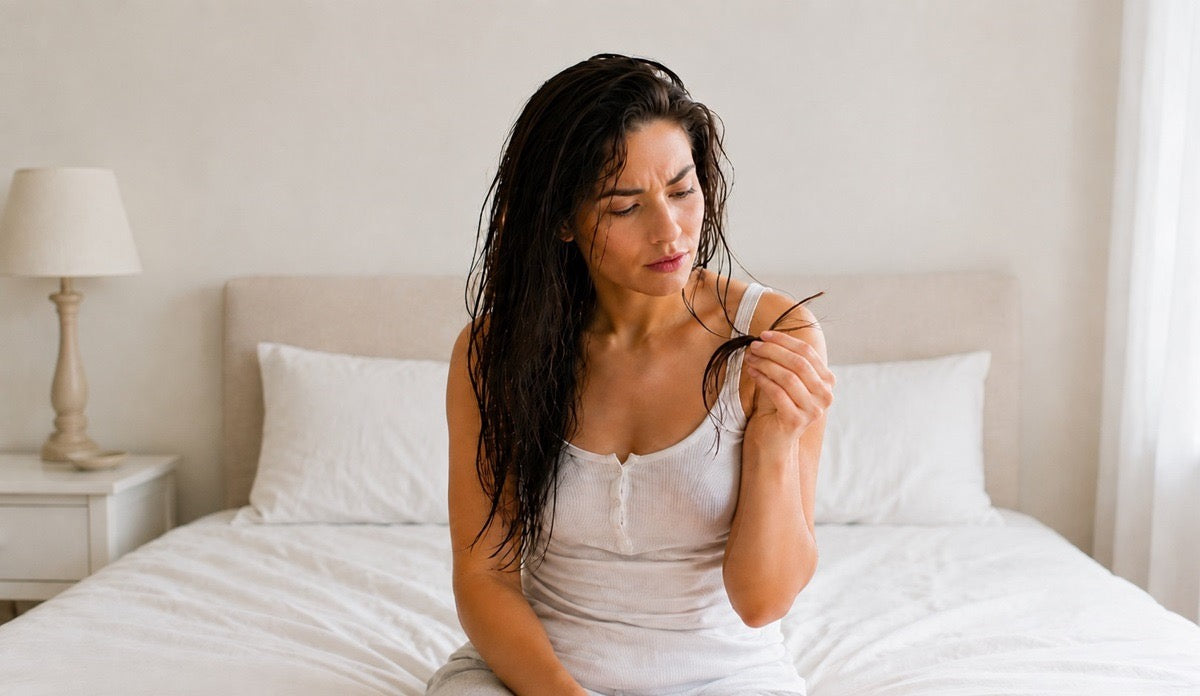
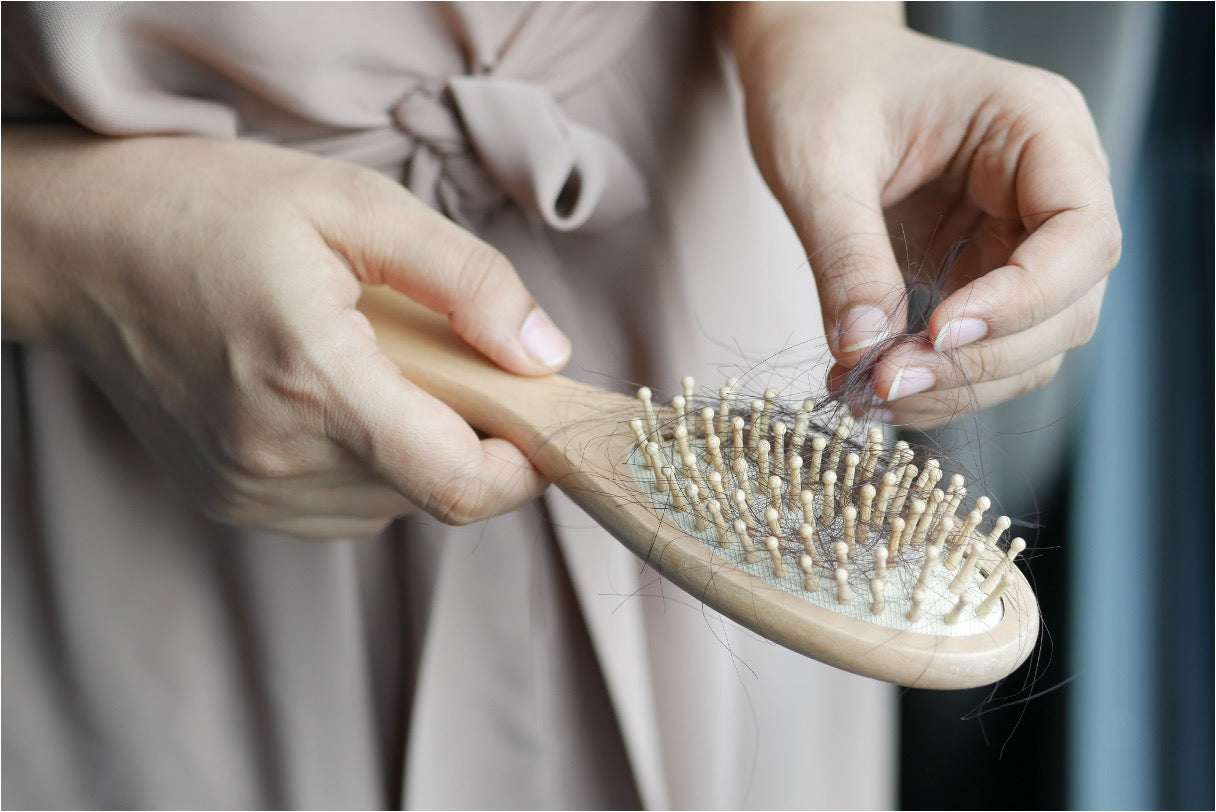
The result is diffuse thinning across the entire scalp, rather than patchy or localized loss. The shedding is widespread and even, which is one of the key identifiers of telogen effluvium. You'll typically notice significantly more hair than usual on your pillow, in the shower drain, and on your hairbrush.
Why Acute Illness Pushes Hair Follicles Into Shedding Mode
During food poisoning, your body faces several threats at once: rapid fluid loss, elevated body temperature, and depletion of key electrolytes and micronutrients. Severe dehydration reduces blood volume and circulation, so hair follicles are effectively starved of oxygen and nutrients during the illness.
At the same time, rapid loss of zinc, iron, and B vitamins compromises the cellular machinery that drives hair growth, and follicles are among the most metabolically active cells in the body, making them especially sensitive to that disruption.
The Role of Cortisol and Physiological Stress
Cortisol, your body's primary stress hormone, spikes dramatically during acute illness. Food poisoning triggers a full physiological stress response, and elevated cortisol has a well-documented suppressive effect on hair follicle cycling. It signals the body to conserve energy by halting non-essential processes, and hair growth falls squarely into that category during a crisis.
The spike alone can push follicles into premature telogen, even before dehydration or nutrient loss is factored in. When stress hormones, dehydration, and micronutrient depletion combine, the disruption is amplified enough to produce noticeable shedding weeks later.
Hair Loss After Food Poisoning: Timeline Explained
One of the most confusing parts of post-food poisoning hair loss is that it doesn't happen right away. You feel sick, you recover, life goes back to normal, and then two to three months later, your hair starts falling out in alarming amounts. This delayed response is what causes most people to miss the connection between their illness and their hair loss.
Understanding the timeline is both reassuring and practically useful. Knowing when to expect shedding, how long it lasts, and when to worry helps you make smarter decisions about treatment and professional care.
Why Hair Loss Is Delayed 2–3 Months After Illness
When food poisoning forces hair follicles into the telogen (resting) phase, those follicles don't immediately release the hair shaft. The telogen phase itself lasts about 2 to 3 months before the hair is physically shed. The delay between the food poisoning episode and the visible hair loss is simply the telogen phase running its course. This 6 to 12 week lag is largely consistent across different people and triggering illnesses, which is why the timeline is fairly predictable.
How Long Does Shedding Last?
Once shedding begins, most people experience peak hair loss for several weeks to a few months. During this window, daily shed counts can rise sharply, with telogen effluvium pushing the normal of up to 100 hairs per day up to 300 or more.
After the peak, shedding gradually tapers off as follicles return to the anagen (growth) phase. Full recovery, meaning visible regrowth and a return to normal density, typically takes 6 to 9 months from the start of shedding. The shedding itself is the visible result of something that already happened, and treating the root causes during this phase is what accelerates regrowth.
How Can You Treat Hair Loss After Food Poisoning?

You can nurture your hair and fuel regrowth by supporting the scalp, replenishing key nutrients, and restoring hydration and lowering stress.
Telogen effluvium from food poisoning is driven by a specific physiological event, so treatment is about supporting follicle recovery and restoring what was depleted. The good news is that this type of hair loss is almost always reversible with the right approach, and the fastest results come from working on the scalp and the body at the same time.
Support the Scalp Directly
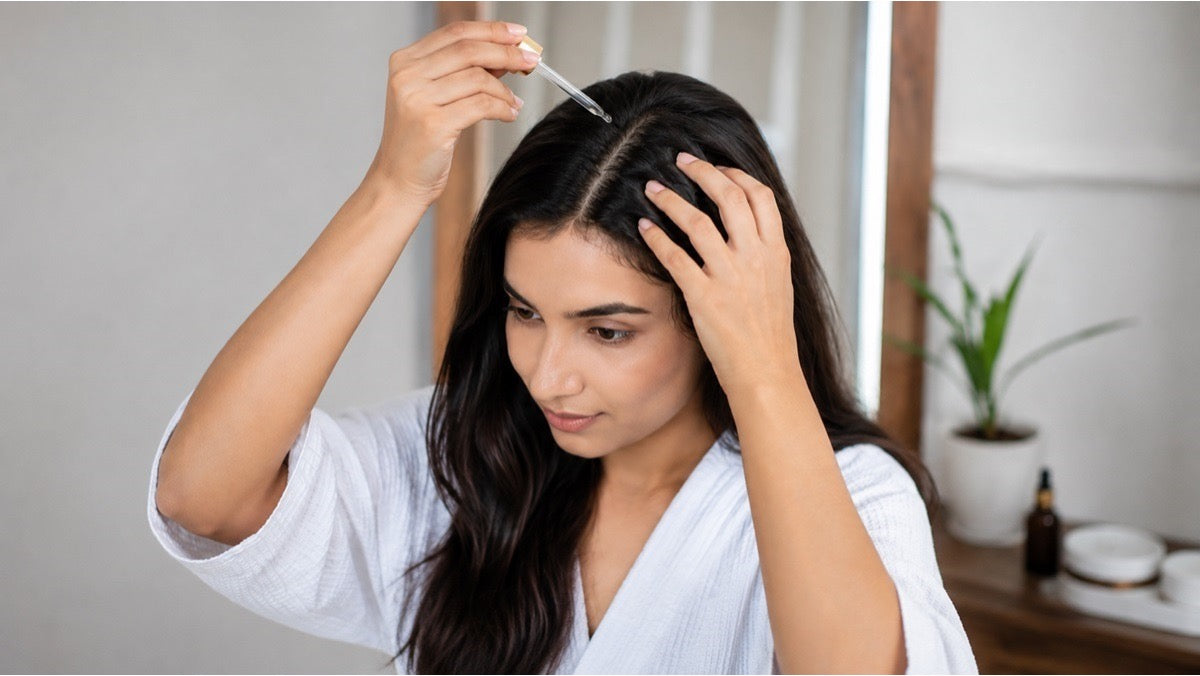
Topical care is often where regrowth picks up speed, especially while your gut is still recovering and absorption is unreliable. Treatments that stimulate blood flow and deliver active ingredients straight to the follicle can meaningfully shorten the recovery window when used consistently. A targeted scalp spray like Trybello Hair Helper Spray fits well here, since it bypasses a still-healing gut and gives the scalp steady external support while your body rebuilds from the inside.
Replenish Key Nutrients
Internal recovery does the heavy lifting alongside scalp care, and nutrient replacement is the biggest lever. Iron deficiency is one of the most common post-illness drivers of prolonged shedding, so focus on iron-rich foods like spinach, lentils, and lean red meat, and add a supplement if blood work shows low ferritin. Zinc is lost rapidly through diarrhea and vomiting and directly supports the cell division behind follicle activity, so add pumpkin seeds, chickpeas, or a zinc supplement.
Both biotin and B12 matter, since both fuel keratin production and oxygen delivery to follicles, and B12 deficiency in particular can stretch shedding well past the normal recovery window.
Restore Hydration and Lower Stress
Many people remain mildly dehydrated long after the acute illness passes, so consistent hydration with electrolytes (sodium, potassium, magnesium) helps restore blood volume and scalp circulation. Ongoing cortisol load also keeps follicles stuck in the resting phase, and adaptogenic herbs like ashwagandha and rhodiola have evidence supporting their role in lowering it. Lower cortisol means follicles can cycle back into active growth faster.
Speed Up Hair Growth with Trybello Hair Helper Spray

Trybello Hair Helper Spray contains biotin, caffeine, castor oil, and rice water extract to nurture your hair follicles and promote growth.
Hair loss after food poisoning feels alarming, but it's a temporary disruption your body is fully equipped to reverse. With consistent nutrient support, steady hydration, lower cortisol, and direct scalp care, follicles cycle back into active growth and density returns. The faster you start, the shorter the recovery window.
At Trybello, we built our Hair Helper Spray to make the scalp side of that recovery effortless. We deliver biotin, caffeine, castor oil, and rice water extract straight to your follicles, bypassing a healing gut. Backed by our 120-day guarantee, we help you get your hair back, faster.
Try the Trybello Hair Helper Spray →
Frequently Asked Questions (FAQs)

Trending Topics

*Disclaimer: Individual results may vary. The information provided in this article is for educational purposes only and is not intended as medical advice. Consult a healthcare professional before starting any new hair or lash care regimen, especially if you have sensitivities or underlying health conditions. Product pricing is subject to change. For full terms, visit Trybe

See our latests posts #TRYBELLO