Hair Loss After Miscarriage: Causes, Timeline & Regrowth Tips
BY TRYBELLO
Apr 20, 2026

Key Takeaways
- Hair loss after miscarriage is caused by a sudden drop in estrogen and progesterone, which shifts a large number of follicles into the shedding phase at the same time, a condition known as telogen effluvium.
- Shedding typically starts 2 to 3 months after miscarriage, and most women see significant recovery within 6 to 12 months as hormones stabilize and the hair cycle returns to normal.
- Practical regrowth tips include eating foods rich in iron, B vitamins, and protein, switching to sulfate-free shampoo, and avoiding heat styling and chemical treatments that can weaken fragile strands.
- No single tip guarantees faster results, but combining gentle scalp care with consistent nutritional support gives the hair cycle the best internal and external conditions to recover.
- The Trybello Daily Hair Booster supports this recovery from within using ingredients like Polygonum Multiflorum (Fo-ti), ginseng, and collagen, and comes with a 120-Day Results Guarantee.
Can Hair Loss Happen After Miscarriage?
Hair loss after miscarriage is a common and temporary condition driven by the sharp hormonal drop that follows pregnancy loss. When estrogen and progesterone levels fall quickly, a large number of follicles enter the shedding phase at the same time, a process called telogen effluvium.
The result is diffuse thinning across the scalp that typically starts around 2 to 3 months after the miscarriage and can increase daily shedding from the usual 50 to 100 hairs to as many as 100 to 300 hairs at its peak. Most women see meaningful recovery within 6 to 12 months as the hair cycle stabilizes.
Supporting recovery with gentle scalp care, balanced nutrition, and targeted supplements like the Trybello Daily Hair Booster can help create better conditions for natural regrowth throughout this period.
“Plant-Based Capsules Reverse Scalp Aging for Fuller, Thicker Hair. Why 597+ Women Rate This Daily Booster 5 Stars!"
Transform hair from the inside out with all-natural capsules that strengthen follicle structure and stimulate healthy growth in just 16 weeks.
Follicle-Reviving Ingredients
- • Polygonum Multiflorum (Fo-ti) – Revives dormant hair follicles
- • Ginseng – Promotes scalp circulation and natural beauty
- • Collagen – Strengthens retention, reduces shedding
Nature-Powered Benefits
- • Plant-based actives reverse scalp aging
- • Just 2 capsules each morning
- • Made in USA
120-Day Guarantee: No transformation? 100% money back.


Why Miscarriage Triggers Hair Loss
To understand why hair loss happens after a miscarriage, it helps to first look at what pregnancy does to your hair. Hormonal changes during pregnancy shift the natural hair cycle, often making hair feel thicker and fuller. When those hormone levels suddenly change, the cycle is disrupted, leading to noticeable hair shedding.
The Role of Estrogen & Progesterone in Hair Growth
Hair grows in three phases: anagen (growth), catagen (transition), and telogen (resting/shedding). Normally, most of your hair stays in the growth phase.
During pregnancy, higher levels of estrogen and progesterone extend this phase, keeping more hair growing for longer and reducing daily shedding. This creates the appearance of fuller hair, as fewer strands are falling out.
How a Sudden Hormone Drop Disrupts the Hair Cycle
After a miscarriage, hormone levels drop quickly. This sudden change pushes many hair follicles out of the growth phase and into the resting phase simultaneously.
As a result, a larger-than-normal number of hairs are prepared to shed together, making hair loss more noticeable. This can happen even after early pregnancy loss, though the severity may vary.
Telogen Effluvium: The Medical Name for What You Are Experiencing
This type of hair shedding is known as telogen effluvium, a temporary condition that causes diffuse hair loss across the scalp. It doesn’t damage the follicles permanently.
One of the most confusing aspects is the timing: shedding usually starts weeks or even months after the miscarriage, once the resting hairs begin to fall. This delay can make it harder to connect the hair loss to the initial event.

Hair loss after miscarriage is usually temporary and follows a natural shedding cycle before regrowth begins.
The Hair Loss Timeline After Miscarriage
Hair regrowth after miscarriage follows a delayed but predictable cycle. Understanding the timeline can help set realistic expectations and reduce anxiety during recovery.
Initial Hair Loss Phase (1–3 Months)
Hair shedding usually starts 2–3 months after a miscarriage, not immediately. This delay happens because follicles enter the telogen (resting) phase right after hormonal changes, but shedding only occurs weeks later.
When shedding begins, it can feel sudden and heavy. Daily hair loss may increase from a normal 50–100 hairs to around 100–300 hairs per day in telogen effluvium. The shedding is typically diffuse, affecting the whole scalp rather than specific areas.
Recovery & Regrowth Phase (3–12 Months)
Shedding usually starts to slow within a few months, and early regrowth often appears around 3–6 months after shedding begins. These fine “baby hairs” signal that follicles are returning to the growth phase.
Over time, texture and density gradually improve. Most women see significant recovery within 6–12 months, as the hair cycle stabilizes and normal growth resumes.
Hair Regrowth Tips
Proper nutrition and haircare play a key role in supporting hair regrowth after miscarriage, as the body works to restore balance and rebuild strength.

Nutrition supports the natural rebuilding process of healthy hair strands.
Essential Nutrients for Hair Growth
Iron and ferritin are important for maintaining healthy hair follicles and supporting normal growth activity.
B-complex vitamins help with keratin production, while protein from foods like eggs, legumes, and lean meats provides the structure needed for new hair formation. Together, these nutrients support stronger and healthier regrowth.
Addressing Common Deficiencies
Some women may experience nutrient deficiencies after miscarriage, especially low iron levels, which can affect hair health.
Blood tests can help identify gaps such as iron, vitamin D, or B12. In most cases, improving diet is the first step, with supplements considered only under medical guidance.
Gentle Hair Care Practices During Recovery
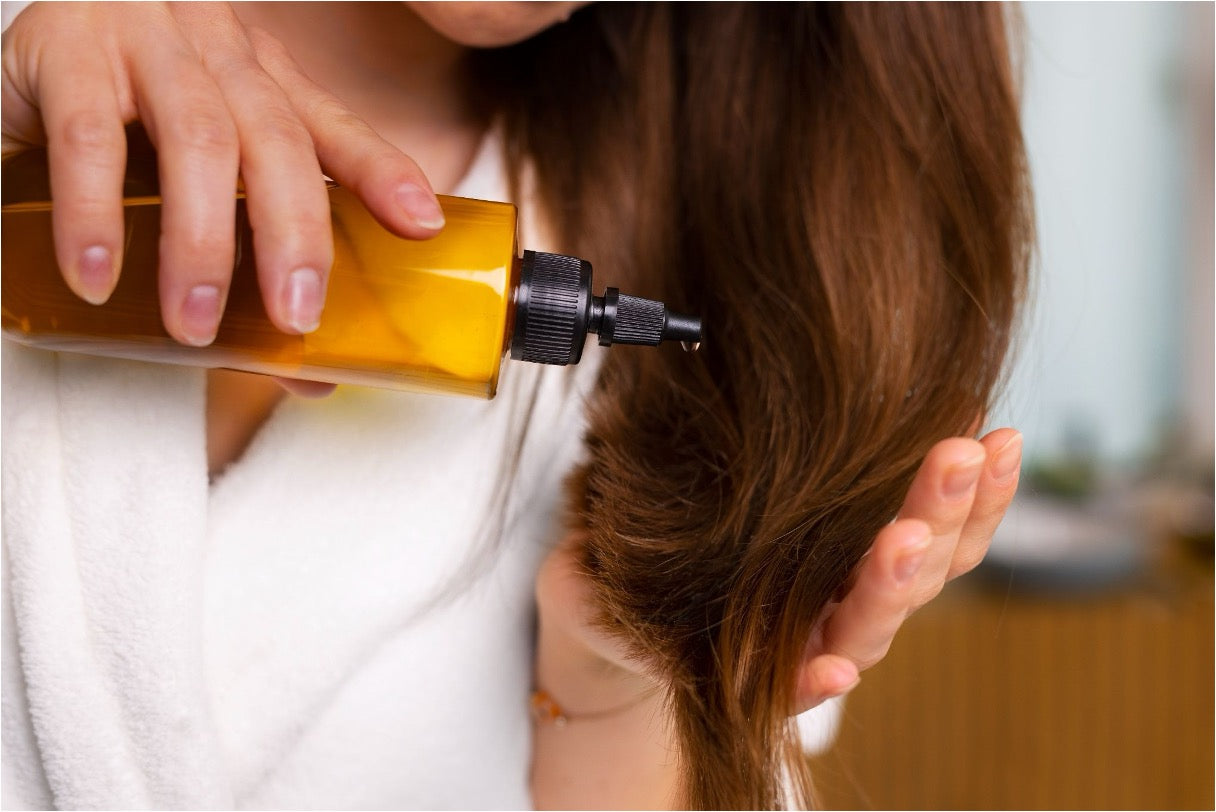
During recovery, hair care should focus on protecting fragile strands rather than using harsh treatments. Hair is often weaker during this phase, so reducing stress on the scalp and hair is essential. Gentle, consistent habits help minimize breakage and support natural regrowth.
Avoid chemical treatments like bleaching, perming, or straightening, as they can further weaken already delicate hair. Switch to sulfate-free shampoos and limit washing to around 2 times per week to maintain scalp balance. A gentle scalp massage during washing can also support circulation.
Support Hair Regrowth After Miscarriage with Trybello Care Routine

Trybello supports regrowth with a gentle routine that helps maintain scalp health and stronger-looking hair over time.
Hair loss after miscarriage is a natural, temporary response to hormonal disruption. Most women see meaningful recovery within 6 to 12 months when they prioritize gentle scalp care, proper nutrition, and consistency throughout the process.
At Trybello, we developed the Trybello Daily Hair Booster to support that nutritional foundation, with ingredients like Polygonum Multiflorum (Fo-ti), ginseng, and collagen that help strengthen follicles from within. Our US-based company and 120-Day Results Guarantee let you try it with confidence. If you are ready to support your regrowth from within, explore the Trybello Daily Hair Booster today.
Try Trybello Daily Hair Booster
Frequently Asked Questions (FAQs)

Trending Topics




*Disclaimer: Individual results may vary. The information provided in this article is for educational purposes only and is not intended as medical advice. Consult a healthcare professional before starting any new hair or lash care regimen, especially if you have sensitivities or underlying health conditions. Product pricing is subject to change. For full terms, visit Trybe

See our latests posts #TRYBELLO