Hair Loss After Wisdom Teeth Removal: Causes & Recovery Timeline
BY TRYBELLO
Aug 25, 2026

Key Takeaways
- Wisdom tooth extraction can trigger telogen effluvium, a temporary shedding that starts 1 to 3 months after surgery, which is why most people never connect the two events.
- The trigger is surgical stress, which pushes an unusually high share of follicles into dormancy at once, where they wait before releasing the hair strand.
- Anesthesia, recovery medications, and the drop in protein and iron during a soft-food diet all add extra load onto already stressed follicles.
- Shedding typically peaks around month four, and density returns within six to nine months without treatment, since follicles pause rather than get destroyed.
- Our Trybello Hair Helper Spray delivers caffeine, biotin, and follicle-reviving extracts in a daily scalp routine built for this recovery window, backed by a 120-Day Growth Guarantee.
How Surgical Stress Triggers Delayed Hair Shedding
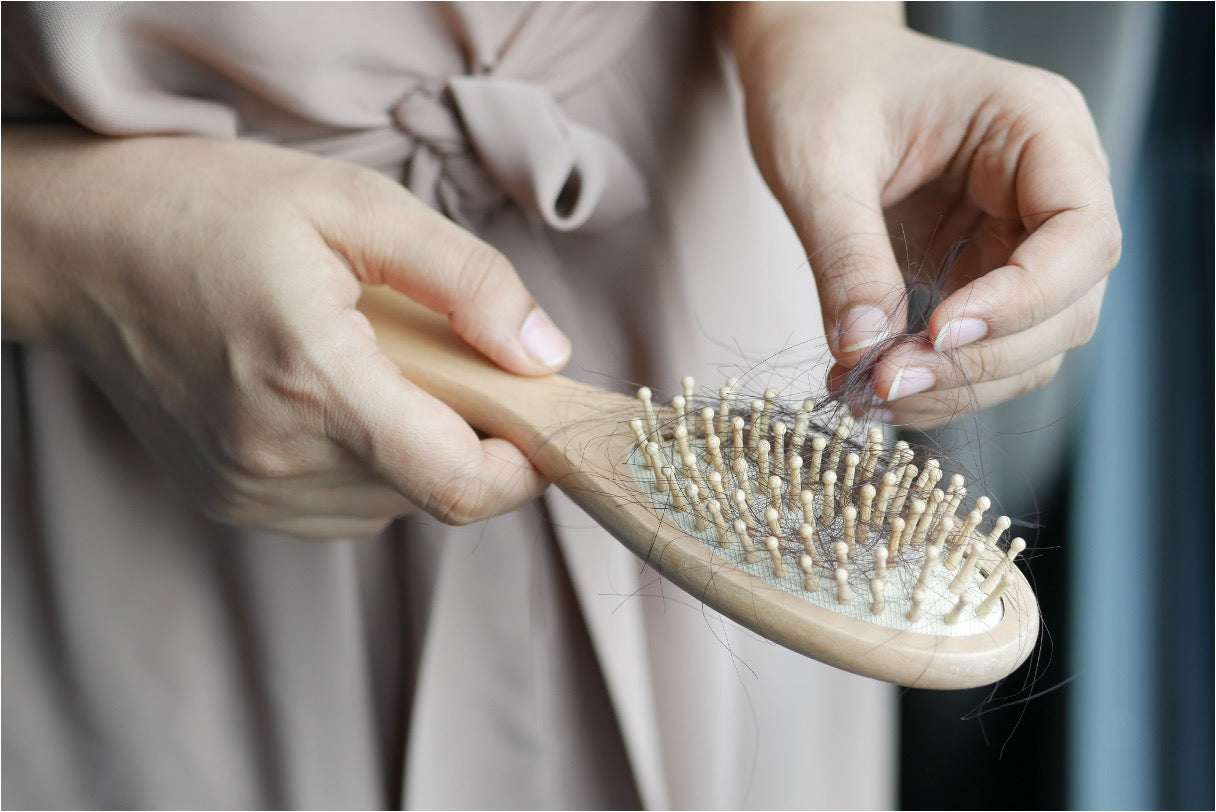
Hair loss after wisdom teeth removal is temporary shedding triggered by the physical stress of the procedure, not damage to the follicles themselves. The scalp reacts to stress on a lag, so the extraction is usually healed and forgotten by the time the shedding starts. That's why the two events rarely get connected.
The delay also changes what a reasonable response looks like. Nothing you do during the shed will stop it, because the trigger occurred weeks earlier, so the useful approach is protecting the regrowth that follows. Nutrition, gentle handling, and scalp condition are the variables you still control.
Our Trybello Hair Helper Spray is built for exactly that stretch. It is a doctor-approved scalp treatment designed for daily use over months, matching how post-surgical regrowth actually unfolds.
“Doctor-Approved Natural Spray Rapidly Boosts Growth & Thickness.
Why 88,000+ Women Are Switching to Trybello!"
Join 88,000+ women who've transformed their hair with our doctor-formulated spray, rated 4.85/5 Excellent by 60,000+ real reviewers.
Proven Natural Ingredients
- Caffeine – Energizes follicles and supports a longer, healthier growth phase
- Sophora Flavescens Extract – Revitalizes dormant follicles for improved density
- Oryza Sativa (Rice) Extract – Antioxidant-rich, protects follicles from oxidative stress
- Angelica Polymorpha Sinensis Root Extract – Boosts scalp microcirculation and nutrient delivery
- Biotin – Strengthens hair structure and supports keratin production from within
120-Day Growth Guarantee: No results? 100% money back, no questions asked.


Is Hair Loss After Wisdom Teeth Removal Normal?
A wisdom tooth extraction places less strain on the body than abdominal or orthopedic surgery, so it triggers shedding less often. Cases that do occur tend to involve impacted teeth, general anesthesia, extended chair time, post-operative infection, or recovery that limits eating for a week or more.
Procedure length matters for a second reason. Positional alopecia, caused by prolonged pressure on one part of the scalp, is associated with surgeries lasting more than four hours. Almost no wisdom tooth extraction runs that long, which removes one mechanism from the picture entirely.

Wisdom tooth extractions rarely trigger hair loss unless complications like infection or prolonged recovery limit nutrition.
What Causes Hair Loss After Wisdom Teeth Removal
Physical Stress From the Procedure
Surgery redirects blood flow, nutrients, and energy toward wound repair. Hair follicles rank low in that allocation. Cortisol rises, follicles exit the growth phase early, and shedding follows on a delay. This is considered a primary mechanism behind hair loss after many types of surgery.
Medication Taken During Recovery
Hair loss can occur as a side effect of certain medications taken during surgery or recovery. Drug classes documented as triggers for telogen effluvium include beta-blockers, vitamin A, ACE inhibitors, anticonvulsants, antidepressants, and anticoagulants.
Standard post-extraction antibiotics and painkillers are not established triggers, so review any regular medication you were already taking with your doctor before you blame the extraction.

Surgical stress, medications, and nutrient gaps from soft-food diets can all contribute to hair loss after wisdom teeth removal.
Reduced Food Intake & Nutrient Gaps
A shortage of calories and nutrients such as iron and protein can cause hair loss. Soft-food restrictions last several days, longer if healing is slow or a dry socket develops, and protein intake falls sharply during that window. A brief gap causes no lasting damage on its own. Combined with surgical stress, it tips the balance.
An Existing Condition Being Unmasked
Shedding sometimes reveals thinning that was already in progress. Pattern hair loss, thyroid dysfunction, and low ferritin can advance quietly for years, and a stress event accelerates them into view. In these cases, shedding slows without density fully returning.
Recovery Timeline for Hair Shedding After Wisdom Teeth Removal
Recovery follows a sequence. Nothing is visible for the first six weeks, because the follicles have already switched into dormancy while the hair is still anchored in place. The shed itself is the delayed result of a change the body made at the time of surgery.
Regrowth becomes visible from around months three to six as short, fine hairs standing upright along the hairline and part. These are new growth-phase hairs, and they confirm the cycle has restarted. Full length takes considerably longer, since hair grows around half an inch per month, so a strand shed at month three needs more than a year to reach its previous length.
| Stage | What Happens | What Helps |
|---|---|---|
| Weeks 0 to 6 | No visible change; follicles already dormant | Rest, hydration, return to normal eating once comfortable |
| Months 1 to 3 | Diffuse shedding begins across the scalp | Restored protein and iron intake, gentle handling, a consistent scalp routine |
| Months 3 to 6 | Shedding peaks then tapers; density at its lowest | Avoid heat, tight styles, and aggressive brushing |
| Months 6 to 9 | Daily loss normalizes; short regrowth appears | Continue routine; check iron and thyroid if no improvement |
| Months 9 to 12 | Density largely restored; length still catching up | Maintenance only |
Supporting Regrowth During the Recovery Window

Nutrition, smoking cessation, gentle handling, and scalp care are the key variables for supporting hair regrowth during recovery.
A dormant follicle cannot be forced back into growth. The variables you can control are nutrition, smoking, handling, and scalp condition.
- Nutrition has the largest effect, and a balanced diet with enough calories, iron, and protein is the standard recommendation for preventing hair loss after surgery.
- Smoking is the second factor. It causes inflammation in the body, which can worsen hair loss, and it is already off the table after an extraction because of dry socket risk.
- The way you handle your hair matters because new regrowth is fine and breaks easily, so tight ponytails and high heat undo visible progress.
- Scalp condition is the fourth variable, since follicles restarting growth perform better in a clean, well-circulated environment than under buildup or irritation. Our Trybello Hair Helper Spray fits that role. As a US-based company, we formulate it for daily use, so you simply apply it and massage it into the scalp to support a consistent routine throughout recovery, when steady care over several months matters more than a one-time intervention.
Trybello Helps You Wait Out Post-Extraction Shedding

Trybello Hair Helper Spray supports hair during the post-surgical shedding phase, backed by a 120-day growth guarantee.
Hair loss after wisdom teeth removal follows a predictable timeline, and it resolves on its own for nearly everyone. The shedding peaks, then tapers, and full density typically returns within six to nine months as dormant follicles restart their cycle. The real decision is how well you support that window, not whether the hair grows back.
We built our Trybello Hair Helper Spray for that waiting period, when what matters most is keeping a routine going month after month. Its formula features caffeine to support a healthy growth phase, Sophora Flavescens and rice extract to help revitalize and protect follicles, plus biotin to strengthen hair structure. Our 120-Day Growth Guarantee means you can start now and judge it against your own recovery. Get your bottle of Trybello Hair Helper Spray today.
Frequently Asked Questions (FAQs)

Trending Topics



*Disclaimer: Individual results may vary. The information provided in this article is for educational purposes only and is not intended as medical advice. Consult a healthcare professional before starting any new hair or lash care regimen, especially if you have sensitivities or underlying health conditions. Product pricing is subject to change. For full terms, visit Trybello.com.

See our latests posts #TRYBELLO