Miniaturized Hair vs Normal Hair Shedding: Differences, Causes & Solutions
BY TRYBELLO
Jul 20, 2026

Key Takeaways
- Normal hair shedding is part of your body's natural renewal cycle, and the strands you lose should look and feel the same as the rest of your hair in terms of thickness, length, and color.
- Miniaturized hair is noticeably finer, shorter, and lighter than the healthy strands around it because the follicle is shrinking with each growth cycle, producing progressively weaker hair over time.
- DHT (dihydrotestosterone) sensitivity inherited from either parent is the primary driver of miniaturization, but aging, hormonal fluctuations, chronic stress, and scalp inflammation from harsh products can all compound the process.
- Topical DHT blockers, low-level laser therapy, and nutritional support are some of the most effective solutions, with earlier intervention consistently producing stronger outcomes.
- Trybello Hair Helper Spray Plus combines Capixyl™ with biotin and caffeine in a lightweight topical formula that you can apply daily, with many users reporting improved fullness in as little as 4–6 weeks.
What Is the Difference Between Shedding & Miniaturization of Hair?
Normal hair shedding replaces old hairs as they finish a resting phase, while miniaturized hair signals that follicles are shrinking and producing weaker strands with each growth cycle. The two look similar at a glance, which is why many people brush off early miniaturization as ordinary shedding until visible thinning sets in.
A quick way to tell them apart is to examine a shed strand. Normal hair keeps a small white bulb at the root and matches your other hair in thickness, while a miniaturized strand looks like a thin, wispy thread that may fade in color near the tip. Catching this difference early, before a widening part or visible scalp shows up, gives treatment the best chance of working.
“Enhanced with Capixyl™ for 2X Faster Results! Why Smart Women Are Upgrading to Bello Hair Helper Spray Plus!"
Experience accelerated hair transformation with our enhanced formula featuring scientifically-proven Capixyl™. See visible growth in just 4 weeks, not 12.
Advanced Natural Formula with Capixyl™
- • Capixyl™ – Clinically proven to lower DHT levels and stimulate follicles for 2X faster growth
- • Enhanced Biotin – Maximum scalp absorption for accelerated thickness
- • Caffeine Extract – Boosts ingredient absorption and blood circulation
- • Rice Water + Red Clover – Reduces shedding by up to 60%
120-Day Growth Guarantee: No results after 4 months? Full refund, no questions asked.


What Does Normal Hair Shedding Look Like?
Every strand of hair on your head is on its own independent timeline, cycling through growth, transition, and rest phases continuously.
At any given moment, roughly 85–90% of your hair is actively growing, while the remaining 10%–15% is resting and preparing to shed. This staggered system is why normal shedding doesn't result in noticeable thinning, as new hairs are always replacing the ones that fall.
The Four Stages of the Hair Growth Cycle
The hair growth cycle has four distinct phases:
- Anagen (Growth Phase): Lasting 2–7 years, this is when the hair actively grows from the follicle. The longer this phase, the longer your hair can grow.
- Catagen (Transition Phase): A short 2–3 week phase where the follicle shrinks and detaches from the blood supply, signaling the end of active growth.
- Telogen (Resting Phase): Lasting around 3 months, the hair sits dormant in the follicle before being released. This is the phase associated with natural daily shedding.
- Exogen (Shedding Phase): The old hair strand is pushed out as a new one begins growing beneath it, completing the cycle.
In miniaturization, the anagen phase becomes progressively shorter with each cycle. This means hairs don't get the chance to grow long or strong before they shed, which is why miniaturized hairs look wispy and underdeveloped.
How Much Daily Hair Loss Is Normal
The widely cited number is 50–100 hairs per day, and that holds true for most healthy adults. However, this number shifts depending on hair density, age, seasonal changes, and how frequently you wash your hair.
What warrants attention is a sustained increase in shedding over several weeks, especially when paired with visible thinning at the crown, temples, or hairline.
Signs Your Shedding Is Still Within a Healthy Range
Shed hairs have a small white bulb at the root (telogen bulb), indicating they completed the resting phase naturally.
Your overall hair density looks consistent over time with no widening part or visible scalp. Shedding increases temporarily after stress, illness, or dietary changes, then returns to baseline within a few months.
The shed hairs are also the same thickness from root to tip as the rest of your hair.
Quick Check: Pull a shed hair from your brush and hold it up to the light. A healthy shed hair will have a uniform thickness, a defined pigmented shaft, and a small white bulb at one end.
A miniaturized hair looks like a thin, wispy thread, sometimes barely visible, and may lack color entirely near the tip.

Normal hair shedding produces strands that match the rest of your hair in thickness, length, and color.
What Miniaturized Hair Actually Is
Hair miniaturization is a progressive process where follicles gradually shrink in size with each successive growth cycle. The follicle doesn't die outright. Instead, it slowly produces thinner, shorter, and less pigmented hairs until eventually it may stop producing visible hair altogether.
Miniaturized hairs are noticeably finer to the touch and appear significantly narrower in diameter than surrounding healthy terminal hairs. They're often shorter even when left to grow, and many appear lighter in color due to reduced melanin production.
Running your fingers through affected areas often feels like touching fine baby hair rather than the thicker strands elsewhere on your scalp.
What Causes Hair Miniaturization
1. Genetics & Androgenetic Alopecia
Androgenetic alopecia is the most prevalent cause of hair miniaturization, driven by a genetic predisposition in which certain follicles respond adversely to DHT. This trait can be inherited from either parent, with follicles in the temples, crown, and hairline typically being the most susceptible.
In men, it follows a predictable pattern starting at the temples and crown. In women, thinning tends to be more diffuse, often presenting as a widening of the part or an overall volume reduction.
2. DHT & Its Effect on Hair Follicles
DHT is a derivative of testosterone, converted by an enzyme called 5-alpha reductase. In genetically sensitive follicles, DHT binds to androgen receptors and progressively shortens the anagen growth phase.
With each cycle, the follicle produces a slightly thinner, shorter hair. Because this happens gradually over years, many people don't realize miniaturization is occurring until they've already lost significant density.
3. Age-Related Follicle Changes
Even without a strong genetic predisposition, aging naturally slows the hair growth cycle. The anagen phase shortens, follicles become less responsive to growth signals, and cell turnover decreases.
Aging also reduces scalp sebum production and blood circulation to the follicle bed. This results in gradual, diffuse thinning rather than the patterned loss associated with androgenetic alopecia.
4. Stress & Hormonal Shifts
Significant stress can push a large number of follicles into the telogen phase simultaneously, a condition called telogen effluvium. While typically temporary, repeated or prolonged stress can accelerate miniaturization in genetically susceptible individuals.
Hormonal shifts tied to pregnancy, thyroid dysfunction, and menopause carry similar risks, particularly as estrogen's protective role against DHT diminishes during perimenopause.
5. Harsh Hair Products & Scalp Damage
Chronic exposure to bleach, relaxers, and sulfate-heavy shampoos can damage the scalp environment that supports follicle health. While product damage alone rarely causes true miniaturization, it amplifies existing vulnerabilities.
Inflammatory conditions like seborrheic dermatitis and chronic product buildup can increase prostaglandin D2 levels around the follicle, a compound research has linked to follicle miniaturization.
Solutions for Hair Miniaturization
Topical DHT Blockers & Scalp Treatments
Topical formulations containing ingredients like saw palmetto and caffeine work by interfering with DHT's ability to bind to follicle receptors at the scalp level. These are particularly valuable for individuals who want to address the hormonal root cause without systemic side effects.
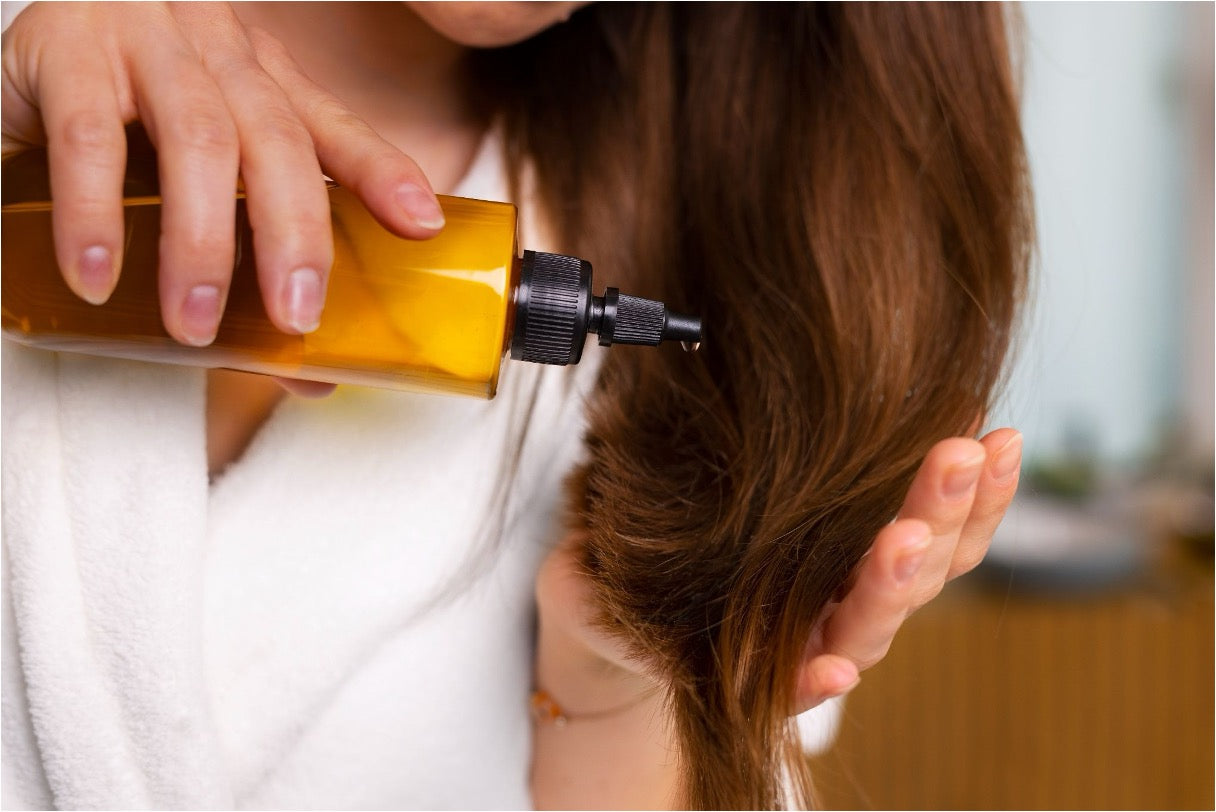
At Trybello, our Trybello Hair Helper Spray Plus is formulated with Capixyl™, a biomimetic peptide combined with red clover extract rich in the antioxidant Biochanin A, plus biotin and caffeine to support stronger, fuller-looking hair. This advanced formula helps revitalize hair follicles, reduce shedding, and improve hair density without harsh ingredients.
Simply spray 1–2 pumps onto thinning areas once or twice daily, massage into the scalp, and leave it on for at least 30 minutes or overnight. With consistent use, you may notice visible improvements in as little as 4–6 weeks.

Trybello Hair Helper Spray Plus combines Capixyl, biotin, and caffeine to target DHT-related miniaturization directly at the follicle level.
Low-Level Laser Therapy (LLLT)
LLLT delivers specific wavelengths of red light (typically 650–670 nm) directly to the scalp, stimulating cellular energy production within follicle cells. This boost in cellular activity helps extend the anagen phase and improve follicle function. LLLT is most effective in the early-to-mid stages of miniaturization, where follicles are weakened but still active.
Lifestyle & Nutritional Support
Deficiencies in iron, zinc, biotin, vitamin D, and protein have all been associated with accelerated shedding and compromised follicle health. Addressing these through diet or targeted supplementation creates a foundation that makes every other treatment more effective.
Reducing chronic stress through consistent sleep, exercise, and recovery practices also plays a measurable role in keeping cortisol from accelerating follicle deterioration.
Miniaturized Hair vs Normal Hair Shedding: Key Differences Compared
| Feature | Normal Hair Shedding | Miniaturized Hair |
|---|---|---|
| Daily Hair Loss | 50–100 strands as part of a healthy cycle | Gradual increase in shedding as follicles weaken |
| Strand Diameter | Consistent, full thickness | Progressively thinner with each growth cycle |
| Strand Length | Matches your usual hair length | Shorter than expected, even without cutting |
| Pigmentation | Full color retained | Lighter or translucent near the tips |
| Root Bulb | White telogen bulb present | Smaller and underdeveloped |
| Scalp Visibility | No visible change over time | Gradual thinning, the scalp becomes more visible |
| Primary Cause | Natural hair growth cycle | DHT sensitivity, genetics, and hormonal disruption |
| Reversibility | No action needed, part of normal function | Can improve in many cases, with early intervention |
How Trybello Helps Strengthen Hair Affected by Miniaturization

Every ingredient in the Trybello Hair Helper Spray Plus is selected to address a specific factor behind follicle miniaturization.
The difference between normal shedding and miniaturized hair comes down to what's happening inside the follicle. Recognizing that distinction early gives you the best chance of preserving density before the damage becomes irreversible.
Our Trybello Hair Helper Spray Plus is powered by Capixyl™, a biomimetic peptide complex paired with red clover extract that works directly at the follicle to help strengthen hair affected by DHT-driven miniaturization. The formula also includes biotin and caffeine to promote stronger, denser regrowth with consistent daily application. Trybello is a US based company dedicated to clean, science backed haircare, formulated and shipped from the United States. Try it risk-free with our 120-Day Growth Guarantee and see the difference for yourself.
Frequently Asked Questions (FAQs)

Trending Topics




*Disclaimer: Individual results may vary. The information provided in this article is for educational purposes only and is not intended as medical advice. Consult a healthcare professional before starting any new hair or lash care regimen, especially if you have sensitivities or underlying health conditions. Product pricing is subject to change. For full terms, visit Trybello.com.

See our latests posts #TRYBELLO