Female Pattern Hair Loss: Early Signs, Causes & Treatment Options
BY TRYBELLO
Jul 3, 2026

Key Takeaways
- Female pattern hair loss (FPHL) is a progressive, genetic condition in which hair follicles gradually miniaturize under the influence of androgens such as DHT.
- The earliest signs are subtle: a widening center part, a thinner ponytail, and more hair collecting in your brush or shower drain.
- FPHL is driven by genetics and hormones, and its effects intensify with age, particularly around menopause.
- Treatment options range from topicals such as Trybello Hair Helper Spray and minoxidil to prescription medications.
- The Trybello Hair Helper Spray provides a strong entry point into FPHL care, combining caffeine, biotin, castor oil, and rice water extract in a clean formula that fits into any long-term treatment plan.
What are the Signs of Female Pattern Hair Loss?
Female pattern hair loss (FPHL) is the most common form of hair thinning in women, affecting roughly 25% of women by age 49. Unlike sudden, dramatic shedding episodes, FPHL creeps in quietly. It's a slow, progressive process rooted in genetics and hormonal factors, where hair follicles gradually shrink and produce progressively finer, shorter hairs over years or decades.
Rather than the dramatic receding hairline seen in male pattern baldness, FPHL tends to present as diffuse thinning across the top and crown of the scalp. The front hairline is usually preserved, which is part of why it can be so easy to miss early on. Recognizing these early markers is what makes a real difference in outcomes, since treatments work best when they begin before significant follicle miniaturization has occurred.
“Doctor-Approved Natural Spray Rapidly Boosts Growth & Thickness.
Why 100,000+ Women Are Switching to Trybello!"
Join over 100,000 happy customers who've transformed their hair with our doctor-formulated spray in just 12 weeks, rated 4.8/5 by 40,000+ real users.
Proven Natural Ingredients
- • Caffeine Extract – Blocks DHT and boosts blood flow to follicles
- • Biotin – Direct scalp absorption, no pills needed
- • Castor Oil – Soothes inflammation and locks in moisture
- • Rice Water Extract – Strengthens hair and reduces shedding
120-Day Growth Guarantee: No results? 100% money back, no questions asked.


Early Signs of Female Pattern Hair Loss
A Widening Center Part
One of the very first signs women notice is that their center part looks wider than it used to. This happens because hair follicles along the part line are among the first to be affected by the hormonal and genetic factors that drive FPHL. When those follicles begin to miniaturize, the hair shafts they produce become progressively finer and shorter, making the scalp underneath more visible.

One of the earliest signs of female pattern hair loss is a more visible scalp due to progressively thinning hair.
Thinning at the Crown
Crown thinning is the hallmark of female pattern hair loss. It typically begins as a subtle reduction in hair density at the very top of the scalp and spreads outward in a circular pattern. Unlike male pattern baldness, FPHL rarely results in complete baldness, but significant crown thinning is absolutely possible without treatment.
More Hair in Your Brush, Drain, & Pillow
Noticing more hair than usual collecting in your hairbrush, clogging your shower drain, or left behind on your pillow is a signal worth taking seriously. While some daily shedding is completely normal, a sudden or sustained increase in the amount of hair you're losing points to a disruption in the normal hair growth cycle.
In FPHL, the growth phase of each hair follicle progressively shortens. This means more hairs enter the shedding phase at once, and the hairs that grow back are finer and shorter than before.
A Shrinking Ponytail
For women who regularly wear their hair in a ponytail, a measurable reduction in circumference is one of the most reliable early indicators of FPHL. If you've gone from wrapping your hair tie twice to three times, or if your ponytail looks noticeably thinner in photos compared to a year ago, that change in volume is telling you something real.
Causes of Female Pattern Hair Loss
Genetics & Hereditary Factors
Heredity is the primary driver of FPHL. If your mother, grandmother, or other close female relatives experienced hair thinning, your risk is meaningfully elevated. The condition is linked to genetic sensitivity of hair follicles to androgens, which causes follicles to progressively shrink and produce thinner, shorter hairs over time.
Importantly, this genetic predisposition can be inherited from either side of the family. The old belief that hair loss is only passed down through the maternal line has been largely disproven. Checking your family history on both sides gives you a more accurate picture of your personal risk.
Hormonal Changes During Menopause
Estrogen and progesterone help keep hair in the active growing phase longer and slow the effects of androgens on hair follicles. When these hormones decline during perimenopause and menopause, that protective effect diminishes, and the androgens that drive follicle miniaturization become relatively more dominant.
This hormonal shift is why so many women experience a noticeable acceleration in hair thinning during their 40s and 50s. Female pattern hair loss and menopausal hair loss can occur simultaneously, compounding the effect. Different mechanisms drive the two conditions but frequently overlap, making this life stage one of the highest-risk periods for significant hair thinning in women.
It's worth noting that hormonal hair loss from menopause looks different from FPHL in some cases. Menopausal hair loss can present as more diffuse, all-over thinning rather than the crown-and-part-focused pattern of androgenetic alopecia.
Age
The relationship between age and FPHL is straightforward: the longer the genetic and hormonal factors have to work on your follicles, the more pronounced the thinning becomes. Hair thinning is a cumulative process, and the effects compound over time.
Hair follicle miniaturization doesn't happen overnight. It unfolds over years or even decades. By the time thinning is visually obvious, the process has typically already been underway for a long time.
Treatment Options for Female Pattern Hair Loss
1. Trybello Hair Helper Spray
Our Trybello Hair Helper Spray is a non-prescription topical option worth considering for women looking to build a consistent daily foundation into their FPHL treatment plan. Because female pattern hair loss is a long-term condition that responds best to layered, ongoing care, the products you use every day matter as much as the prescription medications your dermatologist may recommend.
The Trybello Hair Helper Spray contains caffeine extract, which has been studied for its ability to disrupt DHT activity at the follicle and encourage the growth phase to run longer than it otherwise would. Biotin contributes to keratin production, which finer, weaker strands rely on for structural integrity; castor oil calms low-grade inflammation, while rice water extract helps thinning hair resist breakage.
The spray is lightweight, absorbs quickly, and has a clean ingredient profile. It is vegan, cruelty-free, and free from parabens, sulfates, and synthetic fragrances, making it compatible with prescription regimens and gentle enough for daily use on sensitive scalps.

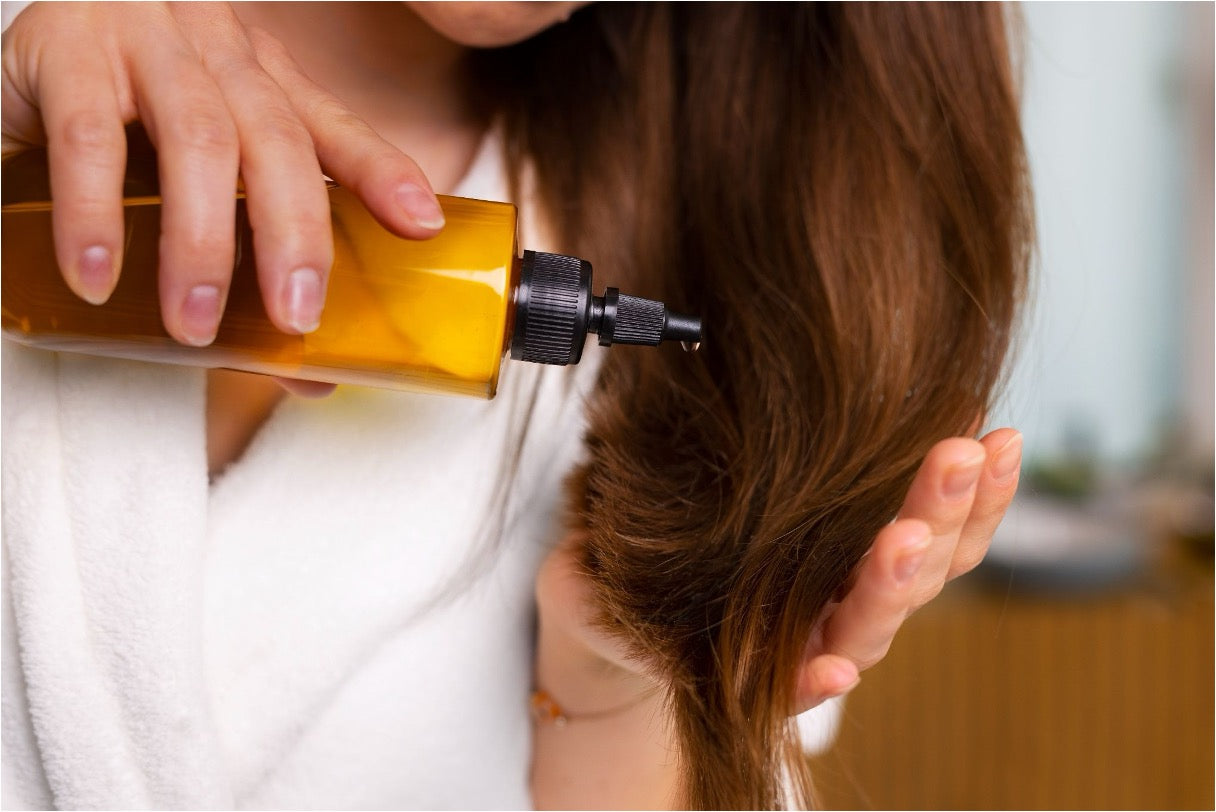
The Trybello Hair Helper Spray works with all textures and is designed to fit into your current hair regimen.
2. Minoxidil
Minoxidil is an FDA-approved topical treatment for female pattern hair loss and remains one of the most well-studied options available. It works by prolonging the anagen (growth) phase of the hair cycle and increasing blood flow to hair follicles, which encourages thicker, longer hair growth over time.
Results with minoxidil take time. Most women begin to see meaningful improvement after 3 to 6 months of consistent, twice-daily application. Note that minoxidil does not cure FPHL; it manages it. If you stop using it, the hair loss will resume.
This makes it a long-term commitment rather than a short-term fix, and it's most effective when started while the hair follicles are still active.
3. Prescription Medications
For women whose FPHL is significantly driven by hormonal factors, prescription medications may be recommended alongside topical treatments.
Hormone replacement therapy (HRT) may additionally be considered for women experiencing simultaneous menopausal hair loss, as restoring estrogen levels can help reduce the relative dominance of androgens.
These options require guidance from a dermatologist or physician, and individual suitability varies based on health history.
Treatment Options for Female Pattern Hair Loss: Summary Table
| Treatment | Type | Best For |
|---|---|---|
| Trybello Hair Helper Spray | Topical Spray | All stages of FPHL, Early-stage thinning, daily maintenance, guaranteed results backed by a clean ingredient profile |
| Minoxidil 2% or 5% | Topical Solution/Foam | Mild to moderate FPHL |
| Prescription Medications | Oral Prescription | Hormonal/androgen-driven FPHL |
Why the Trybello Hair Helper Spray Wins for Female Pattern Hair Loss

Trybello Hair Helper Spray is designed to block DHT, while strengthening hair from the roots and reducing shedding.
FPHL is one of the most manageable forms of hair loss when it's caught early and approached with a long-term plan. What the treatment options above all share is that they work best when used consistently over months rather than weeks, and often in combination rather than in isolation. Daily topical care provides the follicle-level support that makes any intervention more effective.
Our Trybello Hair Helper Spray is a simple daily application that gently eases scalp inflammation, strengthens your hair, and reduces shedding. Many users notice improvements in shedding and volume within 4 to 6 weeks with daily use, though the fuller benefit typically emerges alongside a broader treatment plan over several months. Every order is also backed by our 120-Day Growth Guarantee. Add the Trybello Hair Helper Spray to your routine to notice the Trybello difference in your hair risk-free.
Frequently Asked Questions (FAQs)

Trending Topics




*Disclaimer: Individual results may vary. The information provided in this article is for educational purposes only and is not intended as medical advice. Consult a healthcare professional before starting any new hair or lash care regimen, especially if you have sensitivities or underlying health conditions. Product pricing is subject to change. For full terms, visit Trybello.com.

See our latests posts #TRYBELLO