Menopause Hair Thinning at the Temples: Causes & Remedies
BY TRYBELLO
Jul 23, 2026

Key Takeaways
- Temple thinning during menopause happens when falling estrogen lets dihydrotestosterone (DHT) shrink follicles that are already genetically sensitive to it.
- Tight hairstyles, low iron, vitamin D, biotin, or zinc, chronic stress, and certain medications each compound the hormonal trigger and speed up temple loss.
- Topical DHT blockers such as saw palmetto, pumpkin seed oil, and rosemary oil offer the most direct way to slow miniaturization at the temples.
- Scalp massage, a protein-rich anti-inflammatory diet, and hormone replacement therapy (HRT) round out the remedies, with daily consistency being what makes any of them work.
- Trybello Hair Helper Spray Plus delivers Capixyl, biotin, and caffeine straight to the temples, targeting DHT-driven miniaturization where menopausal thinning shows first.
Understanding Menopause Hair Thinning at the Temples
Roughly 52% of postmenopausal women between 50 and 65 experience some hair thinning or loss, according to a 2022 study in the journal Menopause. So if it's showing up at your temples, you're not alone.
Temple thinning takes hold during menopause when falling estrogen loosens its check on dihydrotestosterone (DHT). The hormone binds to sensitive follicles and shrinks them cycle after cycle, and the temples show it first because their follicles react most strongly.
Slowing it down means working two fronts at once: DHT-blocking topicals applied right at the temples and internal nutritional support. Products like Trybello Hair Helper Spray Plus deliver their actives straight to the scalp, where early intervention makes the biggest difference.
“Enhanced with Capixyl™ for 2X Faster Results! Why Smart Women Are Upgrading to Bello Hair Helper Spray Plus!"
Experience accelerated hair transformation with our enhanced formula featuring scientifically-proven Capixyl™. See visible growth in just 4 weeks, not 12.
Advanced Natural Formula with Capixyl™
- • Capixyl™ – Clinically proven to lower DHT levels and stimulate follicles for 2X faster growth
- • Enhanced Biotin – Maximum scalp absorption for accelerated thickness
- • Caffeine Extract – Boosts ingredient absorption and blood circulation
- • Rice Water + Red Clover – Reduces shedding by up to 60%
120-Day Growth Guarantee: No results after 4 months? Full refund, no questions asked.


Why Does Menopause Trigger Hair Loss?
During menopause, your body goes through a dramatic hormonal shift. Estrogen and progesterone, two hormones that directly support hair growth, decline sharply. These hormones help keep hair in its active growing phase (the anagen phase) for longer. When they drop, hair cycles through faster, spending more time in the shedding phase and less time growing.
At the same time, androgens (male hormones like testosterone and DHT) become relatively more dominant in the body. DHT, or dihydrotestosterone, is particularly problematic. It binds to hair follicle receptors and causes them to shrink over time, a process called follicle miniaturization. The temples are among the areas most vulnerable to DHT's effects, which is why thinning there can become noticeable during menopause.
There's also a secondary factor that often goes unmentioned: the scalp itself changes during menopause. Reduced estrogen means less collagen and sebum production, making the scalp drier and less hospitable to healthy follicle function. This creates an environment in which hair has a harder time growing back as thick or as strong as it once was.
Other Possible Causes of Temple Hair Thinning During Menopause
Menopause creates the hormonal conditions that contribute to hair thinning, but it rarely acts alone. Several other factors can accelerate or worsen temple hair loss during this life stage.
Traction Alopecia
Traction alopecia is hair loss caused by repeated tension or pulling on the hair follicles. Tight ponytails, braids, buns, and certain hair extensions are common culprits.
The temples and hairline are the most exposed areas to this type of mechanical stress, and if you've worn tight styles regularly over the years, the follicle damage can compound the hormonal thinning already happening during menopause.

Unlike hormone-driven loss, traction alopecia can become permanent if the tension isn't relieved early enough.
Vitamin Deficiencies
Nutritional gaps are incredibly common during and after menopause, and several specific deficiencies are directly linked to hair thinning.
Iron deficiency is one of the most significant because ferritin (stored iron) is needed to support the hair growth cycle, and low levels have been associated with increased shedding. Vitamin D, biotin, and zinc also play important roles in follicle health.
It's worth noting that while vitamin and mineral deficiencies can contribute to hair loss, no supplements are currently FDA-approved specifically for menopause-related hair loss. That said, correcting a documented deficiency through diet or supplementation can make a difference in hair shedding and quality.
Chronic Stress
Chronic stress triggers a condition called telogen effluvium, a widespread shedding event in which a large number of hairs enter the resting (telogen) phase simultaneously.
During menopause, the body is already under significant physiological stress from hormonal changes, and emotional or psychological stress on top of that can dramatically accelerate shedding.
Medications
Certain medications commonly prescribed during menopause and midlife can contribute to hair thinning as a side effect. These include blood thinners, antidepressants, beta-blockers, and some cholesterol-lowering drugs.
If you started a new medication around the same time your hair began thinning, it's worth discussing with your doctor, as a simple adjustment could make a significant difference.
Remedies That Slow Menopausal Temple Hair Thinning
The right approach to menopausal temple thinning combines targeted ingredients, lifestyle adjustments, and, where appropriate, medical support.
1. Products with DHT Blockers
Since DHT is a primary driver of follicle miniaturization at the temples, using products that inhibit DHT activity at the scalp level is one of the most direct and effective natural strategies available. One standout product is our Trybello Hair Helper Spray Plus infused with Capixyl™, an active complex clinically proven to lower DHT levels, combined with biotin and argan oil to improve hair growth.
Other well-researched natural DHT blockers include saw palmetto, pumpkin seed oil, rosemary oil, and stinging nettle root.
2. Hormone Replacement Therapy (HRT)
For women experiencing significant menopausal symptoms alongside hair loss, hormone replacement therapy (HRT) can be one of the most effective medical interventions available.
By restoring estrogen and progesterone to more optimal ranges, HRT can slow the hormonal cascade that triggers follicle miniaturization. However, the decision to pursue hormone therapy should always involve a thorough evaluation of individual risk factors with a qualified healthcare provider.
3. Nutrition & Dietary Supplements

Aim for high-quality protein sources at every meal: eggs, legumes, fish, and lean poultry.
What you eat directly impacts the quality and quantity of your hair. A protein-rich diet is foundational because hair is made almost entirely of keratin, a structural protein, and inadequate protein intake accelerates shedding.
Beyond protein, anti-inflammatory foods like fatty fish, walnuts, flaxseeds, and leafy greens support scalp circulation and reduce the oxidative stress that damages hair follicles.
If dietary intake alone isn't enough, targeted supplementation with iron (if deficient), vitamin D, zinc, and biotin can help fill the gaps, but always test before supplementing, particularly for iron, to avoid toxicity.
4. Scalp Massage
Scalp massage is an underrated and completely free tool for supporting hair health. A 2016 study published in ePlasty found that just 4 minutes of daily standardized scalp massage over 24 weeks increased hair thickness among participants.
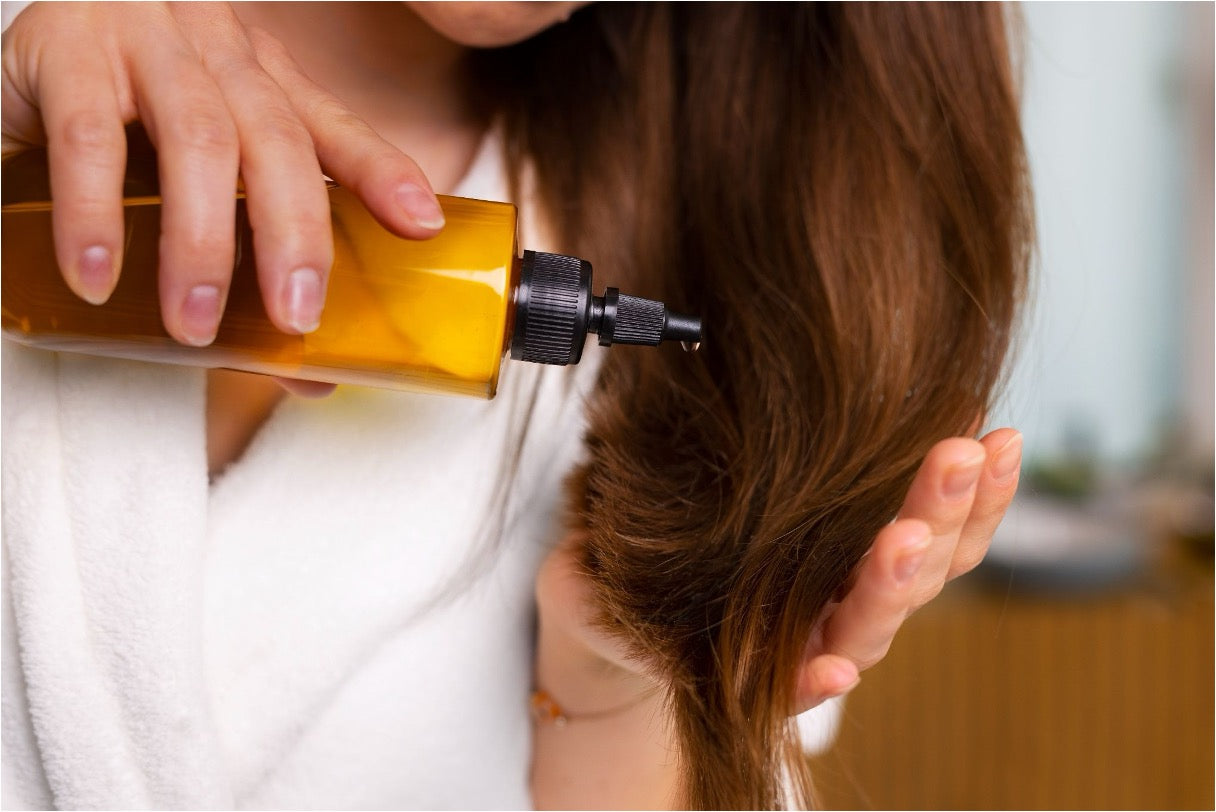
Mechanical stimulation increases blood flow to the scalp, delivering more oxygen and nutrients directly to the hair follicles. For enhanced results, apply a few drops of rosemary or pumpkin seed oil to the fingertips, then massage in firm circular motions along the temples and hairline for 3 to 5 minutes daily.
How Trybello Helps Restore Thinning Temples During Menopause

The Trybello Hair Helper Spray Plus formula targets the hormonal surge behind temple thinning while protecting follicles from the oxidative stress that menopause amplifies.
Temple thinning during menopause results from hormonal, nutritional, and environmental changes converging on follicles that are already vulnerable to DHT. Addressing it effectively means working on both fronts: applying targeted care directly to the scalp where thinning is visible and supporting your body internally with the nutrients and adaptogens that menopause depletes.
Our Trybello Hair Helper Spray Plus delivers Capixyl, biotin, and caffeine topically to the temples and scalp to address DHT-driven miniaturization, while the Trybello Daily Hair Booster Capsules provide saw palmetto, ashwagandha, fish collagen, and vitamin D3 to address hormonal and nutritional gaps that accelerate thinning. Together, they create a complete daily regimen tailored to the specific mechanisms underlying menopausal hair loss. Shop both products and take advantage of our 120-Day Growth Guarantee today.
Frequently Asked Questions (FAQs)

Trending Topics




*Disclaimer: Individual results may vary. The information provided in this article is for educational purposes only and is not intended as medical advice. Consult a healthcare professional before starting any new hair or lash care regimen, especially if you have sensitivities or underlying health conditions. Product pricing is subject to change. For full terms, visit Trybello.com.

See our latests posts #TRYBELLO