Capixyl vs Rosemary Oil for Hair Growth: Benefits, Side Effects & Reviews
BY TRYBELLO
Nov 17, 2026

Key Takeaways
- Capixyl pairs a peptide with red clover extract to support follicle anchoring and target DHT, while rosemary oil works partly through antioxidant and anti-inflammatory activity on the scalp.
- Capixyl’s benefits include more hairs in the active growth phase and an easy fit in lightweight sprays, while rosemary oil suits scalp massage and builds hair count gradually.
- Rosemary oil’s side effects include scalp itching, redness, and burning, especially when undiluted, while Capixyl combination formulas showed no local adverse reactions in a 24-week study.
- Capixyl reviews often mention fuller-looking hair and less shedding after about two months, while rosemary oil reviews praise shine and softness but report mixed growth results.
- Trybello Hair Helper Spray Plus offers Capixyl in a spray that needs no mixing or dilution, and every bottle is covered by a 120-Day Growth Guarantee.
How Capixyl Stands Apart From Rosemary Oil
Capixyl stands apart from rosemary oil mainly in formulation: one is a lab-built peptide and botanical complex, the other a single essential oil that requires dilution before use. That difference shapes application, consistency, and how predictably each one performs from bottle to bottle.
Choosing wrong costs more than time. Undiluted rosemary oil can irritate the scalp and trigger itching or redness, and homemade blends change in strength from one batch to the next. Capixyl products vary as well, since concentration and supporting ingredients differ between brands, so a clearly labeled formula from a trusted brand matters as much as the ingredient itself.
Trybello Hair Helper Spray Plus pairs Capixyl with caffeine and biotin in a dermatologically tested formula from a US-based brand.
"Enhanced with Capixyl™ for Faster Results! Why Smart Women Are Upgrading to Trybello Hair Helper Spray Plus!"
Experience accelerated hair transformation with our enhanced formula featuring scientifically proven Capixyl™. See visible growth in as fast as 4 weeks.

Advanced Natural Formula with Capixyl™
- ✓ Capixyl™ – Clinically proven to lower DHT levels and stimulate follicle growth
- ✓ Biotin – Supports keratin production for stronger, healthier hair
- ✓ Caffeine – Boosts absorption of active ingredients for maximum effectiveness


Capixyl vs Rosemary Oil: How Do They Work for Hair Growth?
How Capixyl Works
Capixyl combines two active components: acetyl tetrapeptide-3, a small manufactured peptide, and red clover extract, which contains a plant compound called biochanin A. Laboratory research suggests the peptide supports proteins involved in keeping hair anchored within the follicle's supportive structure.
Biochanin A has shown activity against an enzyme involved in producing DHT, the hormone linked to follicle shrinkage in people prone to pattern hair loss. Together, the two components target both the structural and hormonal sides of thinning hair rather than just one.
How Rosemary Oil Works
Rosemary oil's potential benefits are generally tied to its antioxidant and anti-inflammatory properties, along with possible effects on scalp circulation. Lab research has also found that rosemary leaf extract can inhibit the same DHT-producing enzyme that Capixyl’s biochanin A targets.
Researchers have not pinned down exactly how much each mechanism contributes to visible hair growth in people, which makes rosemary’s benefits harder to isolate than Capixyl’s more clearly defined dual action.
Benefits of Capixyl vs Rosemary Oil
Benefits of Capixyl for Hair Growth
1. Improves the Growing-to-Resting Hair Ratio
The clearest documented benefit of Capixyl is its effect on the hair growth cycle itself. The evidence for this benefit comes from a four-month study of 30 men with pattern hair loss. Fifteen used a lotion containing 5% Capixyl while fifteen used a placebo, applying it daily.
The Capixyl group's ratio of growing to resting hairs increased by 46%, while the placebo group's ratio actually dropped by 33%. That's a measurable shift in the proportion of hairs actively growing at any given time, which is a different and arguably more useful metric than simply counting total strands.
2. Supports the Structures Surrounding Each Follicle
Capixyl's peptide component appears to support the proteins that keep hair anchored within its follicle, while the red clover extract's biochanin A content targets the DHT-producing enzyme linked to follicle shrinkage. This dual action gives Capixyl a few distinct practical advantages over a single-mechanism ingredient:
- Addresses both the structural anchoring of each strand and the hormonal process behind follicle shrinkage
- Comes from a purpose-built cosmetic complex rather than a single unprocessed plant extract
- Works as a ready-made ingredient that formulators can build into lotions, serums, and sprays without extra processing
3. Fits Easily Into Lightweight Serums & Sprays
Because Capixyl is a manufactured complex rather than a raw essential oil, it blends into water-based formulas without the greasy residue that oils can leave behind. Formulators can mix it into lotions, serums, and scalp sprays at controlled concentrations, which means the finished product can stay lightweight even on fine or fast-oiling hair. Whether a Capixyl product feels heavy or light depends on the full formula around it, not on Capixyl itself.
Benefits of Rosemary Oil for Hair Growth
1. Increases Hair Count After Six Months of Use
The most cited rosemary study followed 100 men with pattern hair loss for six months. Fifty used a rosemary oil formulation, and fifty used minoxidil. Neither group showed a significant increase in average hair count at three months, but both groups showed a significant increase by six months, and researchers found no statistically significant difference between the groups.
That timeline matters. Rosemary oil is not a fast-acting treatment, and anyone expecting visible change within the first few weeks is likely to give up before the ingredient has a chance to work.
2. Delivers Antioxidant & Anti-Inflammatory Support
Rosemary oil contains naturally occurring compounds linked to antioxidant, anti-inflammatory, and antimicrobial activity. Researchers have not determined exactly how much each of these properties contributes to visible hair growth, but the combination is thought to support a calmer, less inflamed scalp environment.
3. Fits Naturally Into Scalp Massage Routines
Rosemary's oil-based format makes it a natural fit for scalp massage, a practice many people already incorporate into their hair care. Ready-made rosemary hair oils that combine rosemary with a carrier oil can also improve softness and shine, though much of that conditioning benefit likely comes from the carrier oil itself rather than rosemary. Smoother, shinier strands should not be mistaken for an actual increase in the number of growing hairs.

Rosemary essential oil is usually sold in dark amber bottles, which shield its aromatic compounds from light that can break them down over time.
Capixyl vs Rosemary Oil Side Effects
Capixyl Side Effects
In a 24-week study of an herbal formula combining biochanin A and acetyl tetrapeptide-3 with ginseng extract and sage oil, researchers observed no local adverse reactions among participants. That said, finished Capixyl products always contain other supporting ingredients, and individual sensitivities vary from person to person.
Follow the finished product's label instructions, test a small area before wider application, avoid contact with eyes, and stop use if persistent itching, redness, burning, or a rash develops. Anyone pregnant or breastfeeding should consult a healthcare professional before use.
Rosemary Oil Side Effects
Rosemary oil can cause scalp irritation, particularly when used undiluted or in excessive amounts. Possible reactions include itching, redness, burning, and inflammation, and natural origin does not make an essential oil automatically gentle.
In the 2015 clinical trial, scalp itching increased from baseline in both the rosemary and comparison groups, though it was reported more frequently in the comparison group. Oil-based products can also feel heavy on fine hair, and people prone to dandruff or scalp inflammation may find oiling routines unsuitable altogether.
What Do Users Say About Capixyl vs Rosemary Oil for Hair Growth?
Capixyl Reviews
Testimonials describing Capixyl-based products often mention fuller-looking hair, improved perceived thickness, and reduced visible shedding over time. A common thread across these reviews is timing: many users describe hair that feels denser after about two months of steady use, and some notice small new sprouts appearing at around the same stage.
It's worth remembering that customer experiences reflect the complete formula a person used, not Capixyl in isolation. A spray or serum built around Capixyl also contains other active ingredients, and any reported improvement reflects the combined effect of everything in the bottle.

Long-standing thin spots can respond too, with one Trybello Hair Helper Spray Plus customer seeing her crown fill in after two years of sparse coverage.
Rosemary Oil Reviews
Reviewers describe rosemary oil blends as improving shine and softness fairly quickly, though opinions on actual growth split more evenly than Capixyl testimonials tend to. Some praise six-month-plus use for visibly fuller coverage, mirroring the clinical trial's own timeline, while others report scalp itching or irritation, a side effect also recorded in the 2015 trial itself.
Capixyl vs Rosemary Oil for Hair Growth: Comparison Table
| Feature | Capixyl | Rosemary oil |
|---|---|---|
| Composition | Peptide and red clover extract | Botanical essential oil |
| How it works | May support follicle anchoring and target DHT-related pathways | Offers antioxidant and anti-inflammatory support, with some lab evidence against DHT |
| Growth evidence | Improved growing-to-resting hair ratio in a small four-month study | Increased hair count after six months in one trial |
| Application | Available in ready-made serums and sprays | Requires dilution or a prepared blend |
| Texture | Can suit lightweight formulas | Oil blends may feel heavy |
| Side effects | Possible irritation depending on formula and sensitivity | Possible itching, redness, and burning |
| Reviews | Fuller-looking hair and reduced shedding reported | Softness and shine reported; growth experiences vary |
Trybello Hair Helper Spray Plus Brings Capixyl Into a Ready-to-Use Formula

With consistent daily use, Trybello Hair Helper Spray Plus is designed to deliver fuller, thicker-looking strands in as little as 12 to 16 weeks.
Rosemary oil appeals because it is familiar and easy to find, but every bottle varies, and getting the dilution right falls to the user. Capixyl arrives as a standardized complex in a finished formula, which takes that guesswork out of a routine that needs months of steady use to show results.
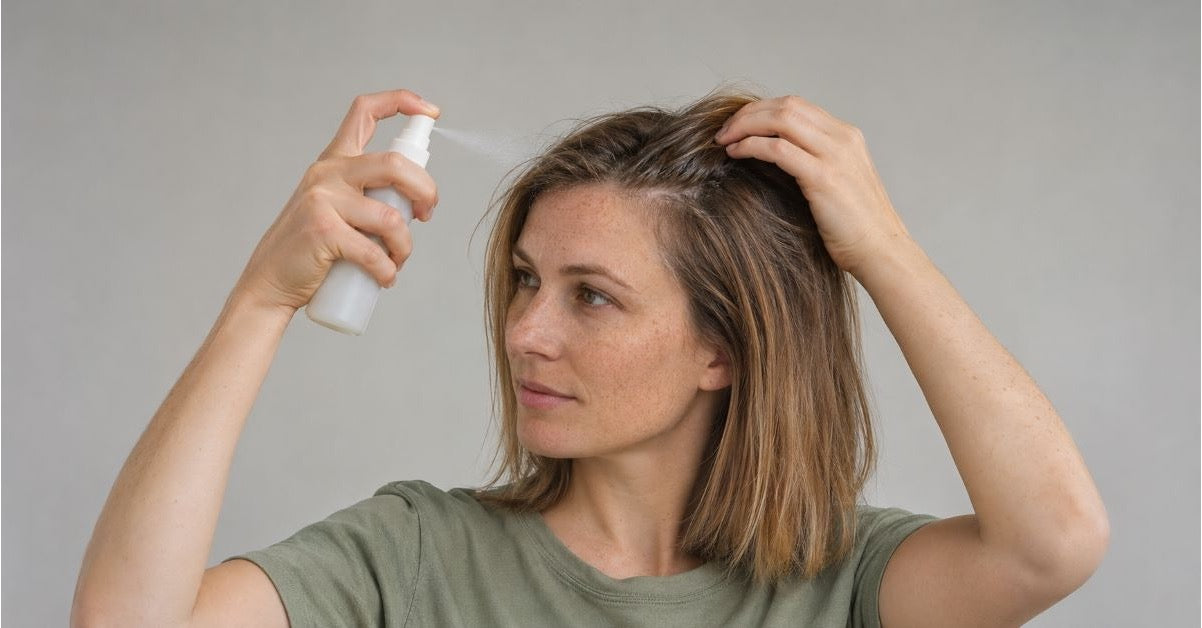
Trybello Hair Helper Spray Plus gives you Capixyl in a measured spray that goes straight onto thinning areas, with no carrier oils to mix or rinse out. We added caffeine to keep follicles active and biotin to reinforce each strand. Add it to your routine today, backed by our 120-Day Growth Guarantee.
Frequently Asked Questions (FAQs)

Trending Topics





*Disclaimer: Individual results may vary. The information provided in this article is for educational purposes only and is not intended as medical advice. Consult a healthcare professional before starting any new hair or lash care regimen, especially if you have sensitivities or underlying health conditions. Product pricing is subject to change. For full terms, visit Trybello.com.

See our latests posts #TRYBELLO