Menopause Dry Scalp: Causes, Symptoms & Remedies
BY TRYBELLO
Nov 12, 2026

Key Takeaways
- Declining estrogen during perimenopause and menopause weakens the scalp’s moisture barrier and shifts sebum production, leaving it drier, flakier, and more reactive to everyday hair products.
- Common signs include tightness after washing, small loose flakes, and intermittent itching that can begin years before a final period.
- Cold weather, heated indoor air, and product changes can compound hormone-driven dryness, so symptoms often worsen seasonally or after switching shampoos, dyes, or styling treatments.
- Switching to a gentle shampoo, using lukewarm water, and removing recently added hair products are standard first steps for mild, hormone-related scalp dryness.
- Trybello’s Hair Growth Shampoo & Strengthening Conditioner Set pairs a sulfate-free shampoo made with aloe vera and turmeric with a conditioner made with camellia japonica and shea butter.
What is Menopause Dry Scalp?
Menopause dry scalp is a change many women notice during perimenopause and menopause, when the scalp becomes drier, more easily irritated, and less tolerant of products it once handled without trouble. At first, people often blame a bad shampoo or cold weather, and while those can play a part, the shift usually has more than one cause at the same time.
In most cases, the dryness is mild and can be managed at home, but its flaking and itching can look a lot like seborrheic dermatitis or psoriasis, which need medicated care. Telling them apart early matters, because a gentle, moisturizing routine that calms hormone-related dryness will do very little for a scalp condition that needs a medicated shampoo.
"Sulfate-Free Hair Growth Duo Delivers Thicker, Fuller Hair Without Harsh Chemicals. Women Rate This Clean Formula 4.8/5 Stars!"
Transform your routine with plant-based shampoo and conditioner that deeply cleanse, nourish, and stimulate growth while protecting the scalp's natural oils, rated 4.8/5 by 40,000+ real customers.

Growth-Boosting Ingredients
- ✓ Aloe Vera & Turmeric – Cleanses and promotes root growth without stripping oils
- ✓ Urcuum Extract – Creates protective barrier against UV damage
- ✓ Camellia Japonica & Shea Butter – Soothes inflammation, deeply hydrates
Clean Beauty Benefits
- ✓ Sulfate-free, vegan, and cruelty-free
- ✓ Plant-based actives with no harsh chemicals
- ✓ Made by USA-based startup

What Causes Dry Scalp During Menopause?
Genetic Factors
Estrogen plays a direct role in skin hydration and barrier function, and when levels fall, the scalp's protective barrier weakens along with it. Sebum output also shifts: it fluctuates during perimenopause as estrogen levels swing, then falls markedly later in menopause, leaving the scalp with less of the natural oil that normally keeps it lubricated.
These changes don't wait for menopause to officially begin. They can start during perimenopause, the transition period leading up to it, which is why scalp dryness often shows up years before a final period.
Natural Aging & Thinner Skin Barriers
Skin generally becomes drier with age regardless of hormone status, so new scalp dryness in midlife is rarely explained by estrogen decline alone. It's usually a combination of factors working together:
- Natural thinning of the skin barrier that comes with age
- Hormonal changes tied to perimenopause and menopause
- Cumulative sun and environmental exposure over decades
- Reduced moisture retention as skin cells turn over more slowly
Because these causes overlap, a remedy that only addresses hormones while ignoring general skin aging often falls short. A scalp care routine built for mature, hormonally shifting skin tends to perform better than one borrowed from your twenties.
Cold Weather & Low Indoor Humidity
Cold air holds less moisture, and heated indoor environments during winter months strip even more humidity from the air around you. For a scalp already struggling to retain moisture because of hormonal changes, this seasonal dryness compounds the problem. Symptoms often get noticeably worse in winter and ease up when warmer, more humid weather returns.
Hair Products That Trigger Scalp Irritation
Shampoos, dyes, and styling products can strip natural oils or introduce fragrances and chemicals that irritate an already sensitive scalp. This can trigger contact dermatitis, which causes itching, dryness, irritation, or a visible rash wherever the product touched the skin. A scalp that tolerated a particular shampoo for years may suddenly react to it once menopause changes the skin's baseline sensitivity.
Recognizing a product-related trigger is usually straightforward if you pay attention to timing. Symptoms that start shortly after switching shampoo, dye, or a new styling treatment point toward the product rather than hormones as the primary cause, which means the fix is simplification rather than more treatment.

Dry shampoos and styling sprays can leave residue on the scalp between washes, adding to irritation on sensitive skin.
Symptoms That Point to Menopause-Related Dry Scalp
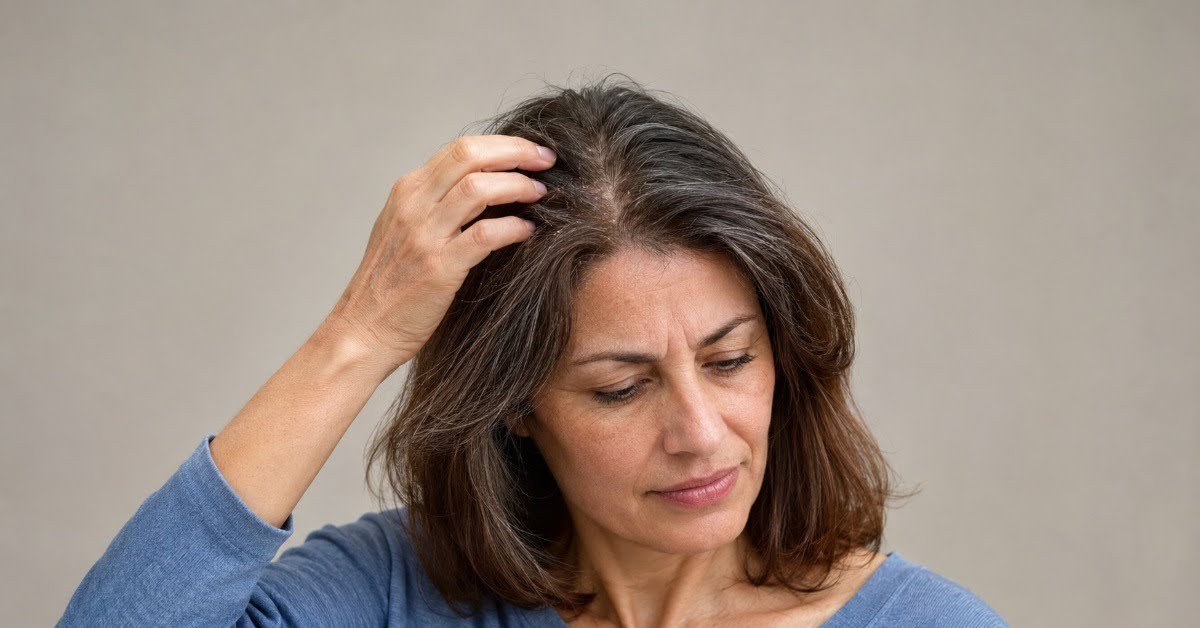
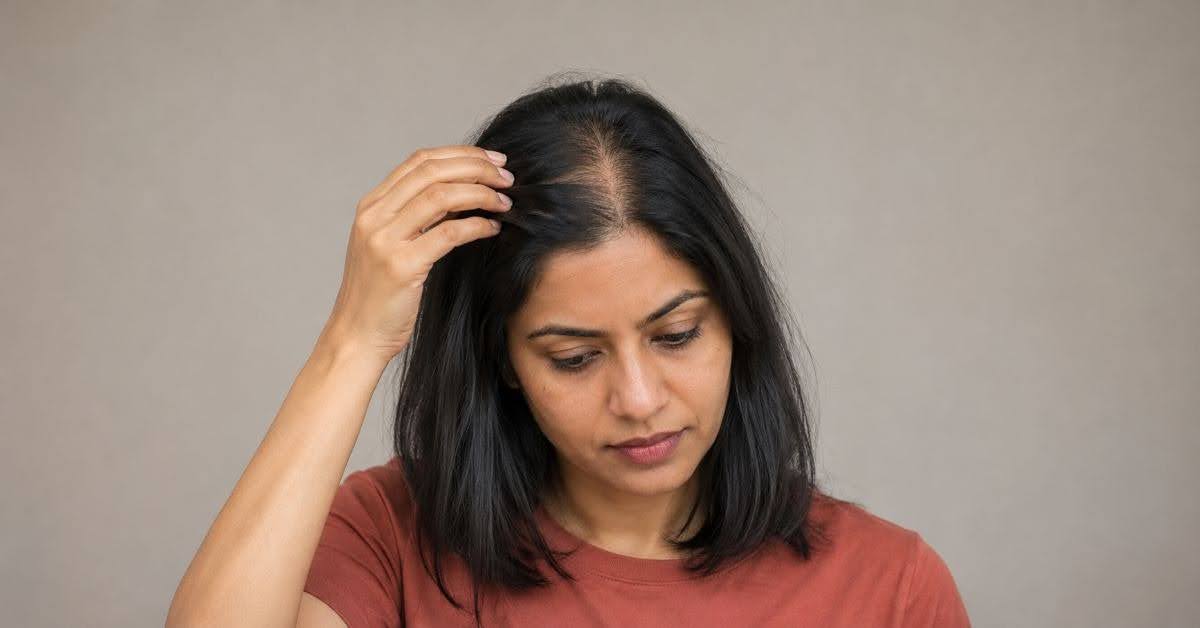
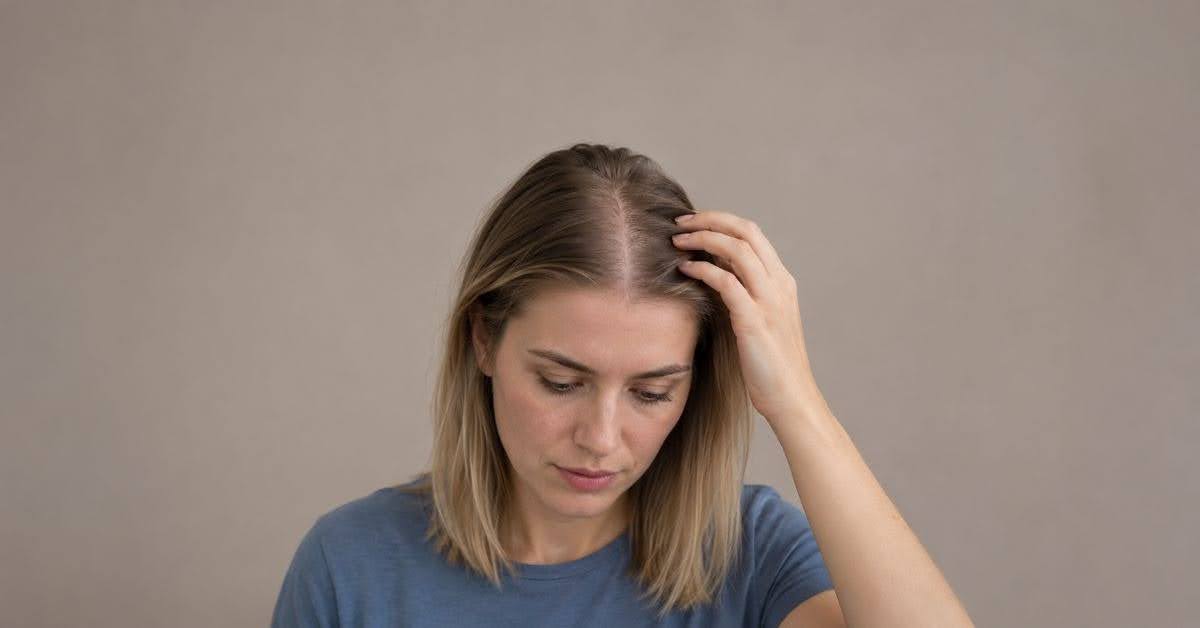
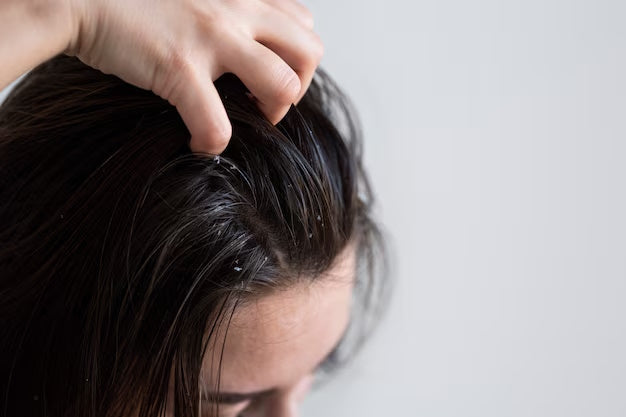
Menopause-related dry scalp usually shows up as itching and flaking that come and go rather than symptoms that are constant or severe. The scalp may feel tight or irritated, especially after washing, and small, loose flakes often appear on the scalp, in the hair, or on dark clothing.
Irritation often becomes more noticeable after using certain products, which is a useful clue that the dryness is reacting to something external on top of the hormonal shift. Severe redness, thick plaques, oozing, marked tenderness, or swelling fall outside typical dry scalp symptoms and shouldn't automatically be chalked up to menopause.

Dry scalp flakes tend to be small, white, and powdery, while dandruff flakes are usually larger, oilier, and yellowish.
How Do You Treat Menopause Dry Scalp?
Most cases of menopause-related dry scalp respond well to simple adjustments in how you cleanse, moisturize, and protect the scalp day to day. The goal is to restore what declining estrogen and slower sebum production have taken away, without introducing new irritants in the process.
Switch to a Gentle, Moisturizing Shampoo
A gentle, non-medicated shampoo is a reasonable first step for uncomplicated dryness. Look for a formulation intended for dry or sensitive scalps, and consider fragrance-free options if irritation has been part of the picture.
The label matters less than whether the formula suits the scalp's real problem. A shampoo marketed toward menopause but packed with fragrance and sulfates won't help as much as a plain, gentle formula built for sensitive skin.
Harsh sulfates can strip the scalp's already limited natural oils, while gentler surfactants clean without compounding the dryness that hormonal changes have already caused.
Trybello Hair Growth Shampoo follows that approach with a sulfate-free formula made with aloe vera, which helps hydrate the scalp as it cleanses. Using Trybello Hair Growth Conditioner afterward adds moisture back to dry, brittle lengths, so a menopausal scalp and the hair growing from it are cared for in the same routine.
Adjust Washing Frequency to the Scalp’s Needs
If frequent washing leaves your scalp feeling stripped or tight, washing less often may help preserve the natural oil your scalp still produces. There's no single schedule that works for everyone. Scalp comfort, oiliness, hair-care needs, and any diagnosed condition should all factor into how often you wash.
Regular cleansing can actually help with mild dandruff, while seborrheic dermatitis may require a specific medicated washing routine instead. That distinction is worth sorting out before assuming that washing less is automatically the right call for your scalp.
Remove Likely Irritants
If symptoms started after a new shampoo, dye, styling product, or scalp treatment, stopping the suspected product and simplifying the routine is the most direct fix. Some people also react to specific essential oils, so pause any product containing them if irritation started soon after you began using it.
Resist the urge to layer new treatments onto an already irritated scalp. Adding more products to fix irritation often backfires, since each new ingredient is one more potential trigger for a scalp that's already reacting.
Consider a Humidifier in Dry Conditions
Adding moisture to indoor air can help when low humidity is contributing to scalp dryness, particularly during winter months or in climates with dry air year-round. A humidifier works as a supporting measure.
It doesn't replace the need to identify a product reaction or treat an underlying inflammatory scalp condition. Think of it as one piece of a larger routine rather than a standalone fix.
Use Medicated Scalp Treatments When Necessary
Recurring flakes paired with oiliness or visible inflammation point toward a condition that needs more than moisture. A medicated anti-dandruff shampoo with an antifungal or anti-flaking active is designed for that situation, and you should use it according to the product’s directions rather than as an everyday cleanser. If symptoms persist despite treatments, see a dermatologist.
Care for Menopause Dry Scalp with Trybello’s Shampoo & Conditioner Set

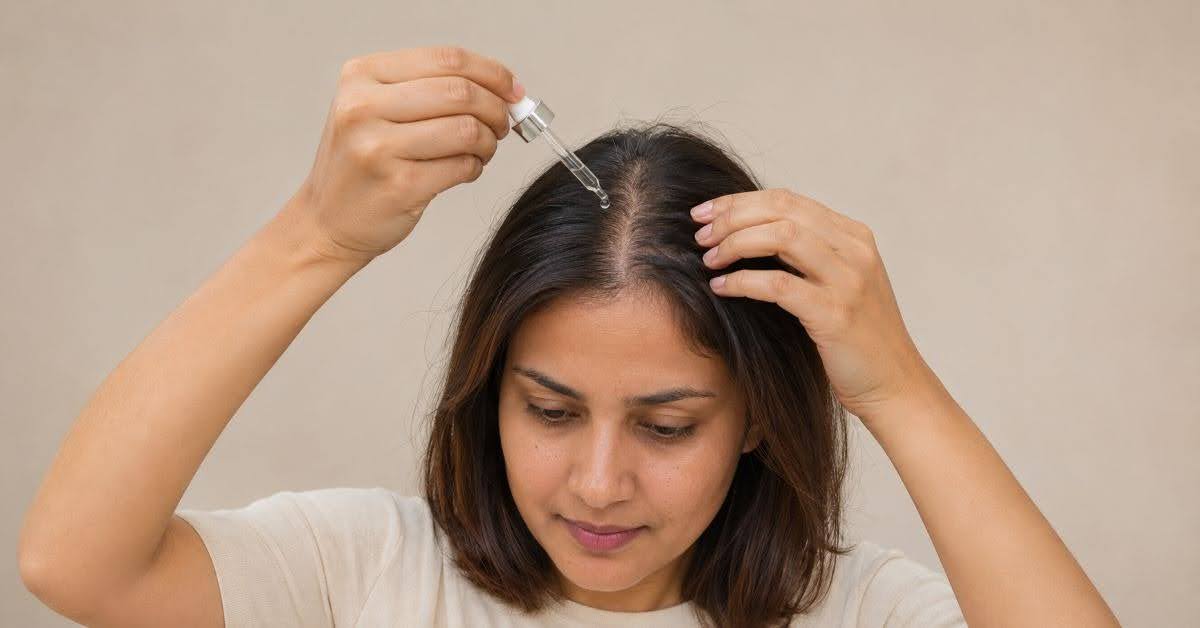
Trybello Hair Growth Shampoo works best when massaged in and left on for two minutes before rinsing, followed by Trybello Hair Growth Conditioner.
Menopause dry scalp can come from declining estrogen, seasonal dryness, or a reaction to a product you use every day. Each of these needs a different fix, so finding the real trigger saves months of trial and error. For most women, a gentler wash routine is the simplest place to start.
We made the Trybello Hair Growth Shampoo to clean without stripping a scalp that’s already low on oil, using aloe vera and panthenol to help it hold moisture. The Trybello Hair Growth Conditioner then softens dry lengths with jojoba and camellia oils. Try the Trybello Hair Growth Shampoo & Strengthening Conditioner Set risk-free for 120 days with our growth guarantee.
Frequently Asked Questions (FAQs)

Trending Topics


*Disclaimer: Individual results may vary. The information provided in this article is for educational purposes only and is not intended as medical advice. Consult a healthcare professional before starting any new hair or lash care regimen, especially if you have sensitivities or underlying health conditions. Product pricing is subject to change. For full terms, visit Trybello.com.

See our latests posts #TRYBELLO