Perimenopause Hair Shedding: Causes, Timeline & Remedies
BY TRYBELLO
Nov 09, 2026

Key Takeaways
- Perimenopause shedding can come from hormonal shifts, pattern hair loss, iron deficiency, thyroid disease, illness, restrictive eating, or medication changes.
- A temporary shedding episode can expose pattern thinning that was already there, which makes the two conditions easy to confuse.
- Trigger-related shedding usually appears two to four months later and tapers over six to nine months, but shedding that stays heavy past six months needs reassessment.
- Correcting a confirmed trigger comes first, supported by good nutrition, stress management, gentle hair care, and topical options where pattern thinning is involved.
- Trybello Hair Helper Spray contains Sophora flavescens and angelica root with rice extract, caffeine, and biotin to support hormone-related thinning, backed by a 120-day growth guarantee.
Is Hair Shedding Normal During Perimenopause?
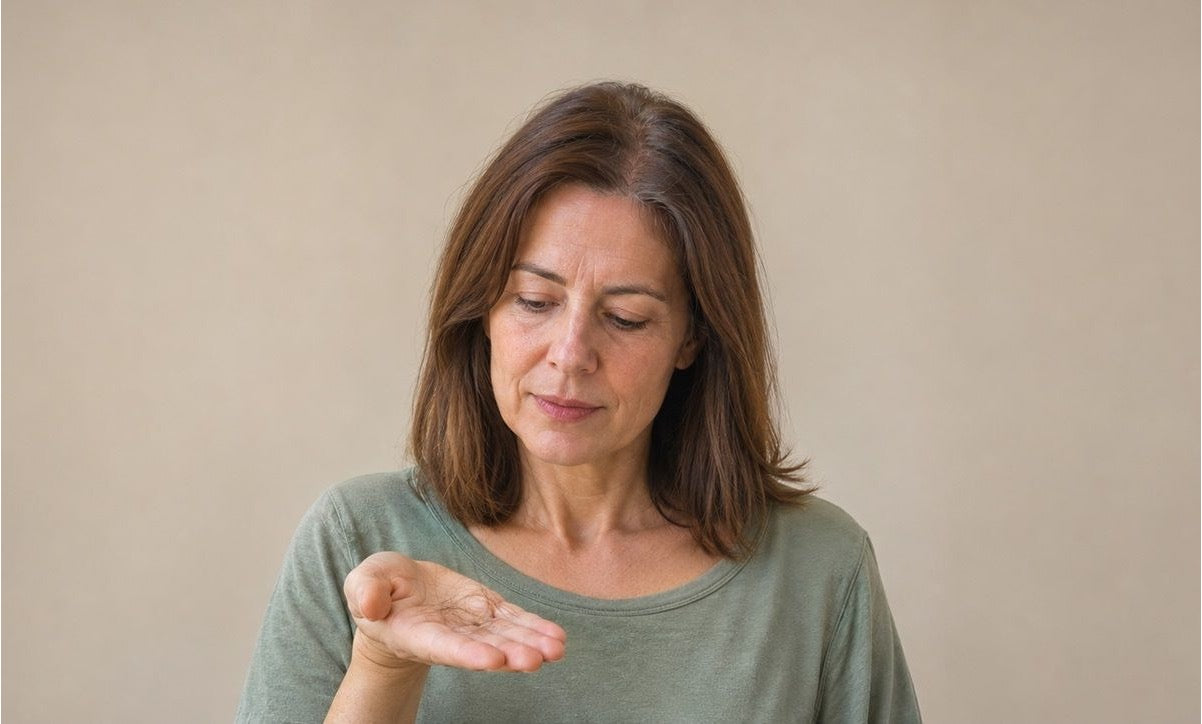
Some hair shedding during perimenopause is normal, but a change from your usual pattern that lasts for weeks is the detail that actually matters, not the raw number of strands in your brush. Most women have no idea what their baseline shedding looks like until it changes, which makes it easy to either panic over normal hair fall or dismiss a genuine problem as "just hormones."
That distinction matters because perimenopause itself is not a reliable standalone explanation for hair loss. A low estrogen reading on a blood test does not identify why a particular woman is shedding, and treatable causes like thyroid disease or iron deficiency can hide behind a perimenopause label for months. Getting the cause wrong delays the right fix, which is why a structured look at timing, pattern and triggers matters more than guessing.
Supportive scalp care has a role here too, even before a cause is confirmed. Trybello Hair Helper Spray is designed as a daily scalp spray that fits into that supportive window, used alongside whatever medical correction a woman's specific trigger requires.
"Doctor-Approved Natural Spray Rapidly Boosts Growth & Thickness. Why 88,000+ Women Are Switching to Trybello!"
Join 88,000+ women who've transformed their hair with our doctor-formulated spray, rated 4.85/5 Excellent by 60,000+ real reviewers.

Proven Natural Ingredients
- ✓ Caffeine – Energizes follicles and supports a longer, healthier growth phase
- ✓ Sophora Flavescens Extract – Revitalizes dormant follicles for improved density
- ✓ Oryza Sativa (Rice) Extract – Antioxidant-rich, protects follicles from oxidative stress
- ✓ Angelica Polymorpha Sinensis Root Extract – Boosts scalp microcirculation and nutrient delivery
- ✓ Biotin – Strengthens hair structure and supports keratin production from within


Causes of Hair Shedding During Perimenopause
Hair shedding during this life stage rarely has one single cause. Hormonal shifts, pattern hair loss, iron deficiency, thyroid disease, illness, restrictive eating and medication changes can all trigger the same visible outcome, which is why two women with "perimenopause hair loss" can need completely different treatments.
Working through these categories one at a time, rather than assuming hormones explain everything, is the fastest way to land on an accurate answer.
Hormonal Fluctuations
During perimenopause, estrogen levels rise and fall unpredictably instead of following their usual monthly cycle. Estrogen helps keep hair in its active growth phase, so when levels drop, more follicles shift into the resting phase at the same time, and those hairs release a few months later as a wave of shedding.
Meanwhile, as estrogen’s protective effect weakens, follicles become more exposed to androgens like dihydrotestosterone (DHT), which can shrink them and produce thinner, shorter strands over time.
That does not mean every woman who sheds during perimenopause has excess testosterone. Most women with female pattern hair loss actually have normal androgen levels, so the issue is often how sensitive the follicles are to the androgens already present, not how much androgen the body produces.
Female-Pattern Hair Loss
Female pattern hair loss causes affected follicles to produce progressively finer, shorter hairs through a process called miniaturization, which reduces scalp coverage and often becomes more obvious in midlife.
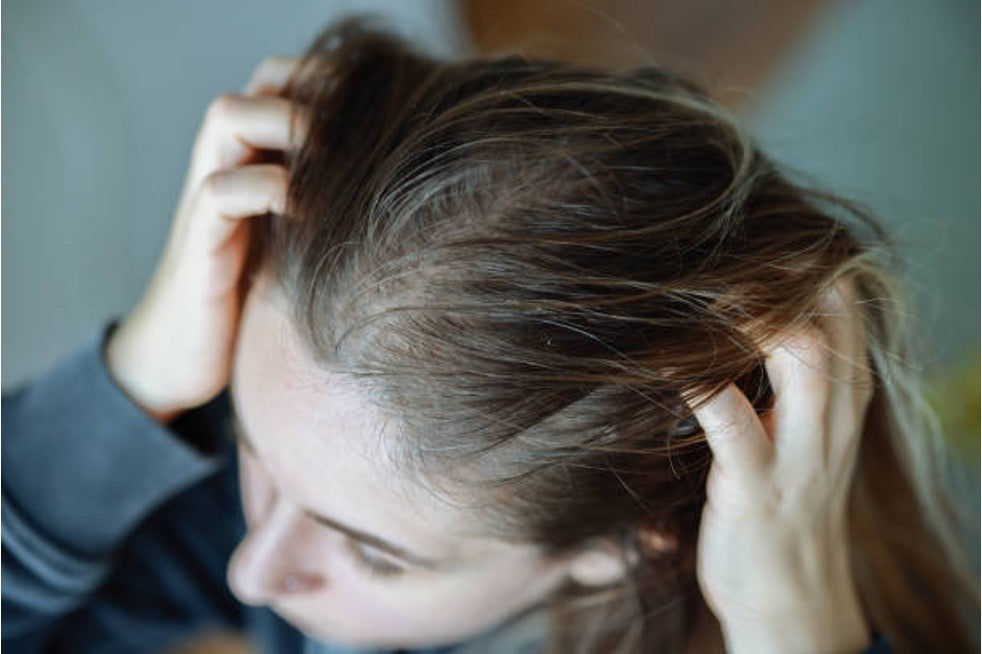
Typical features include a widening central part, thinning over the crown and upper scalp, reduced overall volume, and a frontal hairline that stays relatively intact. A temporary shedding episode can also expose pattern thinning that was already present but subtle, making the two conditions easy to confuse without a closer look.
Health Conditions
Perimenopausal periods can become heavier, lighter, or irregular, and heavy bleeding can lead to iron deficiency, a recognized cause of diffuse shedding. Iron deficiency should be confirmed with testing, since supplementing without an actual deficiency is not a general remedy for thinning.
Thyroid disease is another overlooked trigger. Both an underactive and an overactive thyroid can cause telogen effluvium, and thyroid symptoms often overlap with complaints already blamed on perimenopause.
Surgery & Major Stress
Fever, major illness, surgery, and significant psychological stress can all disrupt the hair cycle. Shedding usually appears months after the event rather than right away, so the trigger may no longer feel connected to the hair loss by the time it shows up. Stress is a real contributor, but it should not become the default explanation that stops someone from ruling out nutritional, hormonal, or medical causes.
Rapid Weight Loss & Restrictive Diets
Rapid weight loss, unusual diets, and inadequate nutrition can also trigger shedding, particularly when protein or other essential nutrients are restricted. When a dietary change lines up with the timing of hair loss, improving overall nutritional adequacy matters more than adding a hair supplement on top of a restrictive eating pattern.
Medication Changes & Stopping Birth Control
Certain medicines and changes in hormonal exposure can trigger shedding, and stopping hormonal contraception is one well-documented example. A clinician reviewing your case should look at anything started, stopped, or changed in the months before shedding began, since the connection is often missed simply because of the time lag involved.
Do not stop a prescribed medication on your own because you suspect it is causing hair loss. Flag the concern to the prescriber instead, so the medication can be reviewed properly against the timing of your shedding.

Perimenopause can last several years, so hormone-related shedding may come and go instead of following one steady course.
Perimenopause Hair Shedding Timeline
There is no single timeline that applies to every woman, because the course depends on whether the underlying issue is an isolated trigger, a repeated one, chronic shedding, or pattern hair loss layered on top. With telogen effluvium, extra shedding typically becomes noticeable two to four months after the triggering event, reflecting the time hairs spend resting before they release.
Once the trigger resolves, shedding tends to taper gradually over roughly six to nine months rather than stopping overnight. Short new hairs can already be growing in while older resting hairs are still falling, so continued shedding does not necessarily mean nothing is improving. Shedding that stays heavy for more than six months, instead of slowly easing, is generally classed as chronic telogen effluvium and deserves reassessment for ongoing or overlapping causes.
Remedies for Perimenopause Hair Shedding
Treat Thyroid Disease & Iron Deficiency
For telogen effluvium, correcting the underlying trigger is the main intervention. This may mean treating a confirmed thyroid disorder, correcting a confirmed iron deficiency, or addressing heavy menstrual bleeding. Correcting the trigger will not instantly stop hairs already committed to shedding, so a lag before visible improvement is normal.
Restore Adequate Nutrition & Protein Intake
A balanced diet with sufficient protein, fruit, vegetables, and overall energy supports normal hair growth. Where intake has been restricted, fixing overall nutritional adequacy matters more than adding a supplement on top of a restrictive diet. Evidence that biotin, zinc, or vitamin combinations reverse hair loss in otherwise well-nourished people remains insufficient.

Fish, eggs, and legumes supply both protein and iron, two nutrients closely tied to a healthy hair cycle.
Manage Stress & Disruptive Menopause Symptoms
Stress is a recognized shedding trigger, and addressing significant stress along with disruptive menopause symptoms can support recovery and overall well-being. That said, stress management should support an evaluation of persistent hair loss, not replace it.
Adopt a Gentle Hair Care Routine
Not every lost strand has fallen from its follicle. Heat styling, chemical processing, and aggressive brushing can break hair shafts, which looks like shedding but is actually breakage. Reducing high heat, harsh chemical treatments, and tight styling protects existing strands, even though it will not reverse miniaturization or stop true follicular shedding.
Consider Topical Hair Treatments
Topical minoxidil is an established first-line option for female pattern hair loss, available as a 2% solution applied twice daily or a 5% foam once daily. Early improvement may show within three to six months, with a fuller assessment at six to twelve months, and continued use is generally needed to maintain results. Temporary increased shedding can occur in the first few weeks, and irritation or unwanted facial hair are possible side effects.
Low-level light therapy, platelet-rich plasma injections, peptide-containing serums, and botanical scalp sprays using extracts like Sophora flavescens or Angelica polymorpha sinensis are additional supportive options some women try.
Ease Perimenopause Shedding with Trybello Hair Helper Spray

Trybello Hair Helper Spray is applied once a day, ideally in the evening, directly onto the areas of the scalp where thinning shows most.
Perimenopause shedding usually traces back to shifting hormones, a stressful trigger, or pattern thinning that becomes more visible as estrogen drops. Extra hair fall tends to appear a few months after a trigger and eases gradually once it settles. Consistent scalp care helps follicles recover through that window.
We formulated Trybello Hair Helper Spray for hormone-related thinning. Sophora flavescens and rice extract help counter DHT, an androgen linked to follicle shrinkage, while angelica root helps calm the scalp, and caffeine helps extend the growth phase. Try Trybello Hair Helper Spray, backed by our 120-day growth guarantee.
Frequently Asked Questions (FAQs)

Trending Topics




*Disclaimer: Individual results may vary. The information provided in this article is for educational purposes only and is not intended as medical advice. Consult a healthcare professional before starting any new hair or lash care regimen, especially if you have sensitivities or underlying health conditions. Product pricing is subject to change. For full terms, visit Trybello.com.

See our latests posts #TRYBELLO