Damaged Hair vs New Growth: Differences, Signs & Pictures
BY TRYBELLO
Nov 06, 2026

Key Takeaways
- Damaged hair has blunt, jagged, or split ends and a rough, dull texture from a stripped protective layer, while new growth has fine, tapered tips that stand upright near the hairline or part.
- A strand with no root bulb and an irregular break is breakage, while a strand near your hairline or part with tapered, paintbrush-like tips is new growth.
- Hair that seems stuck at one length for months is usually breaking as fast as it grows, not failing to grow, because heat, dye, and rough handling wear the shaft down faster than the follicle can replace it.
- Damaged strands can show small swollen nodes along the shaft called trichorrhexis nodosa, which are weak points where the hair snaps under ordinary combing or brushing.
- Trybello Hair Helper Spray Plus reinforces breaking strands with biotin and hydrolyzed rice protein and supports fuller-looking regrowth at the root with Capixyl and caffeine.
Why People Mistake New Growth for Damaged Hair
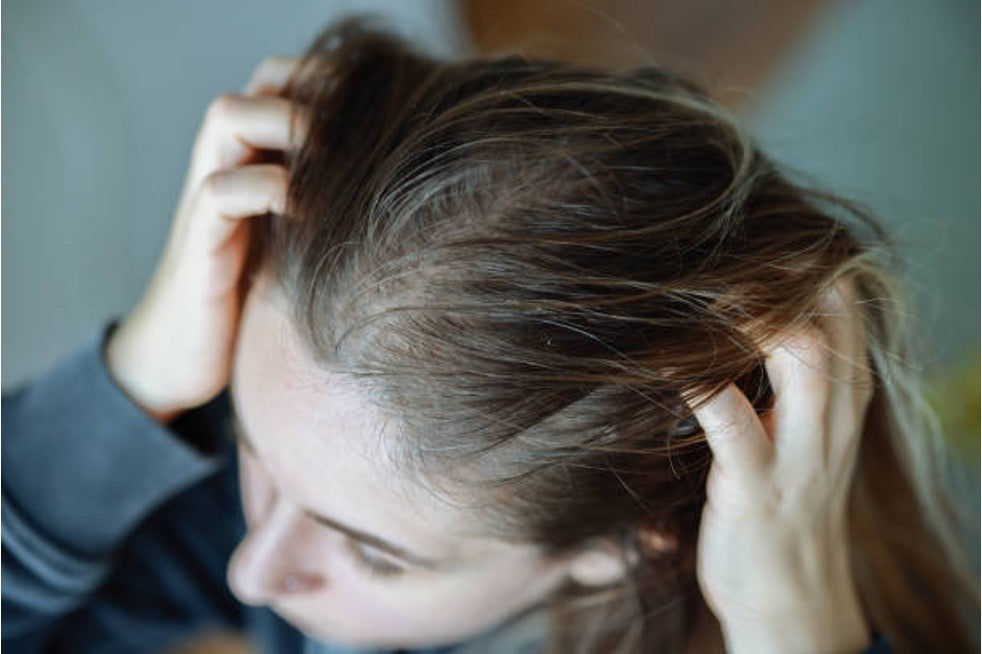
New growth and breakage both show up as short strands near the hairline and part, which is why so many people assume the worst when they spot them. The difference is in the tip: a tapered point narrowing like a paintbrush means the follicle is pushing out a fresh strand, while a blunt, jagged, or split edge means an older strand snapped partway down the shaft. Most people never check the tip and judge by length alone, so healthy regrowth gets lumped in with damage.
The confusion deepens because both can appear at the same time on the same head. A follicle that just entered its growth phase can send up a fine new strand right next to a longer one that is breaking from months of heat styling or chemical processing. Without knowing what to look for, it is easy to assume the hair is thinning when part of it is actually recovering.
Trybello Hair Helper Spray Plus addresses both sides of that overlap. Hydrolyzed rice protein and biotin reinforce the breaking strands that mimic stalled growth, while Capixyl and caffeine support the new growth pushing through at the root, on a timeline that matches the 12-week window it takes for follicle-level changes to reach the surface.
"Enhanced with Capixyl™ for Faster Results! Why Smart Women Are Upgrading to Trybello Hair Helper Spray Plus!"
Experience accelerated hair transformation with our enhanced formula featuring scientifically proven Capixyl™. See visible growth in as fast as 4 weeks.

Advanced Natural Formula with Capixyl™
- ✓ Capixyl™ – Clinically proven to lower DHT levels and stimulate follicle growth
- ✓ Biotin – Supports keratin production for stronger, healthier hair
- ✓ Caffeine – Boosts absorption of active ingredients for maximum effectiveness


Differences Between Damaged Hair & New Growth
Damaged Hair
Damaged hair has lost the protective lipid layer that normally coats the shaft and repels water. Once perming, permanent dye, or repeated heat styling strips that layer away; it cannot grow back, which is why damaged strands need leave-in products to compensate. The result is a shaft that fractures under ordinary combing, brushing, or shampooing instead of bending and recovering.
New Growth
New growth is hair that the follicle is actively producing right now. Each follicle goes through a growth phase that can last several years, and during that time scalp hair adds roughly 1 cm per month. When a fresh strand first breaks through the skin, it is fine, soft, and tapered to a point because it has not yet been exposed to the heat, dye, brushing, and styling that wear older strands down over time. That untouched condition is exactly what makes new growth look and feel different from the hair around it.

Scalp hair in its growth phase adds roughly a centimeter each month, and these fresh, unstyled strands haven’t yet lost their original form.
Signs Your Hair Is Damaged
Signs of Damaged Hair
Damaged hair shows up in how the strand behaves, not just how it looks. Signs of damage include:
- Hair that seems stuck at the same length for months or years
- Visible split ends running up the shaft
- Short, broken strands in spots that see the most friction from combing, tight styles, or sleeping
- White or translucent tips, a sign the protective cuticle has worn away
- Frizz that worsens even with the same products you’ve always used
Signs of New Growth
New growth is easier to spot once you know where to look and what healthy regrowth feels like compared to breakage. Signs of new growth include:
- A visible fringe of short, upright hairs near the hairline or part
- Fine, soft texture compared to surrounding mature strands
- Becomes noticeable as shedding winds down, with fullness usually returning within 6–9 months of a stressor like illness, weight change, or childbirth
- Even, gradual lengthening over several months rather than sudden change
- Small numbers of light-colored vellus hairs mixed in, which is normal
What Damaged Hair & New Growth Look Like Up Close
Damaged Hair

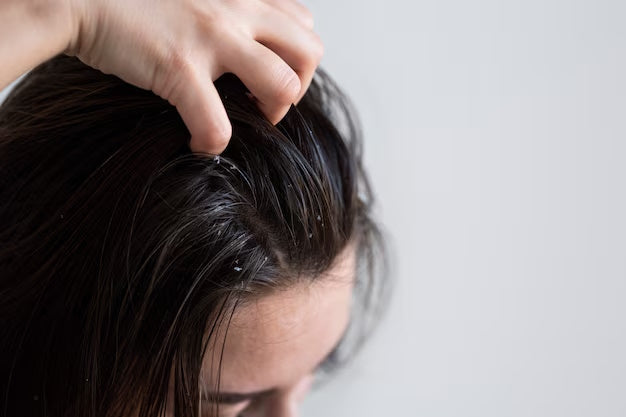
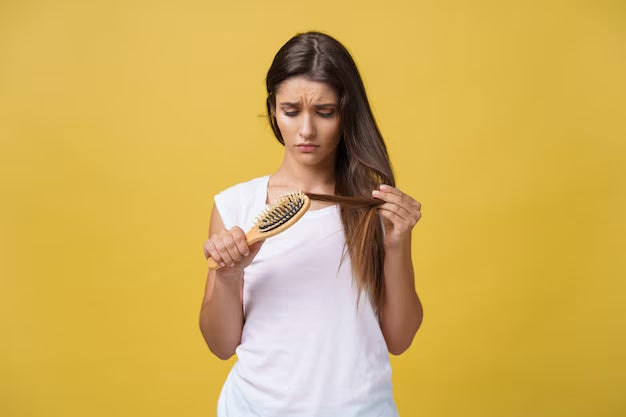
Up close, worn strands fray at the tips, split down their length, and develop weak, swollen spots where they eventually snap.
Under magnification, damaged hair looks like a frayed rope. The end is blunt, jagged, or split lengthwise instead of coming to a point, and there's no bulb at the root because the hair never detached naturally; it snapped. Trichorrhexis nodosa, a common damage pattern, shows up as small swollen nodes along the shaft where the hair is structurally weak enough to break clean through.
Shed hairs look different from broken ones even without magnification. A shed hair has a small teardrop-shaped bulb at the root end, while a broken hair has no bulb at all, just an irregular, uneven break across the shaft. This single detail is often enough to separate ordinary shedding from active damage.
New Growth

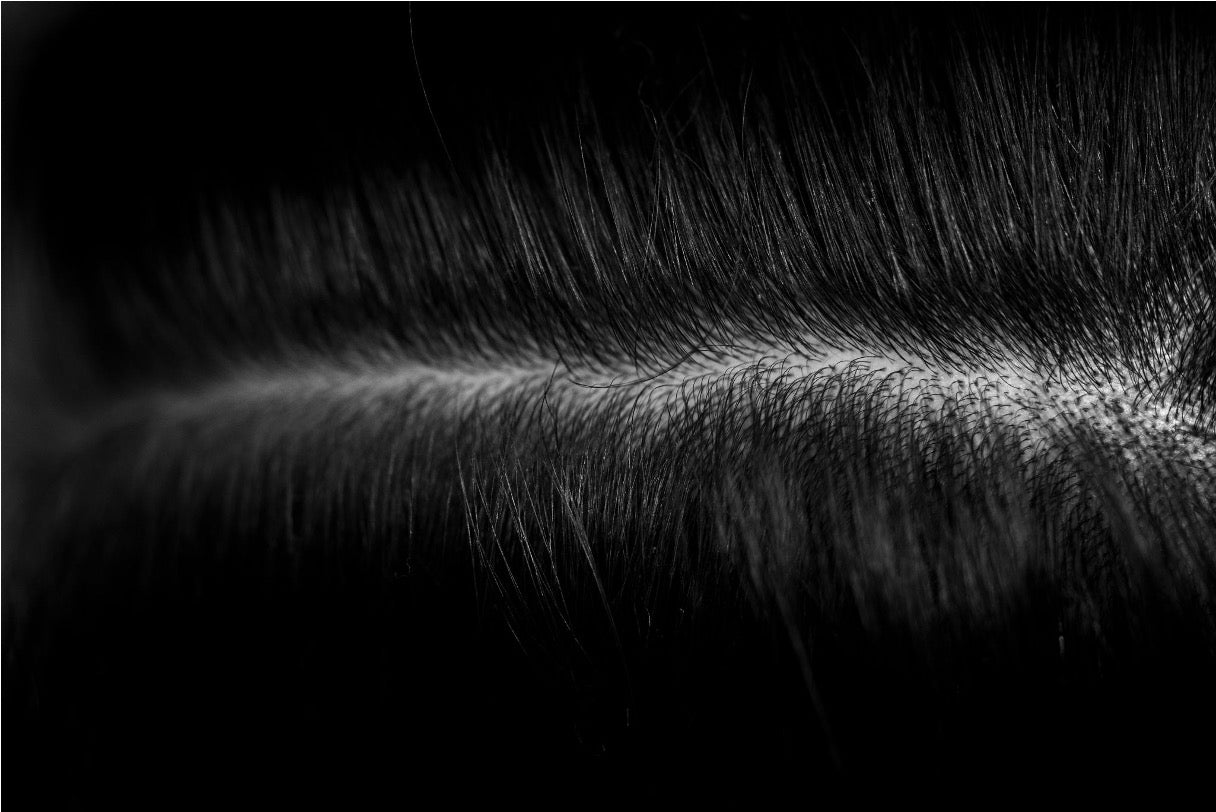
Fresh strands narrow to a fine, paintbrush-like point and tend to stand up from the scalp instead of lying flat.
New growth looks the opposite under the same magnification: a clean, tapered point that narrows gradually to a fine tip, like the end of a paintbrush rather than a frayed rope. These strands often stand slightly upright or at an angle from the scalp rather than lying flat with the rest of the hair, a pattern dermatologists call upright regrowing hairs.
Damaged Hair vs New Growth: Summary Table
| Feature | Damaged Hair | New Growth |
|---|---|---|
| Tip shape | Blunt, jagged, or split | Tapered, pointed |
| Where you find it | Snapped pieces on your brush, pillow, or clothes, with no root bulb | Still attached to the scalp, often near the hairline or part |
| Texture | Rough, dull, dry | Fine, soft |
| Position | Lies flat, uneven length | Stands upright near hairline |
| Common cause | Heat, chemical, mechanical stress | Active growth phase |
Strengthen Breaking Strands & New Growth with Trybello Hair Helper Spray Plus

Trybello Hair Helper Spray Plus pairs rice protein and biotin for fragile strands with Capixyl and caffeine for fuller-looking regrowth.
Checking the tips of short hairs near your hairline or part tells you whether you’re seeing breakage or regrowth, and that answer decides your next step. Breaking hair needs gentler handling and a stronger shaft, while fine new hair needs steady care to make it through its first fragile months.
Trybello Hair Helper Spray Plus works on both, with hydrolyzed rice protein and biotin helping reinforce breaking strands, while Capixyl and caffeine support fuller-looking growth at the root. The lightweight, vegan formula is cruelty-free, and as a US-based company, we back it with our 120-Day Hair Growth Guarantee. Try Trybello Hair Helper Spray Plus today.
Frequently Asked Questions (FAQs)

Trending Topics





*Disclaimer: Individual results may vary. The information provided in this article is for educational purposes only and is not intended as medical advice. Consult a healthcare professional before starting any new hair or lash care regimen, especially if you have sensitivities or underlying health conditions. Product pricing is subject to change. For full terms, visit Trybello.com.

See our latests posts #TRYBELLO