Vanessa Hudgens Postpartum Hair Loss: What She Shared & Why It Happens
BY TRYBELLO
Nov 10, 2026

Image source: “VHudgens J2premiere 2” by Eva Rinaldi licensed under CC BY-SA 2.0 via Wikimedia Commons.
Key Takeaways
- Vanessa Hudgens called her postpartum hair loss "devastating" after her first child arrived in July 2024, then described renewed shedding following her second birth in November 2025.
- Postpartum hair loss, known as telogen effluvium, happens when estrogen drops after delivery and pushes hairs that stayed in the growth phase into shedding mode.
- Noticeable shedding usually starts two to three months after birth and generally resolves within six months, with fullness returning closer to the baby's first birthday.
- Genetics, nutrition, iron levels, and stress all influence how severe the shedding feels, and gentle styling habits can prevent added breakage on top of normal loss.
- Trybello Hair Helper Spray Plus pairs Capixyl™ with biotin and caffeine, ingredients chosen to strengthen returning strands and add visible density as hair grows back.
Why Vanessa Hudgens' Hair Loss Started Months After Giving Birth
Vanessa Hudgens’ hair loss surfaced about four months after her second baby arrived because postpartum shedding is triggered at birth but only becomes visible later. High estrogen during pregnancy keeps extra hairs in their growth phase, and once levels drop after delivery, those hairs move into a resting phase together before falling out weeks later. That lag is the detail most new mothers miss.
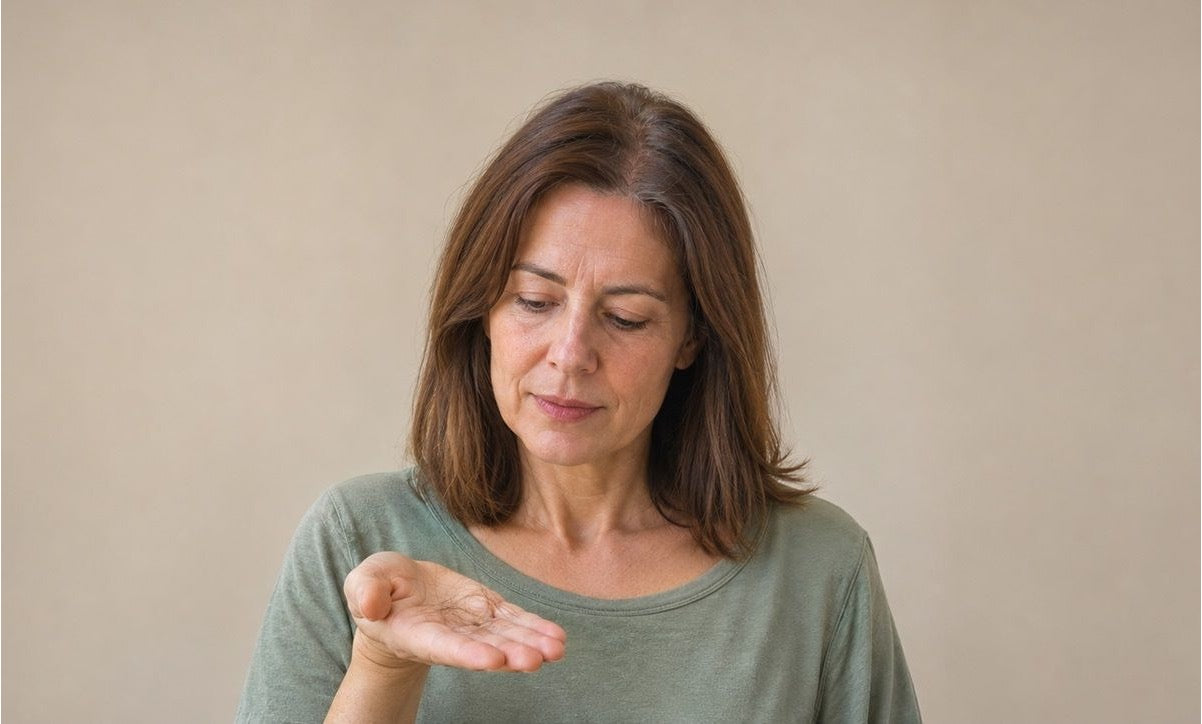
Most women expect any hair changes to happen right after birth. When clumps appear in the brush or shower drain months later, just as life starts to feel settled, it is easy to assume something has gone wrong. In reality, the timing is a normal part of how hair recovers after pregnancy.
"Enhanced with Capixyl™ for Faster Results! Why Smart Women Are Upgrading to Trybello Hair Helper Spray Plus!"
Experience accelerated hair transformation with our enhanced formula featuring scientifically proven Capixyl™. See visible growth in as fast as 4 weeks.

Advanced Natural Formula with Capixyl™
- ✓ Capixyl™ – Clinically proven to lower DHT levels and stimulate follicle growth
- ✓ Biotin – Supports keratin production for stronger, healthier hair
- ✓ Caffeine – Boosts absorption of active ingredients for maximum effectiveness


Vanessa Hudgens Opens Up About Her Postpartum Hair Loss
Hudgens has been unusually candid about watching her hair thin twice, once after each of her children, and her timeline lines up almost exactly with what dermatologists describe as a textbook postpartum shedding pattern.
First Pregnancy & Birth in July 2024
Hudgens welcomed her first child with husband Cole Tucker in July 2024. In an interview with ELLE published in November 2025, she looked back on that first postpartum stretch and described the hair loss that followed as "so devastating." That phrasing matters. It signals that even though the condition is temporary and common, living through it in real time did not feel small or easy to brush off.
Second Child Born in November 2025
Her second child arrived in November 2025, setting up a second round of the same hormonal shift her body had already been through once. Having already experienced postpartum shedding did not make her immune to it happening again. If anything, it meant she knew exactly what was coming.
Social Media Posts From March to July 2026
By March 2026, roughly four months after her second birth, Hudgens posted a video on her Instagram Stories with her hair partly pulled back and wispy pieces framing her face, joking in the caption, "Oh cute you got bangs?" followed by "No, I'm just postpartum."
A few days later, on March 30, she shared a photo of loose strands with the caption, "And so it begins," followed soon after by a selfie captioned "Having a great hair day even with my hair loss lol."
By July 2026, she posted again, this time showing the short new hairs growing in around thinning areas, writing, "Lil delusional ol me thought there's no way my hair will break in postpartum AGAIN. I was wrong." That single sentence captures something a lot of postpartum mothers feel but rarely say out loud: the quiet hope that a second pregnancy will go differently, and the letdown when it does not.
What Is Telogen Effluvium?
Telogen effluvium is the medical term for the hair loss Hudgens described, and it is triggered directly by the hormonal shift after childbirth. Hair naturally cycles through three phases: anagen, the active growth phase; catagen, a short transitional phase; and telogen, the resting phase after which a hair is released and sheds.
During pregnancy, higher estrogen levels keep more hairs sitting in that growth phase longer than usual, which is why pregnant hair often looks thicker and fuller than normal. Once estrogen drops after delivery, many of those hairs move into the resting phase around the same time. Because the resting stage lasts about three months, the hair does not fall out the day of birth. Instead, it sheds in a noticeable wave several months later, which is exactly the delay Hudgens experienced before each round of visible thinning.
The good news is that this type of shedding is diffuse, meaning it spreads evenly across the scalp rather than forming one sharply defined bald spot, and the follicles themselves generally remain capable of producing new hair the entire time.

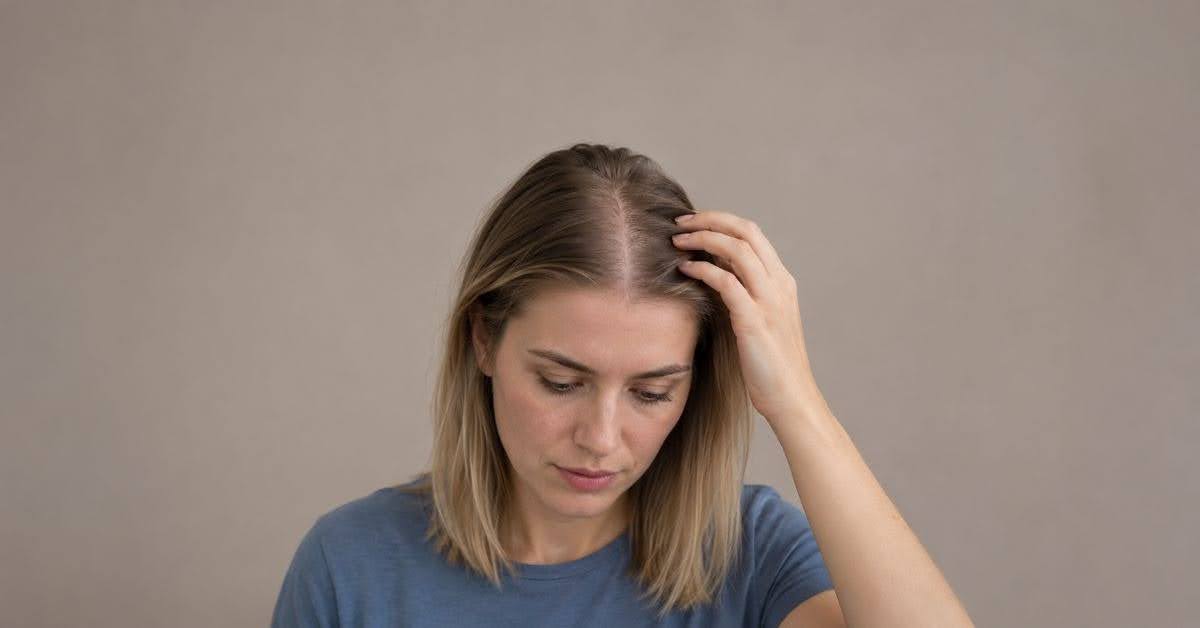
Postpartum thinning is often most visible along the hairline and temples, so it tends to stand out most when hair is pulled back.
Why Postpartum Hair Loss Can Happen With Every Pregnancy
Going through postpartum shedding once offers no protection against it happening again. Hudgens' own experience across two pregnancies makes this clear. Because the same hormonal mechanism (the estrogen drop after delivery) repeats with every pregnancy and birth, the hair cycle resets and triggers shedding again regardless of what happened the first time around.
What Makes Postpartum Hair Loss Worse?
Not every postpartum mother experiences the same severity of shedding, and several overlapping factors explain why.
Genetics & Baseline Hair Density
A person’s starting hair density can affect how obvious the shedding looks. Someone who started with finer or less dense hair may notice the thinning more sharply than someone with thicker baseline hair, even if the actual percentage of hair lost is similar.
Nutrition & Iron Levels
Nutrition status, particularly protein intake and iron levels, can influence how noticeable postpartum shedding becomes. Inadequate protein or other nutritional deficiencies, along with iron deficiency specifically, are recognized contributors to hair loss after delivery on top of the expected hormonal shedding.
Thyroid Disease & Other Conditions
Thyroid disease is another condition that can compound hair loss after birth, and it is worth ruling out if shedding feels more severe or prolonged than typical postpartum patterns. Another hair-loss condition occurring at the same time as telogen effluvium can also make the overall picture look worse than straightforward postpartum shedding alone.
Physical & Emotional Stress
Physical or emotional stress, which is common in the demanding early months of caring for a newborn, is also listed as a factor that can affect how noticeable postpartum hair loss becomes. This is worth remembering, since stress reduction is not just about mental well-being. It can also affect how long shedding lasts during this window.
How to Care for Thinning Postpartum Hair
Time is the most important factor in resolving uncomplicated postpartum shedding, and there is no established way to prevent the normal hormonal shift from happening in the first place. That said, a few habit changes can reduce unnecessary damage layered on top of the shedding that is already occurring.
1. Handle Hair Gently to Reduce Breakage
Shedding and breakage are not the same thing. Shedding means a hair is released from its follicle as part of the natural cycle, while breakage means the hair shaft snaps, which is a separate type of damage entirely. Handling hair gently and avoiding aggressive brushing or combing helps prevent breakage from adding to the volume loss already caused by shedding.
2. Lower Heat Settings When Styling
Reducing heat exposure during styling cuts down on unnecessary damage to strands that are already more fragile during this period. Lower heat settings protect the hair shaft without requiring a complete change in styling routine.

Letting hair air-dry partway before reaching for a blow dryer shortens the time fragile postpartum strands spend under direct heat.
3. Avoid Tight Ponytails & Braids
Tight hairstyles such as tight ponytails and braids put tension on the scalp and can contribute to additional hair loss beyond the hormonal shedding. Looser styles reduce that tension-related risk during a time when hair is already more vulnerable.
4. Eat Enough Protein & Nutrients
Protein is the raw material hair needs to rebuild itself, and a varied diet with enough protein supports that process alongside the natural regrowth already happening after birth. Pairing better nutrition with gentle handling and lower heat gives hair the best possible conditions to recover without added breakage stacked on top of normal shedding.
Rebuild Hair Confidence After Pregnancy With Trybello

Trybello Hair Helper Spray Plus can be applied without washing your hair first, which makes it easy to use on days when a full wash isn’t realistic with a newborn.
Postpartum hair loss is temporary for most mothers, but that does not make the months of shedding any easier to live through. Hudgens going through it a second time shows that knowing what to expect does not soften the experience. The stretch between shedding and regrowth is often where confidence dips the most.
Trybello Hair Helper Spray Plus is our answer for that in-between stage, made with Capixyl™ to help new growth look thicker and fuller. We kept the routine to a few pumps and a quick massage, which matters when a newborn leaves little time for anything else. Add it to your postpartum routine today with our 120-Day Growth Guarantee.
Frequently Asked Questions (FAQs)

Trending Topics




*Disclaimer: Individual results may vary. The information provided in this article is for educational purposes only and is not intended as medical advice. Consult a healthcare professional before starting any new hair or lash care regimen, especially if you have sensitivities or underlying health conditions. Product pricing is subject to change. For full terms, visit Trybello.com.

See our latests posts #TRYBELLO