Female Pattern Hair Loss in Black Women: Causes, Symptoms & Solutions
BY TRYBELLO
Jul 31, 2026

Key Takeaways
- Black hair's tightly coiled structure creates more breakage points along each strand, making it more susceptible to damage from everyday styling, chemical processing, and tension than straighter textures.
- Genetics, traction alopecia, hormonal imbalances, and Central Centrifugal Cicatricial Alopecia (CCCA) are primary causes of female pattern hair loss in Black women, and they frequently overlap rather than occurring in isolation.
- Crown thinning, a broadening part line, and density loss that you notice by feel before it becomes visible are the key early warning signs, though protective styles can conceal these changes for months if you're not checking regularly.
- Treatment approaches include sulfate-free scalp care, topical minoxidil, low-level laser therapy, and PRP, with the best outcomes consistently linked to catching thinning early and committing to a daily routine.
- Trybello Hair Helper Spray delivers biotin, castor oil, caffeine, and rice water extract in a leave-in formula designed for daily use, with customers reporting reduced shedding and improved thickness within 4 to 6 weeks of consistent application.
Female Pattern Hair Loss in Black Women: What You Need to Know
Female pattern hair loss in Black women develops when inherited sensitivity to hormones gradually shrinks hair follicles over time. However, naturally coily hair, frequent tension from protective styles, and a higher risk of conditions like traction alopecia and CCCA can accelerate thinning or make it more noticeable.
Although female pattern hair loss can begin in the late 20s or early 30s, it becomes much more common after age 40 as hormonal changes during perimenopause and menopause affect the hair growth cycle.
Nearly half of Black women experience some form of hair loss during their lifetime, highlighting how common this concern is. Detecting it early is important because hair follicles become progressively smaller over time, making it increasingly difficult to preserve hair density once significant miniaturization has occurred.
While no product can change genetic predisposition, Trybello Hair Helper Spray supports healthier-looking, fuller hair by nourishing the scalp with powerful ingredients as part of a consistent daily hair care routine.
“Doctor-Approved Natural Spray Rapidly Boosts Growth & Thickness.
Why 100,000+ Women Are Switching to Trybello!"
Join over 100,000 happy customers who've transformed their hair with our doctor-formulated spray in just 12 weeks, rated 4.8/5 by 40,000+ real users.
Proven Natural Ingredients
- • Caffeine Extract – Blocks DHT and boosts blood flow to follicles
- • Biotin – Direct scalp absorption, no pills needed
- • Castor Oil – Soothes inflammation and locks in moisture
- • Rice Water Extract – Strengthens hair and reduces shedding
120-Day Growth Guarantee: No results? 100% money back, no questions asked.


What Are the Causes of Female Pattern Hair Loss in Black Women?

In most cases, female pattern hair loss is a combination of genetic, hormonal, and environmental factors working together
The Genetic Factor
Female pattern hair loss is a hereditary condition driven by sensitivity to androgens, hormones that can shrink hair follicles over time. If your mother, grandmother, or aunts experienced thinning, your risk is significantly higher.
Traction Alopecia
Traction alopecia is caused by repeated, prolonged tension on hair follicles from tight braids, weaves, extensions, dreadlocks, and ponytails worn consistently over months or years. It typically appears first along the hairline and temples, where styling tension is greatest.
Traction alopecia is reversible when identified early, but prolonged tension can permanently scar hair follicles. A Journal of the American Academy of Dermatology study found traction alopecia in 31.7% of African women, while later reviews estimate it affects about one-third of women of African descent who regularly wear high-tension hairstyles, making it one of the most common preventable causes of permanent hair loss in this population.
Hormonal Imbalances
Hormonal imbalances can contribute to female pattern hair loss by disrupting the normal hair growth cycle. Changes in estrogen, progesterone, and androgen levels, particularly during perimenopause and menopause, may cause hair follicles to shrink over time, leading to thinner, shorter strands and reduced hair density.
Thyroid dysfunction, Polyendocrine Metabolic Ovarian Syndrome (PMOS), and perimenopause are also major hormonal contributors. If hair loss is accompanied by irregular periods, weight changes, or fatigue, a hormonal panel from your doctor is a critical first step.
Central Centrifugal Cicatricial Alopecia (CCCA)
CCCA is a form of scarring alopecia that primarily affects Black women. It typically begins at the crown and spreads outward.
The exact cause isn't fully understood, but research suggests links to genetics and certain hair care practices. Unlike traction alopecia, CCCA involves internal inflammation that destroys the follicle from within, making early diagnosis essential. Symptoms often include scalp tenderness, itching, and visible scarring alongside thinning.
Symptoms of Female Pattern Hair Loss in Black Women
Gradual Thinning at the Crown
The crown is typically where androgenetic alopecia becomes visible first. Women rarely develop a fully bald patch. Instead, hair at the top gradually becomes finer, shorter, and more sparse.
In Black women, this can be harder to spot initially because of natural hair volume and styling patterns, making regular scalp checks in good lighting important.
Widening Part Line
A widening part line is one of the earliest and most reliable visual indicators of female pattern hair loss. If you've worn your hair in the same part for years and suddenly notice it looks broader or the scalp is more visible through it, that's not your imagination.
The follicles along the part line are often among the first to miniaturize in androgenetic alopecia, producing progressively thinner strands until the scalp beneath becomes clearly visible.
Protective styles like twist-outs and braid-outs can mask this change for months, so examining your part on freshly washed, unstyled hair regularly is worth building into your routine.
Reduced Hair Density & Increased Scalp Visibility
Reduced density often feels different before it looks different. Your ponytail may feel thinner, twists may unravel faster, or styles that held volume may now fall flat.
When you can see scalp through your hair in areas where you couldn't before, especially at the crown, temples, or nape, density has decreased meaningfully.
If this is accompanied by scalp tenderness, itching, or flaking, that combination points to an active inflammatory process, such as CCCA, rather than purely genetic thinning, and warrants a visit to a dermatologist.
Ways to Support Thinning Hair in Black Women
Supportive Hair Care Products
The right products create the scalp environment where regrowth is possible. Sulfate-free formulas with scalp-stimulating ingredients and no heavy silicones help keep follicles clear. Scalp serums containing biotin, niacinamide, or caffeine have shown promise in supporting follicle health and reducing excess shedding when used consistently.
Trybello Hair Growth Shampoo & Strengthening Conditioner Set is a sulfate-free, silicone-free foundation built around aloe vera, turmeric, urucum extract, camellia japonica, and shea butter to cleanse and nourish without stripping natural oils.

The shampoo strengthens and promotes growth while the conditioner moisturizes, soothes, and reduces breakage.
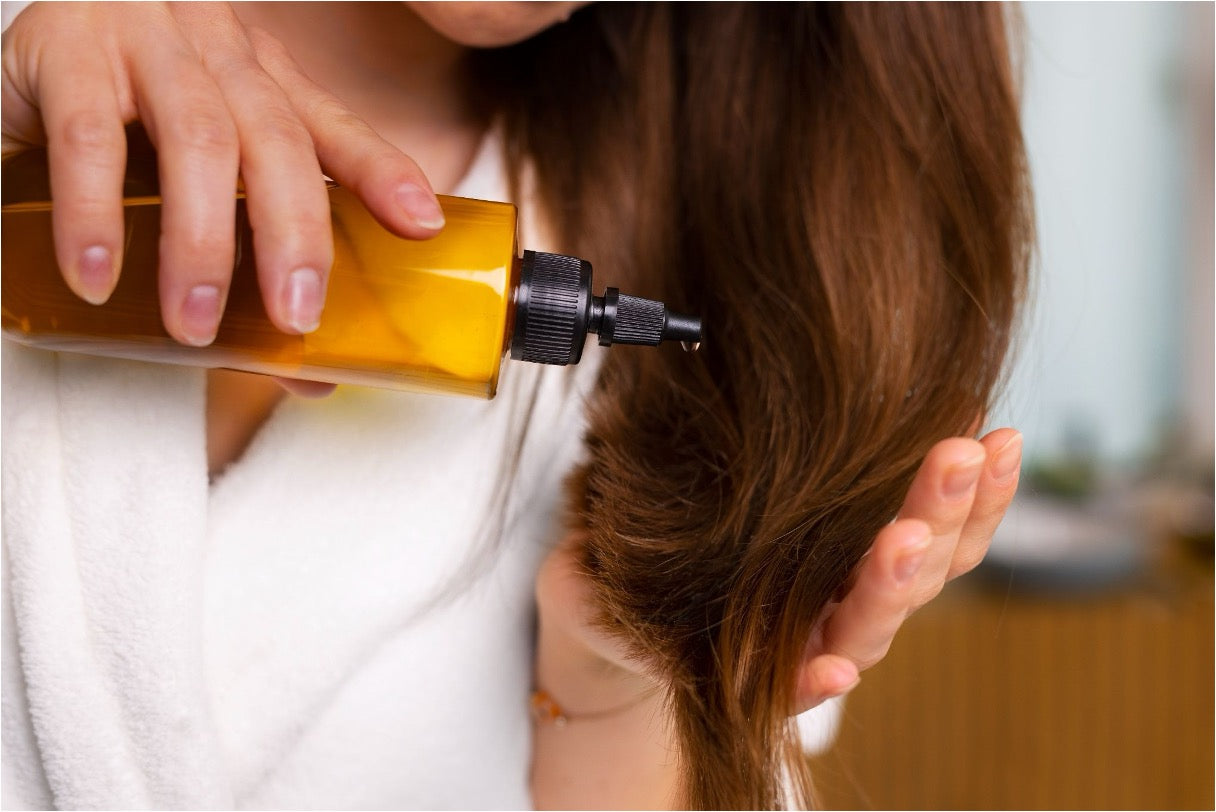
For targeted follicle support, Trybello Hair Helper Spray layers on top as a leave-in formula, delivering castor oil, biotin, caffeine, and rice water extract directly to the scalp. Both are vegan, cruelty-free, and formulated to work across all hair types.
Low-Level Laser Therapy (LLLT)
LLLT uses specific wavelengths of red light to stimulate cellular activity in follicles, increasing energy production and extending the growth phase. It's FDA-cleared for androgenetic alopecia and works best in the early stages, when follicles are weakened but still active. Consistency is essential, as missing sessions frequently is the most common reason users don't see results.
Platelet-Rich Plasma (PRP)
Platelet-rich plasma (PRP) therapy is a non-surgical treatment that uses a concentrated portion of your own blood to stimulate hair follicles. During the procedure, a healthcare provider injects the platelet-rich plasma into areas of the scalp affected by thinning, where the growth factors may help improve hair density and encourage healthier hair growth.
Protective Habits That Reduce Daily Hair Damage
Avoid Tight Hairstyles
Rotating styles regularly, giving your scalp rest periods between installs, and ensuring braiders are not pulling too tightly at the root are practical steps that can make a real difference in long-term follicle health.
Pay particular attention to your edges. The hairline is the most vulnerable area for traction damage because the follicles there are finer and more exposed to styling tension. If you feel pain, see bumps, or notice white flakes around the hairline after getting a style installed, those are red flags.
Minimize Heat & Chemical Damage
Heat and chemical relaxers are two of the most common contributors to cumulative hair damage because repeated, unprotected use weakens the hair shaft and irritates the follicle over time.
High-heat styling tools, when used without a quality heat protectant, strip the hair's moisture barrier and create micro-fractures along the strand that worsen with each session. The result is breakage that's often mistaken for shedding, which leads women to treat the wrong problem entirely.
How Does TryBello Support Black Women Experiencing Hair Thinning?

Trybello Hair Helper Spray is a practical daily option for Black women managing thinning from multiple causes.
Female pattern hair loss in Black women involves a combination of genetic, hormonal, and styling-related factors that require care tailored to those specific challenges. Moving from reactive treatment to proactive scalp health is the single most impactful shift you can make, especially while follicles are still active and responsive.
Our Trybello Hair Helper Spray is a lightweight, leave-in formula that works on all hair types, including natural, relaxed, and color-treated hair, and can be applied between protective styles without causing buildup or weighing strands down. It delivers biotin, caffeine, rice water extract, and castor oil directly to the scalp to support follicle health while ginger root and angelica root extracts provide additional nourishment where thinning is most active. We are a US-based company formulating each product with clean, transparent ingredients. Shop Trybello Hair Helper Spray and start giving your scalp daily, targeted support backed by our 120-Day Growth Guarantee.
Frequently Asked Questions (FAQs)

Trending Topics




*Disclaimer: Individual results may vary. The information provided in this article is for educational purposes only and is not intended as medical advice. Consult a healthcare professional before starting any new hair or lash care regimen, especially if you have sensitivities or underlying health conditions. Product pricing is subject to change. For full terms, visit Trybello.com.

See our latests posts #TRYBELLO