Hair Loss Due To Poor Sleep Quality: Causes, Symptoms & Solutions
BY TRYBELLO
Oct 14, 2026

Key Takeaways
- Poor sleep is linked to several types of hair loss, including stress-related shedding and pattern thinning, but research has not confirmed that it directly causes hair loss on its own.
- Poor sleep often happens with chronic stress, which may shift stress hormones, inflammation, and the internal timing signals that guide hair follicles, pushing more hairs into the resting phase at once.
- Stress-related shedding usually appears 2 to 3 months after a trigger as diffuse thinning across the whole scalp, while patchy bald spots usually point to a different condition.
- A protein-rich diet, gentle washing, less heat styling, looser hairstyles, and daily stress management limit extra damage while a shedding episode runs its course.
- Trybello Hair Helper Spray combines biotin, caffeine, and rice extract in a scalp spray that strengthens and thickens thinning hair, backed by a 120-day growth guarantee.
Understanding Hair Loss Due to Poor Sleep Quality
Poor sleep quality is linked to hair loss, but research has not shown that it causes shedding on its own. The link shows up in conditions like telogen effluvium, a temporary shedding across the whole scalp triggered by stress, but bad sleep rarely happens in isolation. It usually comes with stress, illness, or a change in diet, so it is hard to tell which one actually set off the shedding.
Because stress-related shedding can take months to settle, supporting the scalp during that window matters as much as fixing sleep. Trybello Hair Helper Spray, from US-based haircare brand Trybello, is massaged straight into the scalp to support the follicle rather than only coating the strand. Used alongside better sleep and stress habits, it helps strengthen and thicken hair that is more fragile during a shedding phase.
"Doctor-Approved Natural Spray Rapidly Boosts Growth & Thickness. Why 88,000+ Women Are Switching to Trybello!"
Join 88,000+ women who've transformed their hair with our doctor-formulated spray, rated 4.85/5 Excellent by 60,000+ real reviewers.

Proven Natural Ingredients
- ✓ Caffeine – Energizes follicles and supports a longer, healthier growth phase
- ✓ Sophora Flavescens Extract – Revitalizes dormant follicles for improved density
- ✓ Oryza Sativa (Rice) Extract – Antioxidant-rich, protects follicles from oxidative stress
- ✓ Angelica Polymorpha Sinensis Root Extract – Boosts scalp microcirculation and nutrient delivery
- ✓ Biotin – Strengthens hair structure and supports keratin production from within


Sleep-Related Causes of Hair Loss

Poor sleep coupled with chronic stress could contribute to hair loss.
Hair grows in a cycle: strands spend years growing, then shift into a short resting phase before shedding and making room for new growth. Ordinarily, only a small percentage of hairs sit in that resting phase at once. When the body experiences a major physical or emotional stressor, a much larger share of hairs can shift into that resting phase at once, and they all shed around the same time, usually 2 to 3 months later.
Poor sleep tends to occur alongside chronic stress, and researchers think this combination may affect the signals that reach hair follicles. Sleep disruption has been linked to changes in the body's stress-response system and shifts in inflammatory activity, both of which could influence the follicle's environment.
For many women over 40, menopause adds another layer. Hot flashes and night sweats can disrupt sleep, and the hormone shifts of this stage are also linked to thinning hair, so poor sleep and thinning often go hand in hand.
None of this means poor sleep is single-handedly flipping a switch that shuts down hair growth. The real picture involves several overlapping pathways, and researchers still cannot say how much of a role sleep plays compared to other factors like diet, illness, or genetics in any one person.
Hair Loss Symptoms to Watch For
Increased Shedding During Washing & Brushing
The clearest early sign of telogen effluvium is a jump in the number of hairs coming out during normal activities, like washing, brushing, or running your fingers through your hair. A few stray strands on a pillow are normal. What matters is a noticeable increase from your usual baseline, not the presence of shed hair itself.

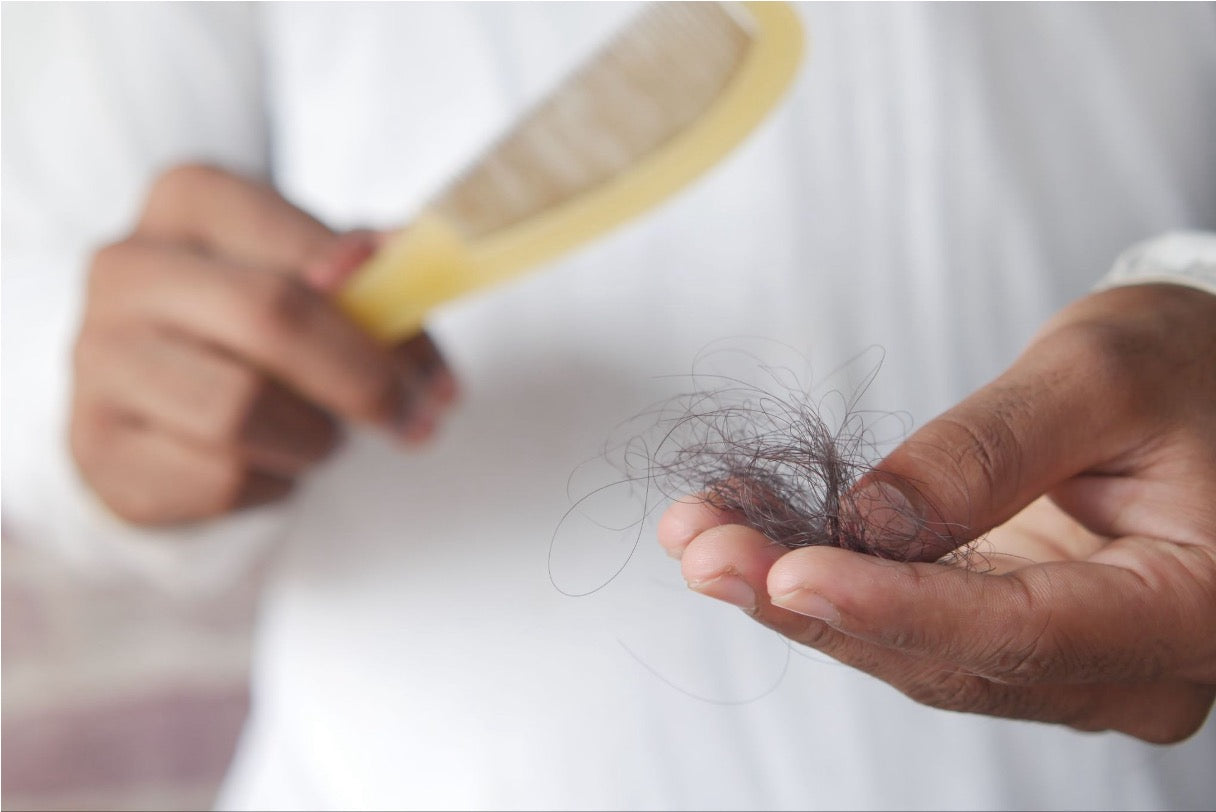
A comb that collects more strands than usual can mean extra hairs have entered the shedding phase at once.
Diffuse Thinning or Patchy Bald Spots
Telogen effluvium is a nonscarring, diffuse condition, meaning the shedding spreads across the whole scalp rather than concentrating in one area, and the follicle itself is not damaged.
Patchy, well-defined bald spots suggest a different process, such as alopecia areata, and persistent itching, burning, or scalp pain should not be chalked up to stress or sleep without getting it checked.
Hair Breakage & Shedding
Shedding and breakage get lumped together, but they are not the same problem. Shedding means a hair falls out at the root, cycling naturally or prematurely out of the growth phase. Breakage means the strand itself snaps partway along its length, usually from heat styling, chemical processing, or rough handling.
More short, broken pieces in your brush after blow-drying or flat-ironing point to breakage, while full-length hairs with a small white bulb at the root point to shedding. Both show up as visible hair loss worth watching out for.
Natural Solutions That Support Healthy Hair Growth
Use a Scalp-Care Spray to Strengthen Thinning Hair
Topical scalp products that deliver biotin, caffeine, and botanical extracts directly to the follicle environment are a practical starting point.
Trybello Hair Helper Spray, for example, combines natural ingredients chosen to strengthen and thicken thinning hair.
- Caffeine energizes follicles and supports a longer, healthier growth phase.
- Biotin strengthens hair structure and supports keratin production.
- Rice extract is antioxidant-rich and helps protect follicles from oxidative stress.
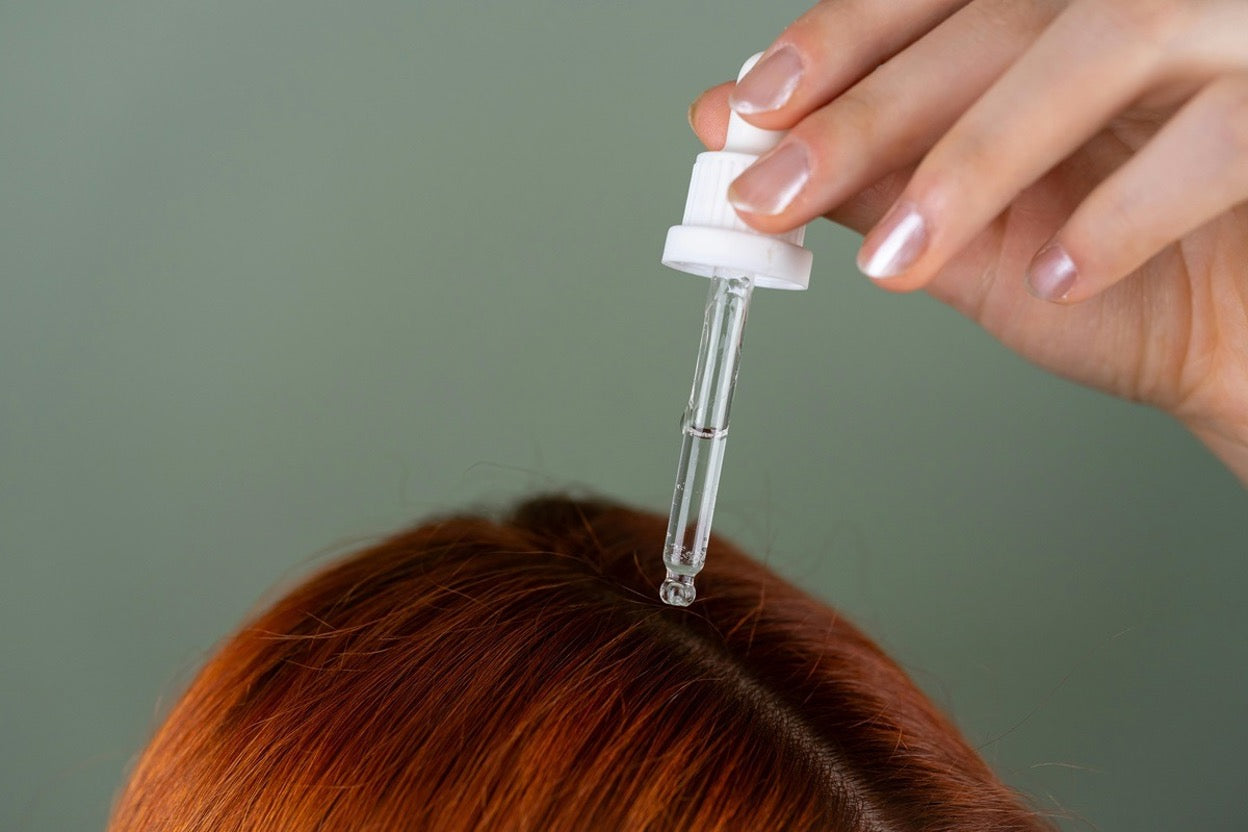
Apply it directly to the scalp, follow with a gentle 30-second massage, and leave it in to dry, so it fits easily into your existing wash routine.
Eat a Protein-Rich, Varied Diet
Hair is largely made of protein, so inadequate intake or insufficient calories can directly contribute to shedding. A varied diet with regular protein sources, such as fish, eggs, poultry, tofu, beans, or lentils, provides the raw materials hair needs to grow back.
Crash diets and rapid weight loss are recognized triggers of telogen effluvium in their own right. Repeatedly cutting out entire food groups in hopes of a faster fix can backfire by adding another stressor on top of whatever caused the original shedding.
Wash & Detangle Hair Gently
The American Academy of Dermatology recommends a gentle shampoo followed by a moisturizing conditioner, since the conditioner coats the strand and reduces breakage and split ends. Aggressive scrubbing at the scalp during washing adds unnecessary friction to hair that is already shedding more than usual.
Detangling technique matters as much as the products you use. Pulling through knots forces out hairs that might otherwise stay in place longer, so working slowly from the ends up reduces unnecessary loss.
Cut Back on Heat & Chemical Styling
Frequent high-heat styling and chemical processing weaken hair that is already more fragile during a shedding phase. Flat irons, curling irons, hot combs, bleaching, and chemical straightening add stress to strands that have less structural reserve to spare right now.
Loosen Tight Ponytails, Braids, & Buns
Repeated tension from tight ponytails, buns, braids, cornrows, or extensions can cause traction alopecia, and persistent pulling can lead to permanent hair loss over time. Tight overnight hairstyles add hours of sustained tension that compounds the problem. Loosening styling tension, especially when hair is already shedding more than usual, protects the follicles that are still in place.
Build Daily Stress-Management Habits
Since poor sleep and chronic stress often go hand in hand, addressing one without the other leaves a gap. Healthy coping strategies, like enjoyable movement, relaxation practices, creative outlets, or leaning on social support, form a reasonable part of a broader approach to hair loss tied to sleep and stress.
Strengthen & Thicken Your Hair with Trybello Hair Helper Spray

The Trybello Hair Helper Spray can help strengthen and thicken your hair.
Poor sleep alone rarely explains hair loss, but alongside stress, diet changes, or illness, it can add to a shedding episode that shows up months later. Spotting diffuse thinning early, protecting fragile strands, and improving sleep and stress habits give your hair the right conditions to recover once the trigger passes.
Trybello founder Julia Goldman created the Trybello Hair Helper Spray to strengthen and thicken hair during exactly this kind of recovery. You spray it onto the scalp, massage it in for about 30 seconds, and leave it to dry, so it fits the routine you already have. Everyone is different, but we are so confident in the Trybello Hair Helper Spray that we offer a 120-day risk-free trial. If you don’t see results, you can easily get your money back. Try Trybello Hair Helper Spray today.
Frequently Asked Questions (FAQs)

Trending Topics




*Disclaimer: Individual results may vary. The information provided in this article is for educational purposes only and is not intended as medical advice. Consult a healthcare professional before starting any new hair or lash care regimen, especially if you have sensitivities or underlying health conditions. Product pricing is subject to change. For full terms, visit Trybello.com.

See our latests posts #TRYBELLO