Hair Growth Spray vs Hair Growth Oil: Differences, Side Effects, Before & After
BY TRYBELLO
Oct 14, 2026

Key Takeaways
- Hair growth sprays target the scalp directly, while hair oils mainly coat and condition existing strands rather than stimulating new growth.
- Results depend on the ingredients: sprays with actives like caffeine aim to support the scalp and follicles, while conditioning oils like coconut and argan mostly add shine and reduce breakage.
- Fragrance, propylene glycol, and essential oils can irritate the scalp in either format, and undiluted botanical oils like rosemary may cause itching, redness, or scaling.
- Before-and-after changes from oils usually show up as shinier, less brittle strands, while changes in fullness and shedding from sprays typically take several months of consistent daily use.
- Trybello's Hair Helper Spray pairs biotin, caffeine, and rice extract in a water-based, non-greasy formula built for daily scalp application without a heavy oil residue.
Is Hair Growth Spray or Oil Better for You?
Hair growth spray is better for people focused on the scalp, while hair growth oil suits those who mainly want to condition the hair they already have. It's easy to assume the format decides the results, but the active ingredients matter far more. A spray made mostly of glycerin and fragrance won't outperform a well-formulated oil, and an oil labeled as growth-boosting will mostly condition the hair unless it contains a researched ingredient, such as rosemary.
Choosing on texture or bottle type alone can cost months. Someone using a conditioning oil to thicken a thinning crown may get shinier, less brittle hair but no added fullness. Texture matters too, since a greasy product is harder to stick with.
For scalp-focused care without the weight of an oil, Trybello Hair Helper Spray is a lightweight leave-in option for daily use, with caffeine and biotin to support thicker, fuller-looking hair.
"Doctor-Approved Natural Spray Rapidly Boosts Growth & Thickness. Why 88,000+ Women Are Switching to Trybello!"
Join 88,000+ women who've transformed their hair with our doctor-formulated spray, rated 4.85/5 Excellent by 60,000+ real reviewers.

Proven Natural Ingredients
- ✓ Caffeine – Energizes follicles and supports a longer, healthier growth phase
- ✓ Sophora Flavescens Extract – Revitalizes dormant follicles for improved density
- ✓ Oryza Sativa (Rice) Extract – Antioxidant-rich, protects follicles from oxidative stress
- ✓ Angelica Polymorpha Sinensis Root Extract – Boosts scalp microcirculation and nutrient delivery
- ✓ Biotin – Strengthens hair structure and supports keratin production from within


Main Differences Between Hair Growth Spray & Hair Growth Oil

The real split between the two is where each product lands: scalp for sprays, strands for oils.
Application
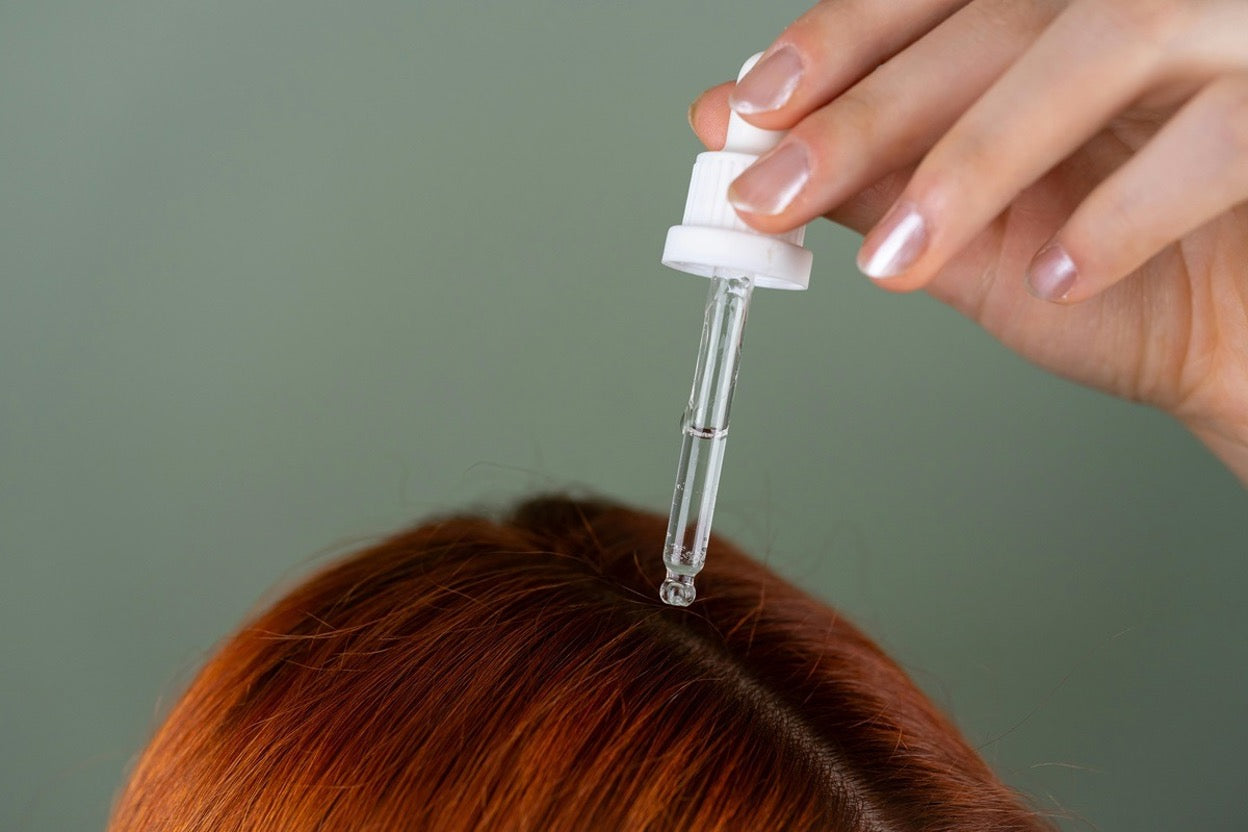
A scalp spray is built for direct, targeted application. Most instructions say to part your hair, spray the exposed scalp along the part, crown, or temples, and massage the product in before leaving it in place. No washout step is involved, which is why sprays are often marketed as leave-in options.
Hair oils generally require a different approach. Most conditioning oils, including coconut and argan oil, are worked through lengths and ends, sometimes left in for an extended period before washing out. That extra step, oiling followed by a wash cycle, is one reason sprays get marketed as a lower-effort alternative for people who don't want to build an oiling routine into their week.
Texture & Finish
Sprays are lightweight and non-greasy, since they're designed to be left in without a wash cycle. Oils carry more weight and shine because they're oil-based by definition, and that same richness can make them feel heavier on fine or fragile hair. Neither texture is inherently better, but it affects how long someone sticks with a routine long enough to see results.
Main Function
Function is the area where sprays and oils genuinely split into different jobs. Sprays are more often formulated with ingredients aimed at the scalp and follicle. By contrast, an oil's main job leans toward conditioning, meaning it makes existing strands shinier, smoother, and less prone to breakage rather than creating new growth.
Side Effects Compared
Potential Side Effects of Hair Growth Sprays
Most hair growth sprays have a mild side-effect profile, but "natural" doesn't mean risk-free. Non-medicinal sprays can still cause irritation or allergic reactions, and the ingredients worth watching are fragrance and propylene glycol.
Minoxidil sprays carry a different set of cautions, since this is a medicinal ingredient with documented effects beyond the scalp. Reported minoxidil side effects include burning, itching, redness, unwanted facial hair, and temporary increased shedding during the first weeks of use.
Official labeling also warns users to stop and seek medical advice if chest pain, rapid heartbeat, faintness, or dizziness occurs, and it flags potential harm during pregnancy or breastfeeding.
Potential Side Effects of Hair Growth Oil
Essential oils present their own caution flags, since concentrated botanicals like rosemary can trigger redness, itching, and scaling when applied undiluted. Allergic contact dermatitis from these oils typically develops 24 to 72 hours after exposure and can appear beyond the application area, such as the forehead, neck, or hands.
Dilution lowers but doesn’t eliminate that risk, so anyone with a history of eczema or a compromised skin barrier should treat fragrance components and botanical oils, including conditioning oils like coconut, as possible triggers.
Effects Explained: Before & After Comparison
Effect of Hair Growth Sprays
The effectiveness of hair growth sprays varies depending on the exact product and its active ingredients. Trybello's Hair Helper Spray, for instance, is formulated with caffeine, biotin, rice extract, Sophora flavescens extract, and Angelica polymorpha sinensis root extract in a water-based formula, and it does not contain minoxidil. It’s also vegan, cruelty-free, and free of sulfates, parabens, and artificial fragrance, which matters for anyone wary of the scalp irritants covered above.
Many customers report less shedding and fuller-looking hair in as little as 4 to 6 weeks of consistent use, with coverage continuing to improve over the following months. Apply four to six pumps along the part each day, massage in, and leave on. The spray's lightweight, water-based, non-greasy texture is a genuine usability advantage for daily leave-in use, separate from any claim about growth itself.

Trybello Hair Helper Spray is designed for daily scalp care that supports thicker, fuller-looking hair.
Effect of Hair Growth Oil
Oils tend to show up more convincingly in condition-based outcomes than in growth-based ones. Rosemary oil is the exception. In a study of men with pattern hair loss, rosemary oil worked about as well as 2% minoxidil after six months and caused less scalp itching. That doesn’t make every rosemary blend effective, but it gives rosemary stronger evidence than conditioning oils like coconut or argan.
Hair Growth Spray vs Hair Growth Oil: Comparison Table
| Feature | Hair Growth Spray | Hair Growth Oil |
|---|---|---|
| Application | Sprayed onto the scalp along the part, crown, or temples, then massaged in | Worked through lengths and ends, often left on before washing out |
| Texture & Finish | Lightweight, non-greasy | Heavier, with added shine |
| Main Function | Targets the scalp and follicles | Conditions existing strands |
| Wash-Out Step | None, left in | Usually required |
| Common Irritants | Fragrance, propylene glycol, botanical extracts | Undiluted essential oils, fragrance |
| Before & After | Changes in fullness and shedding over several months | Shinier, less brittle strands |
Build a Scalp-Focused Routine with Trybello Hair Helper Spray

Trybello Hair Helper Spray puts caffeine and biotin where hair actually grows, instead of coating the strands.
Choosing between a hair growth spray and a hair growth oil depends on the problem you want to solve. Scalp-focused goals call for actives applied where hair grows, while dry, brittle strands benefit more from conditioning oils. Either way, check the label for irritants and use it consistently for several months.
We designed Trybello Hair Helper Spray to make that consistency easy: apply four to six pumps along your part each day, massage in, and leave on, with no greasy residue to wash out. As a US-based company, we back every order with our Complete 120-Day Growth Guarantee, so you can judge the results on your own hair. Try Trybello Hair Helper Spray today.
Frequently Asked Questions (FAQs)

Trending Topics



*Disclaimer: Individual results may vary. The information provided in this article is for educational purposes only and is not intended as medical advice. Consult a healthcare professional before starting any new hair or lash care regimen, especially if you have sensitivities or underlying health conditions. Product pricing is subject to change. For full terms, visit Trybello.com.

See our latests posts #TRYBELLO