Low Porosity Hair vs High Porosity Hair: Pictures, Differences & Care Tips
BY TRYBELLO
Oct 13, 2026

Key Takeaways
- Low-porosity hair has tightly packed cuticle scales that resist water, while high-porosity hair has raised or damaged scales that absorb moisture quickly and lose it just as fast.
- In pictures, low-porosity hair looks smooth and glossy but can turn limp from buildup, while high-porosity hair often looks dull and frizzy, with visible split ends or breakage.
- Low-porosity hair needs lightweight, water-based products and gentle heat to push moisture past the cuticle. High-porosity hair needs richer conditioners and a sealing step to keep moisture from escaping.
- Porosity also isn't fixed for life. Bleaching, heat styling, and repeated chemical services can push naturally low porosity hair toward high porosity over time.
- Trybello Hair Helper Spray is a lightweight, water-based leave-in formula designed to work with either porosity type, using biotin, rice water, and other natural ingredients.
How Cuticle Structure Controls Hair Porosity
The cuticle is the outer layer of each hair strand, and how tightly its scales sit against one another determines whether water and products enter easily or get blocked at the surface. Low-porosity hair has flat, compact scales that repel water on contact, so droplets bead up rather than soak in. High-porosity hair has raised, cracked, or missing scales that let moisture flood in immediately but cannot hold it, so the strand dries out again within hours of conditioning.
That difference changes everything about how you should build a routine. Heavy creams and butters that work well on high-porosity strands sit on top of low-porosity hair without penetrating, leaving it greasy yet still dry underneath. Light, water-based leave-ins absorb quickly into low-porosity hair but evaporate too fast on high-porosity strands without a sealing layer. Porosity also shifts over time as washing, heat, bleach, and color treatments wear the cuticle down, so a routine that worked six months ago can stop working after a round of chemical processing.
Trybello Hair Helper Spray is a lightweight scalp mist that fits either routine as an early step, layering under leave-ins for low porosity and under creams or oils for high porosity, backed by a 120-day money-back guarantee.
"Doctor-Approved Natural Spray Rapidly Boosts Growth & Thickness. Why 88,000+ Women Are Switching to Trybello!"
Join 88,000+ women who've transformed their hair with our doctor-formulated spray, rated 4.85/5 Excellent by 60,000+ real reviewers.

Proven Natural Ingredients
- ✓ Caffeine – Energizes follicles and supports a longer, healthier growth phase
- ✓ Sophora Flavescens Extract – Revitalizes dormant follicles for improved density
- ✓ Oryza Sativa (Rice) Extract – Antioxidant-rich, protects follicles from oxidative stress
- ✓ Angelica Polymorpha Sinensis Root Extract – Boosts scalp microcirculation and nutrient delivery
- ✓ Biotin – Strengthens hair structure and supports keratin production from within


What Low Porosity & High Porosity Hair Look Like
Low Porosity Hair
Low-porosity hair tends to look smooth and glossy because the flat cuticle reflects light evenly. It can also look limp or weighed down when products build up on the surface rather than absorbing into the strand.
Chemical color may also process less predictably on low-porosity hair because the tightly sealed cuticle resists dye entry, which can lead to uneven results or longer processing times.

Low porosity hair tends to have a smooth and glossy look, though it may appear weighed down or limp due to product buildup.
High Porosity Hair
High-porosity hair may look dull because an irregular, lifted cuticle scatters light instead of reflecting it cleanly, and it often shows visible frizz, split ends, or breakage, especially after repeated coloring, bleaching, or heat styling.
It does not always look severely damaged, since silicones and styling films can temporarily smooth the surface and add shine even when the underlying cuticle is still weathered. High-porosity hair accepts color quickly but loses it faster because the same open pathways that let dye in also let it wash out.

High-porosity hair may be frizzy, have split ends, or break, though silicone and styling films may make its surface smooth even though the cuticle is uneven or damaged.
Difference Between Low-Porosity Hair & High-Porosity Hair
Moisture Absorption
Low-porosity hair absorbs water slowly, and droplets often bead on the surface before soaking in. This happens because the cuticle scales lie flat and compact, creating a water-repellent barrier that takes time, manipulation, or gentle heat to break through. High-porosity hair does the opposite: water absorbs almost immediately because gaps, lifted scales, and lost surface lipids let moisture easily reach the cortex beneath.
Moisture Retention & Drying
Once low-porosity hair absorbs water, it holds onto it. This hair type releases moisture slowly and often stays wet long after washing. High porosity hair loses water through the same gaps that let it in quickly, so it tends to dry faster but can also feel dry again soon after, requiring more consistent conditioning and sealing to maintain softness between washes.
Product Absorption & Buildup
Because low-porosity hair resists absorption, products are more likely to sit on the surface than penetrate the strand. This makes buildup and a weighed-down, greasy feel common, especially for people who layer on rich creams, butters, or oils expecting better hydration.
High-porosity hair absorbs leave-ins and conditioners readily, but the softening effects don't last as long, so this hair type often needs more frequent conditioning and sealing rather than heavier products.
How Do You Care for Low & High Porosity Hair?
Caring for Low Porosity Hair
The goal with low-porosity hair is to get moisture to penetrate the strand instead of sitting on top of it.
- Wash your scalp thoroughly and let the lather run through the lengths instead of scrubbing them directly.
- Use a clarifying shampoo periodically, not on a strict schedule, but whenever hair feels coated, or products stop performing the way they should.
- For conditioner, apply it to soaking-wet hair in sections, then cover with a shower cap or warm towel to help it absorb; a steamer can help too, as long as the heat stays comfortable, since excessive heat can damage hair and push it toward higher porosity over time.
- Stick to liquid leave-ins, milks, or light lotions where water is listed near the top of the ingredients, and look for humectants like glycerin, panthenol, or aloe that help draw in moisture. If scalp care is part of your routine, this is also a good time to mist the Trybello Hair Helper Spray onto your scalp while your hair is still damp, then massage it in. Its lightweight, non-oily formula doesn’t leave the kind of residue low-porosity strands tend to collect.
- For sealing, use just a thin layer of lightweight oil or serum over a water-based leave-in rather than a thick butter or pomade, which tends to sit on the surface and attract dirt instead of solving dryness.
Caring for High Porosity Hair
High porosity hair needs the opposite strategy: seal in moisture fast before it escapes.
- Use a rinse-out conditioner every wash day, concentrating on the oldest lengths and ends where damage tends to accumulate.
- Look for cationic ingredients such as behentrimonium chloride or cetrimonium chloride, which reduce static and friction while helping flatten raised cuticle scales.
- On damp hair, layer a leave-in conditioner, then a cream, serum, or oil, since high-porosity strands lose softness quickly without that extra sealing step. You can also use the Trybello Hair Helper Spray: mist it onto the scalp and massage it in before working your leave-in and sealing products through the lengths. Because it’s a lightweight, non-oily scalp spray, it won’t interfere with the richer layers your ends need.
- An occasional protein treatment can help if hair is bleached, overly stretchy when wet, or breaking despite regular conditioning, but back off if hair starts to feel stiff or inflexible.
- Limiting heat styling, using a heat protectant, and spacing out chemical services also help slow further cuticle damage.
Low Porosity vs High Porosity Hair: Comparison Table
| Feature | Low Porosity Hair | High Porosity Hair |
|---|---|---|
| Water absorption | Slow; water beads on surface | Fast; water absorbs almost instantly |
| Moisture retention | Holds water for a long time once saturated | Loses moisture quickly after absorbing it |
| Cuticle condition | Flat, tightly bound scales | Raised, cracked, or lifted scales |
| Drying time | Stays wet longer | Dries relatively fast |
| Product buildup risk | High; products sit on surface | Lower, but oils and silicones can still build up |
| Best product texture | Lightweight, water-based liquids | Richer creams and sealing oils |
| Color processing | Slower, less predictable | Processes quickly but fades faster |
Build a Porosity-Friendly Routine with Trybello Hair Helper Spray

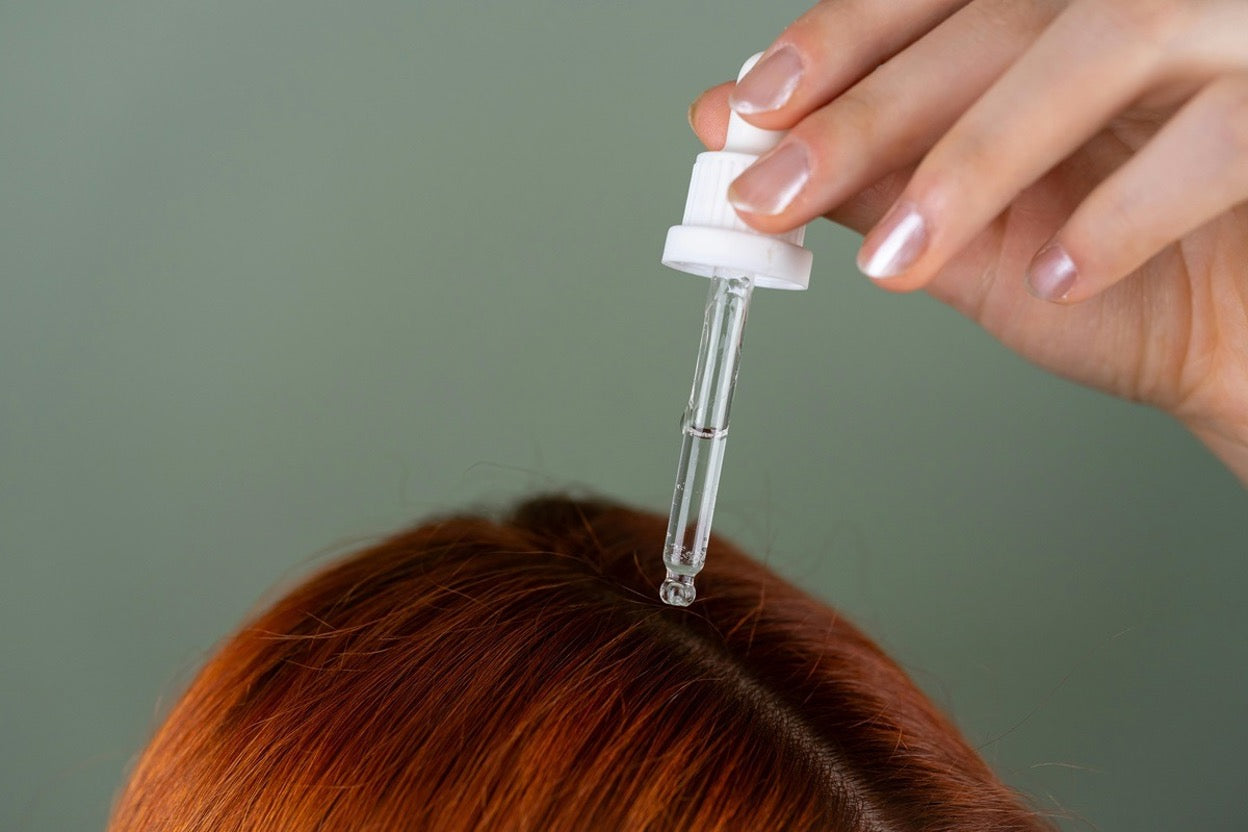
The Trybello Hair Helper Spray is a non-oily and lightweight scalp spray that can strengthen your follicles.
Porosity decides whether your products soak into the strand or collect on top of it, so matching the routine to the cuticle matters more than reaching for richer or more expensive products. Low-porosity hair needs light, water-based layers and gentle heat to open the cuticle. High-porosity hair needs conditioning every wash and a sealing step that locks moisture in before it escapes.
Our Trybello Hair Helper Spray is a lightweight, non-oily scalp mist formulated with biotin to strengthen keratin production, rice extract for antioxidant protection, and caffeine to energize follicles, all in a water-based formula that layers under either routine without adding buildup. Mist it onto a damp scalp before your leave-in, whatever your porosity type, and try it risk-free with our 120-day money-back guarantee. Get your Trybello Hair Helper Spray today.
Frequently Asked Questions (FAQs)

Trending Topics



*Disclaimer: Individual results may vary. The information provided in this article is for educational purposes only and is not intended as medical advice. Consult a healthcare professional before starting any new hair or lash care regimen, especially if you have sensitivities or underlying health conditions. Product pricing is subject to change. For full terms, visit Trybello.com.

See our latests posts #TRYBELLO