Hair Breakage After Coloring: Causes, Treatment & Prevention
BY TRYBELLO
Oct 26, 2026

Key Takeaways
- Hair breakage after coloring comes from permanent dye’s alkaline base lifting the cuticle and hydrogen peroxide bleaching pigment inside the cortex, which strips protein and weakens each strand.
- Going more than three shades lighter than your natural color needs stronger peroxide, so heavy lightening causes far more breakage than darkening or using semi-permanent dye.
- An acidic rinse right after dyeing helps the cuticle close, while protein or cationic conditioner, scalp-only shampooing, and less heat reduce breakage; persistent thinning needs a dermatologist.
- To prevent breakage, patch-test for dye allergies, space touch-ups 8 to 10 weeks apart, and perm or relax at least two weeks before coloring, never together.
- Trybello Hair Helper Spray delivers caffeine, biotin, and rice extract to the scalp, so the hair growing in to replace color-damaged lengths starts from a nourished base.
Can Color-Damaged Hair Recover?
Color-damaged hair can recover over time, but the broken strands themselves won’t repair, so recovery means protecting what’s left and letting healthier hair replace it. Most people expect a mask or treatment to reverse the damage within a few washes. In reality, you need to trim the damaged ends and let the rest grow out, which can take several months depending on how far the damage reaches.
How you handle your hair in the meantime determines how long it takes. Coloring again before the hair has settled, or adding heat and tight styles on top of chemical stress, keeps the damage moving up the strand. It also helps distinguish breakage from thinning at the scalp, because snapped ends respond to gentler care, while ongoing thinning may need a dermatologist.
"Doctor-Approved Natural Spray Rapidly Boosts Growth & Thickness. Why 88,000+ Women Are Switching to Trybello!"
Join 88,000+ women who've transformed their hair with our doctor-formulated spray, rated 4.85/5 Excellent by 60,000+ real reviewers.

Proven Natural Ingredients
- ✓ Caffeine – Energizes follicles and supports a longer, healthier growth phase
- ✓ Sophora Flavescens Extract – Revitalizes dormant follicles for improved density
- ✓ Oryza Sativa (Rice) Extract – Antioxidant-rich, protects follicles from oxidative stress
- ✓ Angelica Polymorpha Sinensis Root Extract – Boosts scalp microcirculation and nutrient delivery
- ✓ Biotin – Strengthens hair structure and supports keratin production from within


What Are the Causes of Hair Breakage After Coloring?

Permanent dye must force open the outer cuticle to deposit color inside, and its alkaline agents and peroxide leave each strand weaker.
How Hair Dyes Work on Hair Cuticles
Breakage after coloring comes down to chemistry. The hair shaft has three layers: the cuticle on the outside, the cortex in the middle, and sometimes a medulla at the core. Permanent dye must get past the first layer to reach the second, and that process inherently disrupts the strand's structure.
Two ingredients do most of the work, and most of the damage: the alkaline base that swells the cuticle open, and hydrogen peroxide, which oxidizes natural pigment so new color can take hold. Both are necessary for permanent color to work, but both leave the hair shaft measurably weaker afterward.
How Permanent Dye Breaks Open the Cuticle
Permanent color works in three stages. First, an alkaline agent and an oxidizer swell the cuticle, lifting it away from the shaft. Second, colorless dye precursors slip through the opened cuticle into the cortex. Third, oxidation bleaches out the hair’s natural melanin and converts those precursors into larger, permanent color molecules that get trapped inside the cortex.
Why Hydrogen Peroxide Weakens the Hair Shaft
Hydrogen peroxide is doing double duty during a color service. It bleaches the natural pigment so new color can show through, and it helps activate the dye precursors inside the cortex. In the process, it also damages the hair's surface and weakens the shaft overall.
How to Treat Color-Damaged, Breaking Hair

Curly, color-treated hair holds up better when detangled while damp with a wide-tooth comb, working gently from the ends toward the roots.
Support the Scalp With Trybello Hair Helper Spray
Conditioners and acidic rinses care for the lengths, but the scalp needs support too while damaged hair grows out. Trybello Hair Helper Spray is a lightweight, non-greasy leave-in applied at the roots, with caffeine to energize follicles and biotin to support keratin production.
Apply it to the scalp daily and massage it in, keeping it away from fragile ends. One Trustpilot reviewer said her beautician noticed less hair in the sink trap after coloring and shampooing. It’s vegan, cruelty-free, and backed by a 120-Day Growth Guarantee.

A Trybello Hair Helper Spray user shares that even her beautician noticed less shedding after coloring and shampooing. (Image source: Trustpilot)
Rinse With an Acidic Product Right After Dyeing
Timing matters more than most people realize. In an electron microscope study that tracked hair before and after permanent dyeing, researchers concluded that rinsing with an acidic pH product immediately after dyeing helped mild hair damage recover faster. The logic is straightforward: dye processing leaves the cuticle in an alkaline, swollen state, and an acidic rinse helps it close back down sooner.
This isn’t a step to save for later in the week. The sooner an acidic rinse is used after the color service, the more it can do to help the cuticle settle before daily handling, brushing, and heat styling start adding mechanical stress on top of the chemical stress.
Switch to Protein & Cationic Conditioning Treatments
Hair care products containing cationic ingredients, such as stearalkonium chloride and cationic polymers, along with protein conditioning agents, may help hair recover faster when used around the time of dyeing. These ingredients work by coating and smoothing the cuticle surface and helping replace some of the protein structure lost during processing.
Conditioner isn't optional after color treatment. Using one after every shampoo helps reinforce the hair's outer layer, making it more resistant to friction-related breakage during washing, drying, and styling.
Change How You Wash & Dry Your Hair
Washing technique plays a bigger role in breakage than most people assume. Massage shampoo into the scalp only, letting it rinse through the lengths naturally instead of rubbing it directly into the strands, where friction is highest.
After rinsing, wrap your hair in a towel to absorb excess water instead of rubbing it dry, and let it air dry whenever possible to avoid added heat exposure.
A sulfate-free option like the Trybello Hair Growth Shampoo & Strengthening Conditioner Set is designed to cleanse without stripping natural oils, which keeps this routine gentler on color-treated hair.
Detangle & Style Without Added Stress
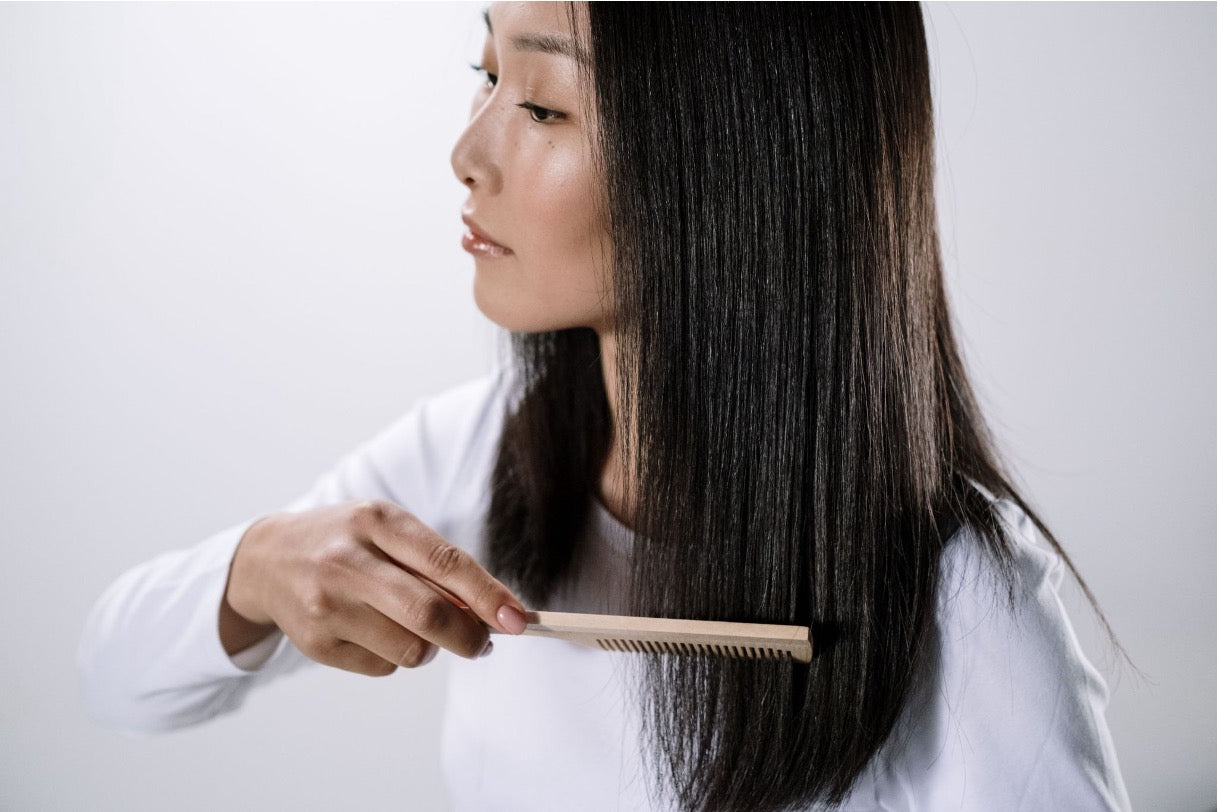
How and when you detangle matters as much as what you use. The right approach depends on hair type:
- For straight hair, let it dry partway before combing through with a wide-tooth comb.
- For textured or tightly curled hair, comb through while the hair is still damp using a wide-tooth comb.
- Remove tangles gently from the ends upward, using a moisturizing conditioner if hair is resistant.
- Limit hot tools to once a week or less, and use the lowest effective heat setting when you do use them.
These adjustments reduce mechanical stress on hair that’s already chemically weakened, giving it a better chance to hold together as it grows out.
When to See a Dermatologist About Hair Loss
If hair isn’t improving, or if thinning becomes noticeable rather than just surface breakage, it’s worth seeing a board-certified dermatologist. Thinning that persists despite gentler handling and better conditioning may point to something beyond routine color damage.
How to Prevent Hair Breakage Before Your Next Color Session

Keeping color changes modest, testing for dye allergies, and leaving longer gaps between appointments all limit damage before it starts.
Stay Within Three Shades of Your Natural Color
Lightening hair more than three shades past its natural level requires stronger peroxide concentrations, and stronger peroxide means more breakdown of the cuticle and cortex. Staying within a three-shade range keeps the chemical processing less aggressive.
Patch Test Before Every At-Home Color Job
Patch testing isn’t just a formality on the box instructions. It’s a direct check for scalp reactions that can complicate hair health well beyond simple breakage.
- Apply a small amount of the dye to a patch of skin, following the product's instructions.
- Watch for redness, swelling, burning, or itching over the recommended waiting period.
- If you notice any reaction, don’t proceed with the dye job; see a dermatologist instead.
Para-phenylenediamine, or PPD, is a well-known allergen found in many permanent dyes, and a patch test is the simplest way to catch a reaction before it affects the whole scalp.
Space Out Touch-Ups & Avoid Stacking Chemical Services
Spacing out touch-ups, especially during dry winter months, gives hair time to recover between chemical exposures; aim for every 8 to 10 weeks or longer. Stacking chemical services, like perming or relaxing on top of coloring, compounds damage, so if you want both, perming or relaxing two weeks before coloring reduces the combined stress on the hair shaft.
Sun exposure adds another layer of risk for already-dyed hair, so a wide-brimmed hat or a leave-in conditioner containing zinc oxide helps limit additional fading and brittleness. Wearing hair loosely pulled back with covered bands, instead of tight styles, also reduces unnecessary tension while hair recovers.
Support Healthier Hair After Coloring with Trybello Hair Helper Spray

Since broken lengths can’t be repaired, Trybello Hair Helper Spray focuses on the scalp, giving incoming hair a nourished start without burdening weakened ends.
Color damage builds with every service, as the cuticle opens and the cortex loses protein. Broken strands won’t knit back together, so the real goal is to slow further damage with acidic rinses, steady conditioning, gentler handling, and longer gaps between appointments, then trim away the weakest ends over time.
At Trybello, we made Hair Helper Spray to support the grow-out phase by nourishing the scalp, where new strands start, while you trim away damaged lengths. The formula pairs caffeine, which energizes follicles and supports longer, healthier growth, with biotin, which strengthens hair structure and supports keratin production. Apply it at the roots, not the fragile ends, so it adds no weight or extra handling to color-treated hair. As a US-based company, we offer a 120-Day Growth Guarantee, and if you don’t see results, you can easily get your money back. Add it to your post-color routine today.
Frequently Asked Questions (FAQs)

Trending Topics




*Disclaimer: Individual results may vary. The information provided in this article is for educational purposes only and is not intended as medical advice. Consult a healthcare professional before starting any new hair or lash care regimen, especially if you have sensitivities or underlying health conditions. Product pricing is subject to change. For full terms, visit Trybello.com.

See our latests posts #TRYBELLO