Hair Breakage After Keratin Treatment: Causes & Repair Tips
BY TRYBELLO
Oct 22, 2026

Key Takeaways
- Keratin treatments rely on formaldehyde-releasing chemicals or glyoxylic acid, and lab studies show both lower hair’s resistance to breakage and its ability to hold water.
- Flat-iron heat used to seal the treatment breaks down keratin at around 237°C (459°F), and adding bleach or color too soon can lift the cuticle and may damage the cortex.
- Shampoo only the scalp, condition after every wash, and blot wet hair with a towel to cut friction on strands that are weakest when wet.
- Limit heat to once a week on the lowest setting, choose looser styles, and space chemical services as far apart as possible to protect new growth while damaged lengths grow out.
- Trybello Hair Helper Spray works where new hair starts, giving the scalp daily care that supports stronger, fuller-looking hair as the breakage grows out.
Is Keratin Treatment Bad for Your Hair?
Keratin treatments can be hard on hair because the chemicals and flat-iron heat that create a smooth finish also weaken the protein inside each strand, and breakage often shows up weeks later.
Freshly treated hair looks sleeker than before, so most people assume it is healthier. That finish says little about what happened inside the strand, which is why people often blame later breakage on brushing or a new shampoo instead of the treatment.
Missing that link has a real cost. Hair isn't living tissue, so a weakened strand cannot rebuild itself, and booking another keratin, color, or bleach service too soon piles fresh damage onto already fragile hair.
"Doctor-Approved Natural Spray Rapidly Boosts Growth & Thickness. Why 88,000+ Women Are Switching to Trybello!"
Join 88,000+ women who've transformed their hair with our doctor-formulated spray, rated 4.85/5 Excellent by 60,000+ real reviewers.

Proven Natural Ingredients
- ✓ Caffeine – Energizes follicles and supports a longer, healthier growth phase
- ✓ Sophora Flavescens Extract – Revitalizes dormant follicles for improved density
- ✓ Oryza Sativa (Rice) Extract – Antioxidant-rich, protects follicles from oxidative stress
- ✓ Angelica Polymorpha Sinensis Root Extract – Boosts scalp microcirculation and nutrient delivery
- ✓ Biotin – Strengthens hair structure and supports keratin production from within


What Causes Hair Breakage After Keratin Treatment?

Sealing keratin with a flat iron causes heat damage, and the chemicals break down hair's core protein and harm the inner cortex.
Chemical Damage From Formaldehyde & Glyoxylic Acid
Traditional keratin treatments rely on formaldehyde or glutaraldehyde, while newer versions use ingredients like methylene glycol and glyoxylic acid that release formaldehyde when heated.
A direct comparison study found that both formaldehyde and glyoxylic acid reduced hair’s resistance to breakage, reduced its ability to absorb and hold water, and reduced overall hair mass.
Heat Damage From Flat Irons During Sealing
Sealing a keratin treatment requires a flat iron, and that heat causes damage separate from the chemicals. Heat denatures alpha-keratin, the main structural protein in hair, and degrades parts of the cortex underneath the cuticle.
A 2019 study measured keratin denaturation at 237°C and confirmed visible cuticle damage from flat iron heat under electron microscopy. Not all hair types react the same way. That same research found greater protein loss in Asian hair than in Caucasian hair, suggesting hair texture and structure affect how much heat damage occurs during the sealing step.
Stacking Keratin With Bleach or Color
Combining straightening with bleaching and flat ironing can create irregular contours, cuticle detachment, and visible deformation, and may damage the cortex.
The American Academy of Dermatology advises sticking to one chemical service at a time. The same principle applies to keratin smoothing, so avoid booking it alongside bleach or color.
How to Protect Hair After a Keratin Treatment

Using conditioner after every shampoo smooths the cuticle and eases detangling, reducing the strain that snaps keratin-treated strands.
Use Hair Strengthening Spray
Since damaged lengths have to grow out, focus your care on the scalp, where new hair forms. Trybello Hair Helper Spray is a lightweight, leave-in scalp spray made with caffeine to energize follicles, biotin to support keratin production, and rice extract for antioxidant protection.
It’s non-greasy and fast-absorbing, so it won’t weigh down fragile, freshly treated hair. Mist it onto your scalp and massage it in daily as you trim away breakage. Pair it with the gentle washing and low-heat habits below.

After years of coloring, bleaching, and heat styling, one Trybello customer says her hair now feels softer and stronger, with far less breakage. (Image source: Trustpilot)
Wash Without Scrubbing the Lengths
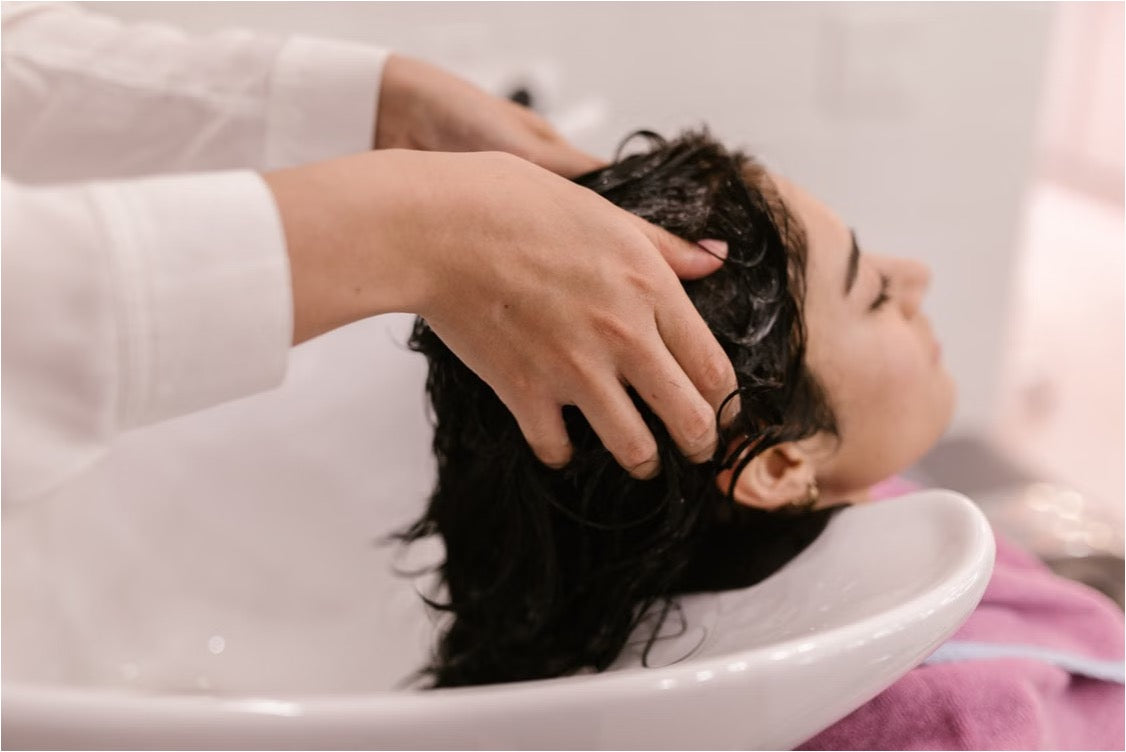
Massage shampoo into the scalp only, letting it flow through the lengths as you rinse instead of rubbing it directly into the strands. Scrubbing the mid-lengths and ends creates friction where the hair is most fragile after a keratin treatment, speeding up breakage instead of preventing it.
Condition After Every Shampoo
Conditioner should follow every single shampoo, especially on chemically treated hair. This step smooths the cuticle and makes hair easier to detangle, reducing the mechanical stress that snaps strands during the wash.
Blot Hair Dry Instead of Rubbing
Wrap wet hair in a towel to absorb excess water rather than rubbing it dry. Wet hair is structurally at its weakest, and rubbing it with a towel creates friction that tears at a cuticle already compromised by formaldehyde or glyoxylic acid exposure. Air drying whenever possible removes heat from the equation entirely.
Lower Your Heat Styling Frequency
Use heat tools on the lowest effective setting for as little time as possible, ideally no more than once a week. Hair that has already gone through a keratin treatment has a lower threshold for additional heat exposure, since flat iron temperatures of up to around 230°C (450°F) have already altered its protein structure to seal the treatment.
A few simple adjustments make a measurable difference over time:
- Air dry whenever your schedule allows instead of defaulting to a blow dryer.
- Set flat irons and curling tools to the lowest setting that still achieves the style.
- Limit how long hot tools contact any single section of hair.
- Cap heat styling sessions to once a week or less while hair recovers.
Skip Tight Ponytails & Buns
Tight ponytails, buns, and cornrows pull on strands at the root and along the shaft, adding tension damage on top of chemical damage. Swapping to covered bands made specifically for hair, and loosening up the style overall, takes one more stressor off hair that is already working overtime to recover.
Space Out Your Next Chemical Service
Space out chemical services by stretching touch-ups to every 8–10 weeks, and even longer in colder months, when hair tends to be drier.
If you also need a color service, the American Academy of Dermatology recommends waiting at least two weeks after a perm or relaxer before adding color. The same caution makes sense after a keratin treatment, since doubling up on chemical processes compounds the structural damage measured in lab studies.
Support Stronger-Looking Hair After Keratin With Trybello Hair Helper Spray

While damaged lengths grow out, a daily scalp spray can support stronger new hair, backed by a 120-day growth guarantee.
Hair breakage after a keratin treatment comes from formaldehyde-releasing chemicals, the heat used to seal them, and any color or bleach added too soon. Damaged lengths will not repair themselves, so recovery depends on gentle washing, less heat, looser styles, and longer gaps between chemical services while new hair grows in.
Because recovery means growing out damaged lengths, we made Trybello Hair Helper Spray to care for the scalp, where that new hair starts. A few sprays massaged in each day support stronger, fuller-looking hair while you trim away breakage. As a US-based company, we offer a 120-Day Growth Guarantee so you have time to see the change: grow and shine or get your money back. Try Trybello Hair Helper Spray.
Frequently Asked Questions (FAQs)

Trending Topics


*Disclaimer: Individual results may vary. The information provided in this article is for educational purposes only and is not intended as medical advice. Consult a healthcare professional before starting any new hair or lash care regimen, especially if you have sensitivities or underlying health conditions. Product pricing is subject to change. For full terms, visit Trybello.com.

See our latests posts #TRYBELLO